Hand washing vs disinfection
Why entry needs both washing and disinfection: the difference, the right order and the effect of wet hands.
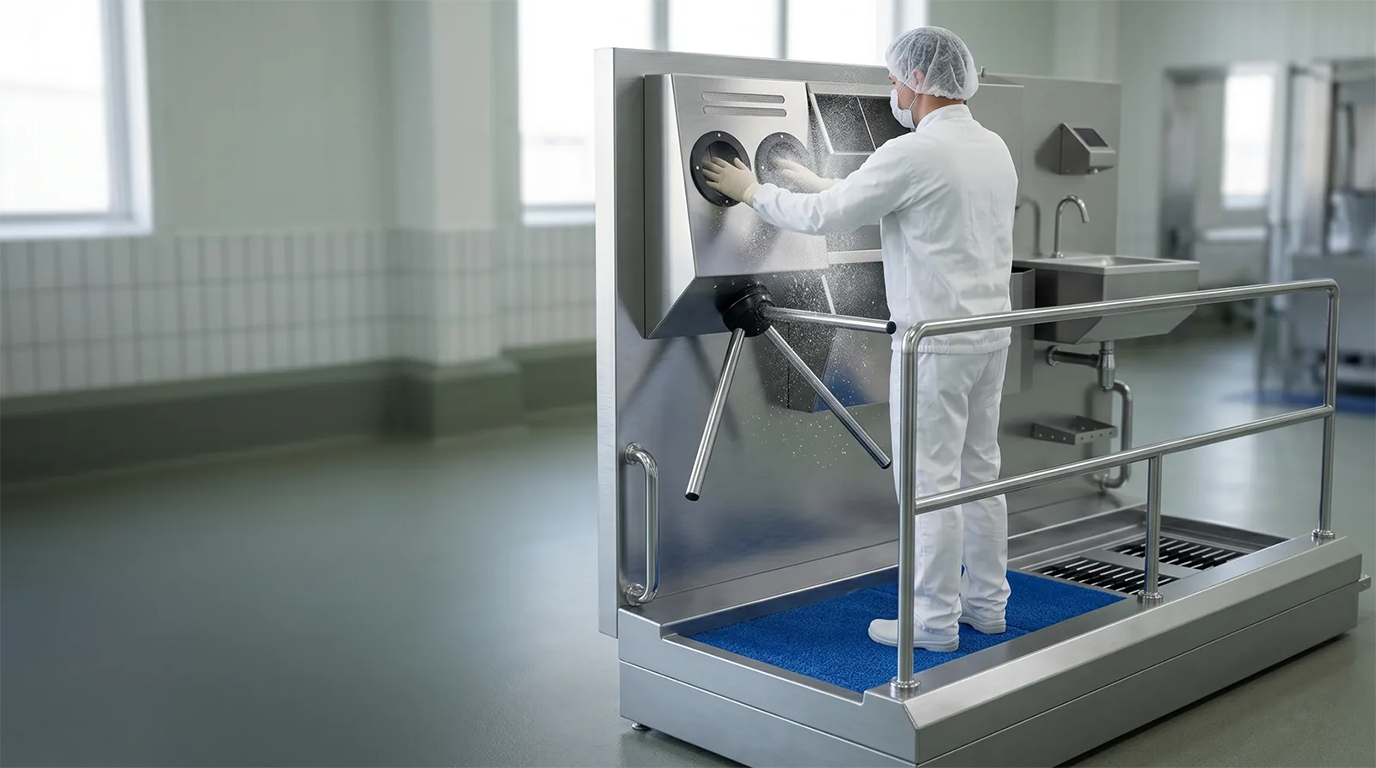
Hand washing or hand disinfection? The right answer is “both” — because they are not alternatives to each other but two different operations that complement one another. Hand washing physically removes dirt and organic residue with water, soap and friction; hand disinfection chemically kills the microorganisms left behind using an alcohol-based product. In this article we clearly explain the difference between the two, why both are required at the entrance to a food facility, the correct order and why wet hands reduce the effectiveness of the hand disinfectant.
What is the difference between hand washing and hand disinfection?
The core difference is this: hand washing removes microbes, hand disinfection kills them. The two work by different mechanisms and do different jobs; neither is a substitute for the other.
Hand washing is a mechanical process. When water, soap and friction come together, dirt, grease, organic residue and the microorganisms embedded in them are lifted from the surface and flow into the drain with the water. Soap plays a critical role here: it lowers surface tension and lets greasy dirt separate from the water. In other words, hand washing does not “kill” the microbe; it physically removes it from there.
Hand disinfection, on the other hand, is a chemical process. An alcohol-based hand disinfectant (typically 60–80% ethanol or isopropanol) breaks down the cell membrane and proteins of microorganisms and inactivates (kills) them in place. It acts fast and leaves no residue that needs rinsing off; however, it does not remove dirt and organic matter from the surface. For this reason, visibly dirty hands must be washed first, and the hand disinfectant applied to a clean hand.
| Working mechanism | Washing: mechanical removal · Disinfection: chemical kill |
|---|---|
| Main agent | Washing: water + soap + friction · Disinfection: 60–80% alcohol |
| Dirt / organic residue | Washing: removes it · Disinfection: does not remove it |
| Effect on a dirty hand | Washing: effective · Disinfection: markedly reduced |
| Typical duration | Washing: ~20–30 s (+ drying) · Disinfection: ~20–30 s of rubbing |
Hand washing takes away the dirt and the microbes with it; hand disinfection kills what is left behind. Safety at the entrance is the sum of the two.
Which is better: washing or disinfection?
On its own the question is framed wrongly; the right question is “which one, when?” The principle agreed on by authorities such as the World Health Organization and the CDC is clear: if hands are visibly dirty or contaminated with organic matter (blood, food residue, soil, faecal residue), washing with soap and water is essential; if hands are visibly clean, an alcohol-based hand disinfectant is a fast and effective option.
Each is strong in a different place. Alcohol-based hand disinfectants inactivate most of the transient flora within seconds and require no sink. By contrast, alcohol is weak against some pathogens: agents such as norovirus, Clostridioides difficile spores and Cryptosporidium are resistant to alcohol and are removed mainly by washing (physical removal). Since these agents are a real risk in food facilities, the washing step cannot be skipped.
If hands are dirty → first wash (remove the organic matter). If hands are clean → disinfect may be enough. At the facility entrance, personnel arrive from the field/outside, so hands are treated as “dirty” in practice; that is why the entrance barrier applies washing first, then disinfection.
Why does a facility entrance need both washing and disinfection?
Because a single step does not close the whole risk. Washing removes the organic load and the microbes carried with it, but some transient flora always remains on the surface; disinfection kills this remainder but cannot clean off dirt and organic matter. When the two steps are applied one after the other, each covers the other’s gap and entrance hygiene reaches its highest reliability.
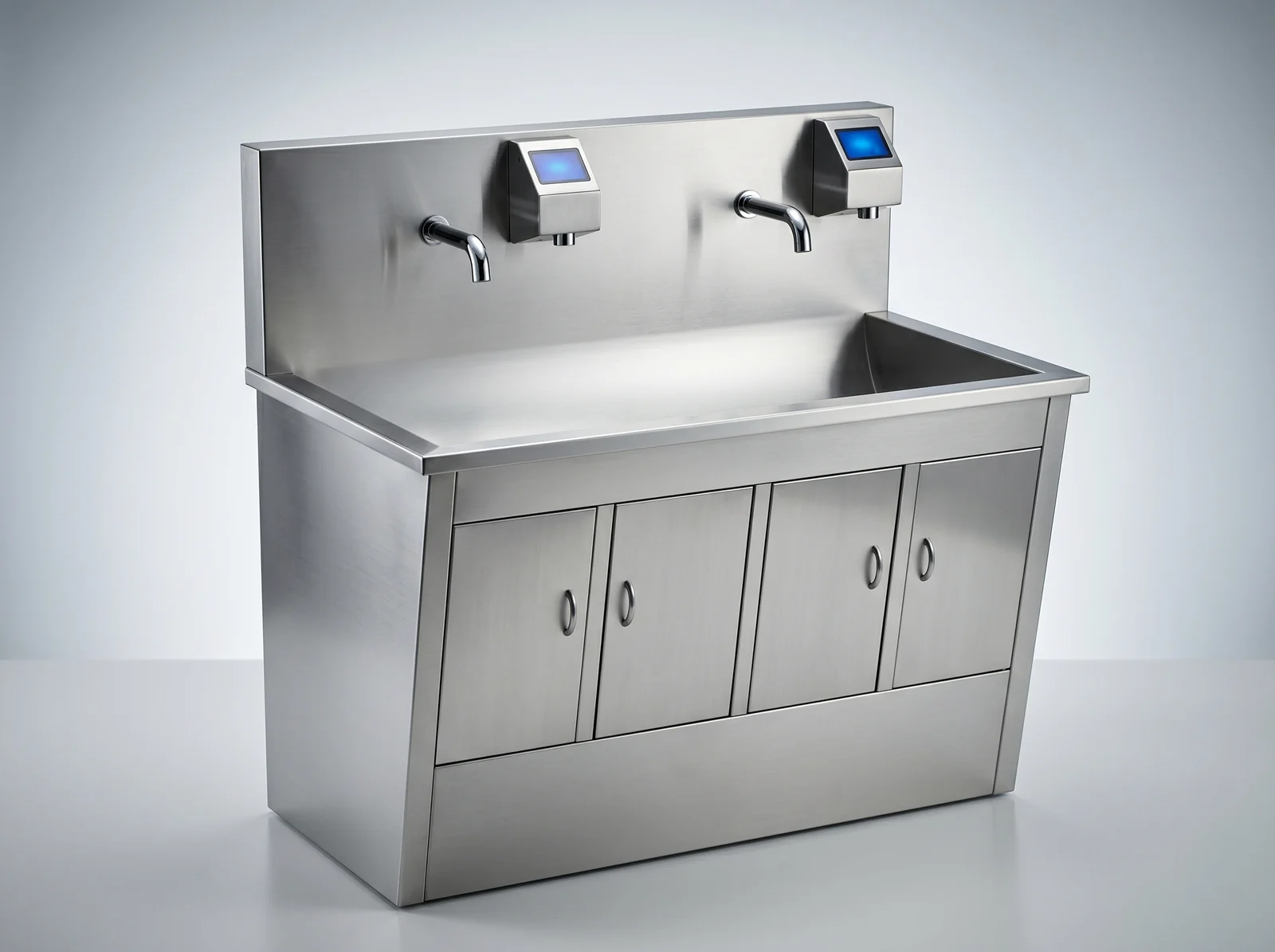
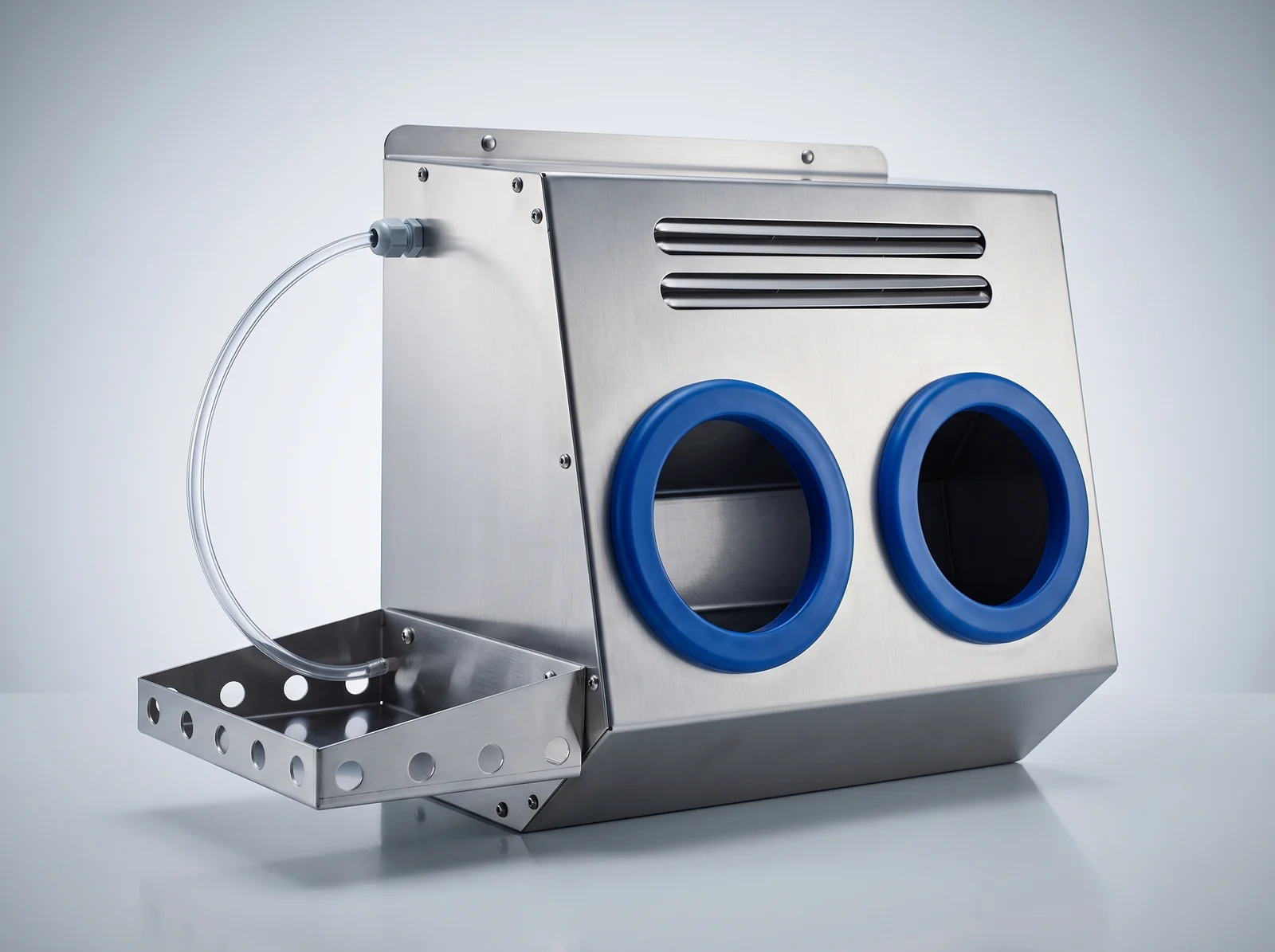
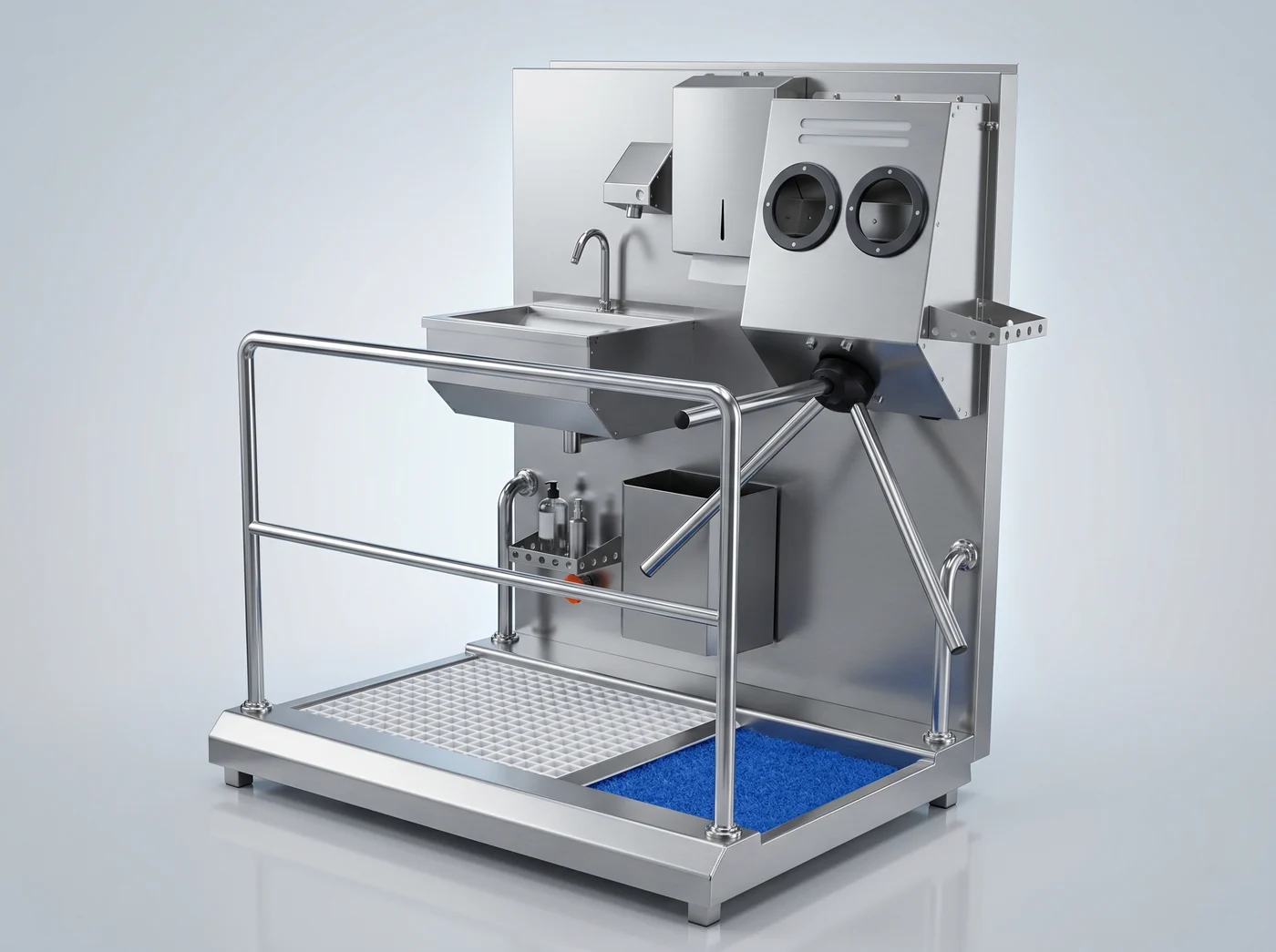
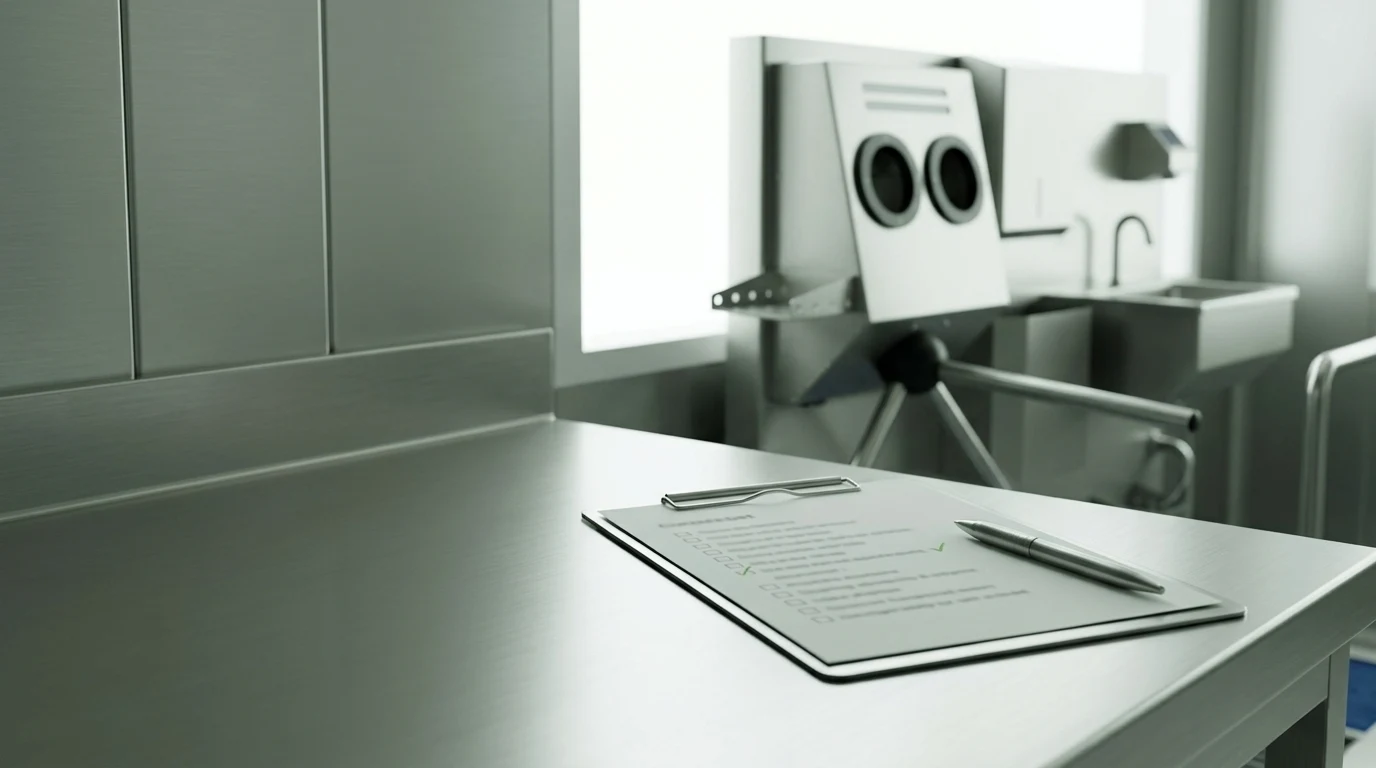
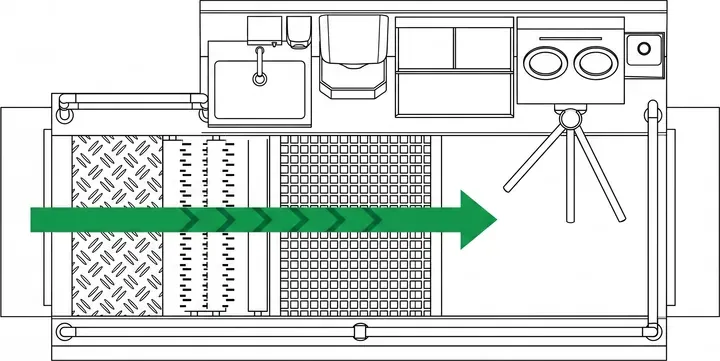
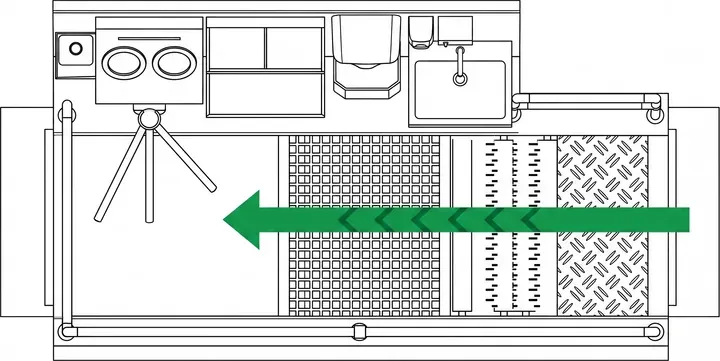
In a food factory, the personnel entrance is the point where cross-contamination most often begins. Hands coming from outside carry both visible dirt and an invisible microbial load. That is why modern personnel entrance solutions combine the two steps on a single controlled line: a sensor-operated industrial washbasin (with liquid soap and paper towel) followed by a touchless, automatic-dosing hand disinfection unit. We explain this logic step by step in our how a hygiene station works article.
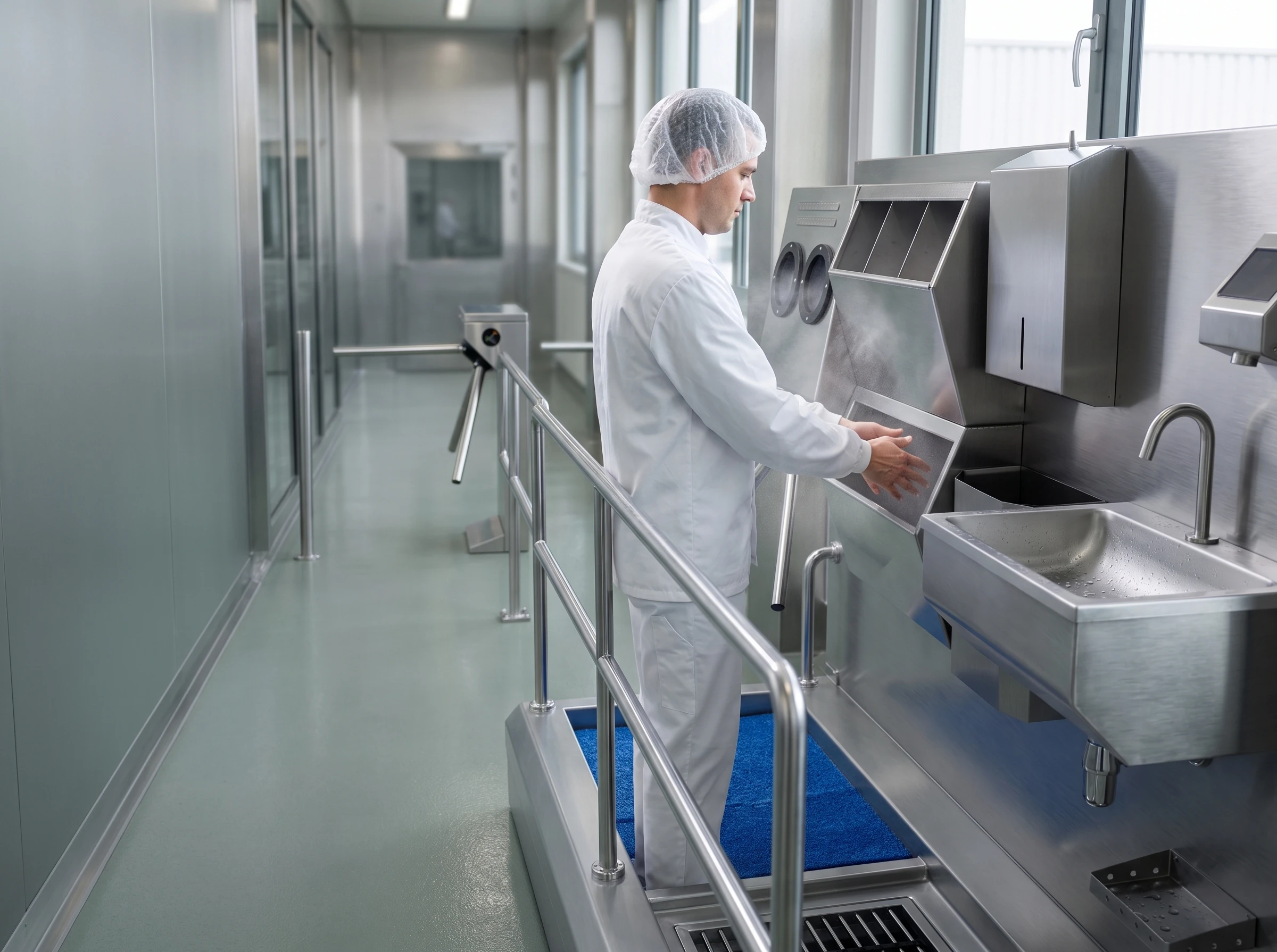
Making the two steps mandatory is not the same as making them auditable. A hygiene station keeps the turnstile locked until the steps are verified by sensors, taking hygiene out of the employee’s discretion — which turns the entrance into an auditable hygiene passage. We address the hand-hygiene expectation of food safety standards in our HACCP and the hygiene station article.
What is the right order: washing first or disinfection first?
The right order is always to wash first, then disinfect. Applying hand disinfectant first is both wasteful and ineffective: while dirt and organic matter sit on the surface, the alcohol cannot reach the microbe. When washing is done first, the dirt and organic load are removed, and the hand disinfectant then works at full effect on a clean surface.
Between them there is a critical intermediate step that is often skipped: drying. After the hands are washed, they must be dried thoroughly before the hand disinfectant is applied. The reason is in the next section — a wet hand dilutes the hand disinfectant and reduces its effect.
- 1Wash — hands are washed with water from the sensor-operated tap, liquid soap and ~20–30 seconds of friction; dirt and organic residue are removed.
- 2Dry — hands are dried completely with paper towel; this step prevents the hand disinfectant from being diluted.
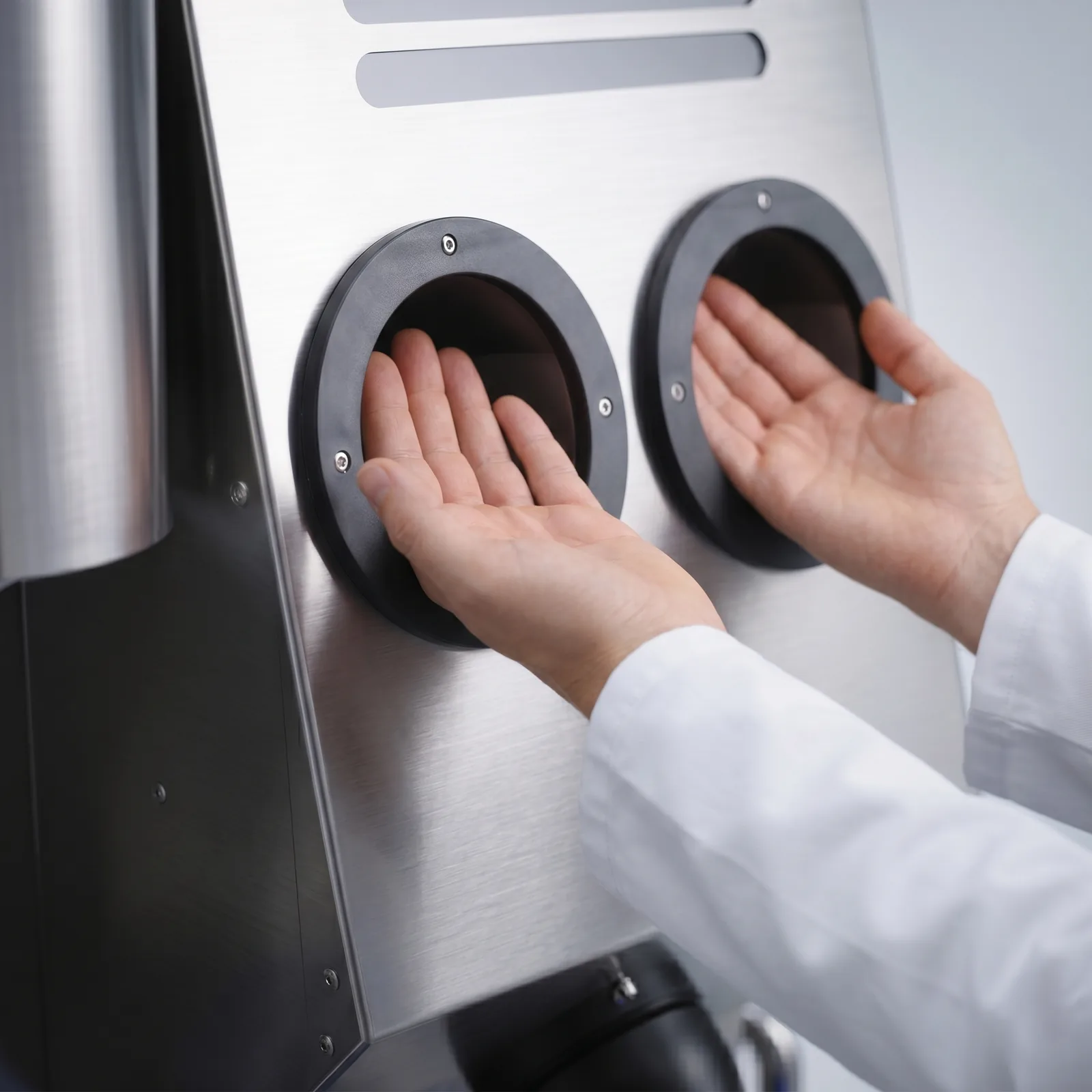
- 3Disinfect — alcohol-based hand disinfectant is dispensed from the touchless unit, rubbed into the dry hand and left to air-dry.
Why do wet hands neutralize the hand disinfectant?
Because the water on the hand dilutes the alcohol in the hand disinfectant. Alcohol-based hand disinfectants are formulated to work effectively within a certain concentration range (usually 60–80%); when applied to a wet hand, the water on the surface can pull the alcohol level below this threshold and the power to kill microbes drops markedly.
A curious but important detail: for alcohol to be effective, it needs a certain proportion of water — pure (100%) alcohol is less effective than diluted alcohol, because water helps break down proteins. The problem is not “water” itself, but uncontrolled excess water. The balance set by the manufacturer is disrupted on a wet hand. That is why hand disinfectant must always be applied to a dry hand. The same logic does not hold for a gloved hand either: disinfection gives the most accurate result on bare, clean and dry skin.
1) Squirting hand disinfectant directly onto a dirty hand. 2) Disinfection after washing without drying the hands (dilution). 3) Wiping off the hand disinfectant before it fully dries — the effect is not complete until the contact time (~20–30 s of rubbing) has elapsed.
Summary: washing or disinfection?
The short answer: at the facility entrance, both, in the right order. Hand washing physically removes dirt and organic matter (and the microbes within them); hand disinfection chemically kills the transient flora left behind. The correct flow is wash first, then dry, and finally apply hand disinfectant to a dry hand. The most robust way to apply this order consistently and auditably is a turnstile-controlled personnel entrance line that makes the steps mandatory.
We can plan a hand-washing + disinfection line suited to your facility’s personnel flow and risk profile together; for the right configuration, take a look at our choosing a hygiene station guide or request a quote from us.
Sources
- Hand hygiene — Infection prevention and control — World Health Organization (WHO)
Frequently asked questions
Which is more effective, hand washing or hand disinfection?
The two do different jobs; neither is a substitute for the other. Hand washing physically removes dirt and organic matter (and the microbes carried with them); alcohol-based disinfection kills the transient flora left behind within seconds. If hands are dirty, washing is essential; if hands are clean, disinfection is a fast solution. At the facility entrance, the safest way is to apply both in order.
Should you wash first or disinfect first?
You should always wash first, then disinfect. While dirt and organic matter sit on the surface, the hand disinfectant cannot reach the microbe. The correct flow: wash first with soap and water, then dry the hands thoroughly, and finally apply hand disinfectant to a dry hand.
Why is applying hand disinfectant to a wet hand a problem?
The water on the hand dilutes the alcohol in the hand disinfectant and pulls the alcohol level below the effective threshold (usually 60–80%), reducing its microbe-killing power. That is why hand disinfectant must always be applied to a dry hand; after washing, hands should be dried completely with paper towel.
Does hand disinfectant replace hand washing?
No. If hands are visibly dirty or contaminated with organic matter, hand disinfectant alone is not enough; moreover, some agents such as norovirus, Clostridioides difficile spores and Cryptosporidium are resistant to alcohol and are removed mainly by washing. Hand disinfectant is a step that completes washing, not an alternative to it.
How do hand washing and disinfection work in a hygiene station?
In a typical hygiene station, personnel first wash their hands at the sensor-operated industrial washbasin (with liquid soap and paper towel), then apply hand disinfectant from a touchless, automatic-dosing unit. The turnstile stays locked until the sensors verify the steps; this means neither step can be skipped and the passage becomes auditable.
How long does correct hand disinfection take?
Alcohol-based hand disinfectant should be dispensed in a sufficient amount onto a dry hand and rubbed for about 20–30 seconds, keeping all surfaces wet, then left to air-dry. Wiping off the hand disinfectant before the contact time has elapsed cuts the effect short.