The hygiene scenario in dairy
Milk and dairy are media favourable to microbial growth; hygiene discipline at staff entry directly affects product safety.
-
Pathogens such as Listeria, which grow even when cold, can be carried into the clean zone by uncontrolled staff passage.
-
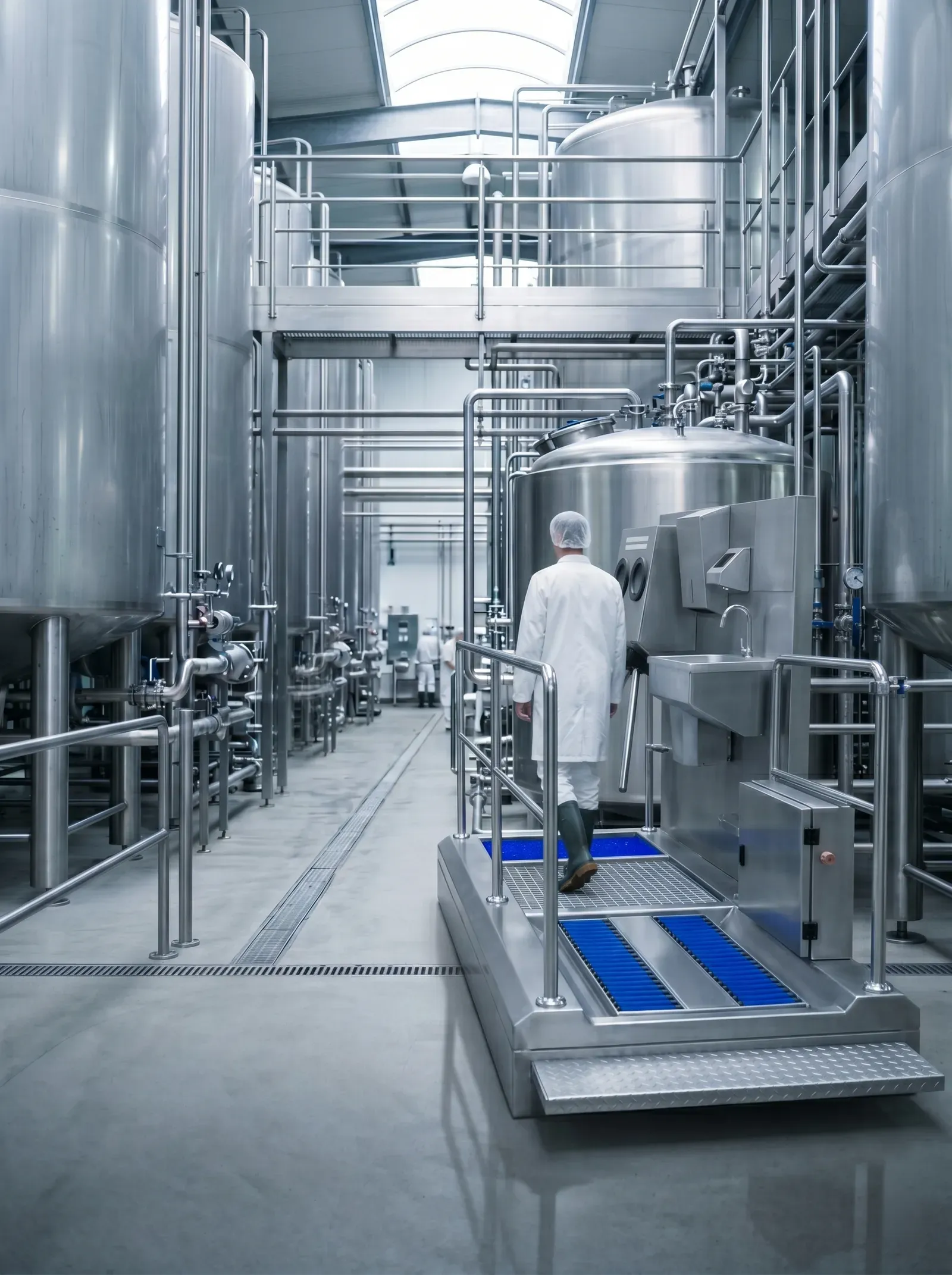
Sensor-operated hand disinfection and hand washbasins support contact-free hand hygiene.
-
A sole-disinfection pool stops floor-borne contamination at the entry point.
-
With all surfaces in AISI 304 stainless, the units withstand aggressive cleaning and disinfection cycles.
The compliance framework in dairy
- HACCP and ISO 22000: milk and dairy products are vulnerable to recontamination after heat treatment; the personnel entrance is an audited point of the prerequisite programme, and evidence that hand hygiene was actually performed is expected.
- Listeria control programmes: BRCGS and IFS audits expect environmental monitoring for Listeria monocytogenes in cold, damp areas. Reducing the load carried on floors and footwear at the entry point directly affects the monitoring results.
- Turkish Food Codex Regulation and Food Hygiene Regulation: personnel hygiene, protective clothing and hand-washing facility requirements for dairy businesses are defined in national legislation and checked in official inspections.
- Hygienic design: because of frequent, aggressive washing, equipment surfaces must be non-porous, correctly finished and corrosion-resistant; an AISI 304 body meets this, and 316 is considered at special points with a high chloride load.
- Zone separation and flow direction: entry to post-pasteurisation areas must be separated from raw-milk reception and outdoor areas. A one-way turnstile fixes the direction of passage; it keeps staff leaving the clean zone from returning through the same line and reduces cross-contamination between zones.
Recommended entry configuration
The configuration we recommend at a dairy entrance handles hand hygiene and floor-borne load on the same line and separates the exit from the clean zone. The number of units and lanes follows the number of staff entering at once at shift start and is settled together on the facility plan at the quotation stage.
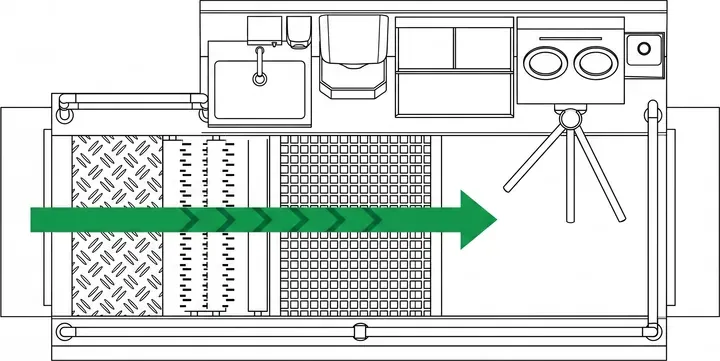
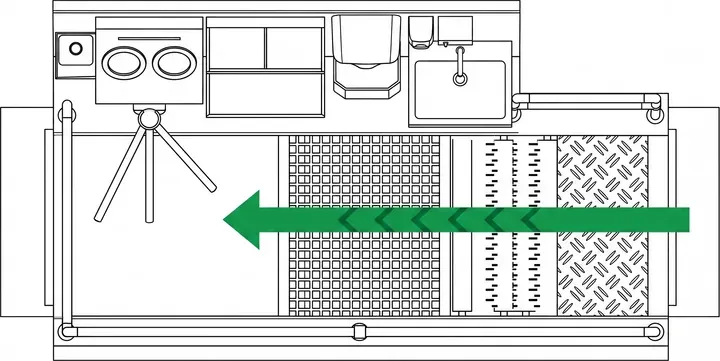
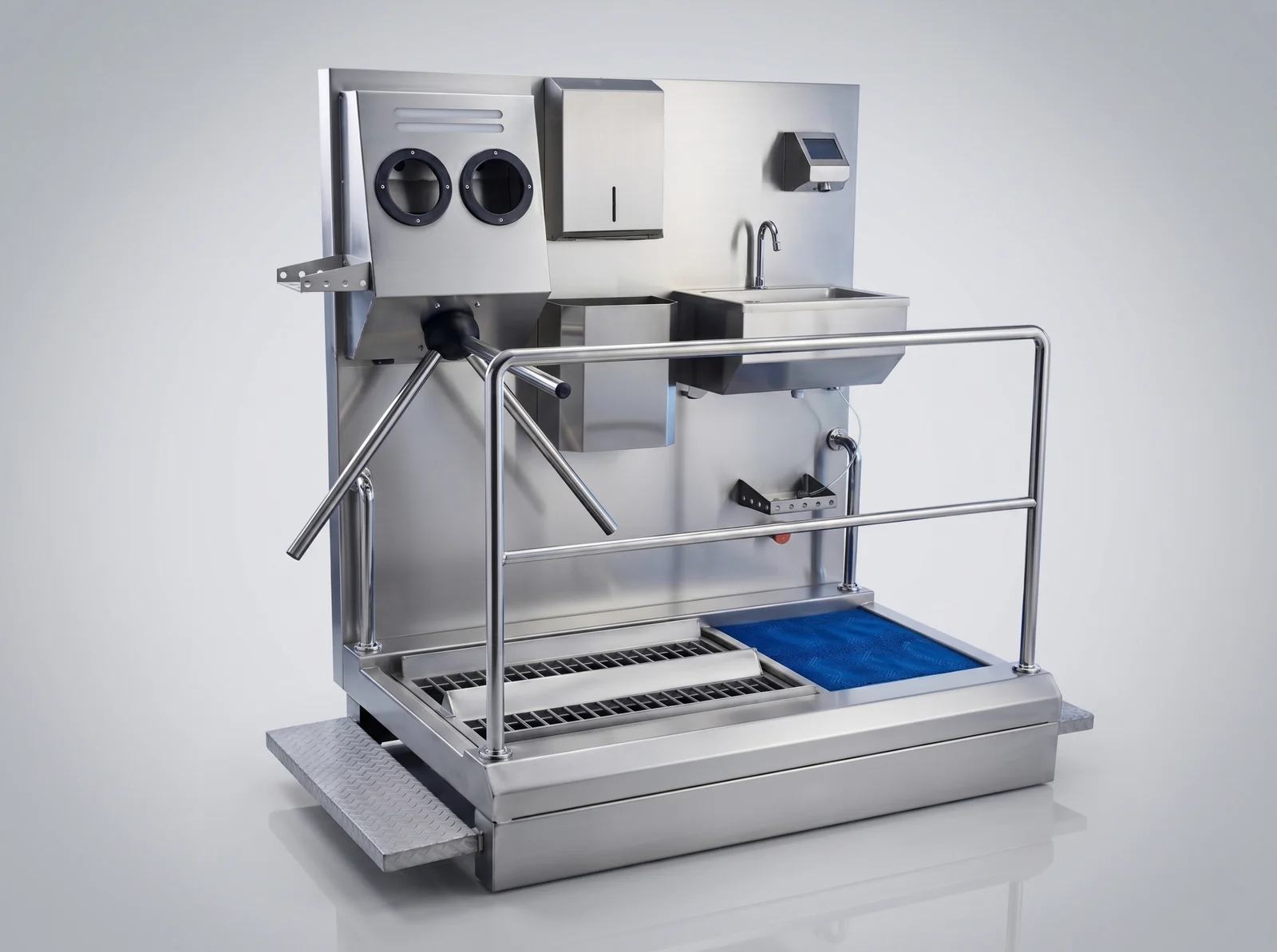
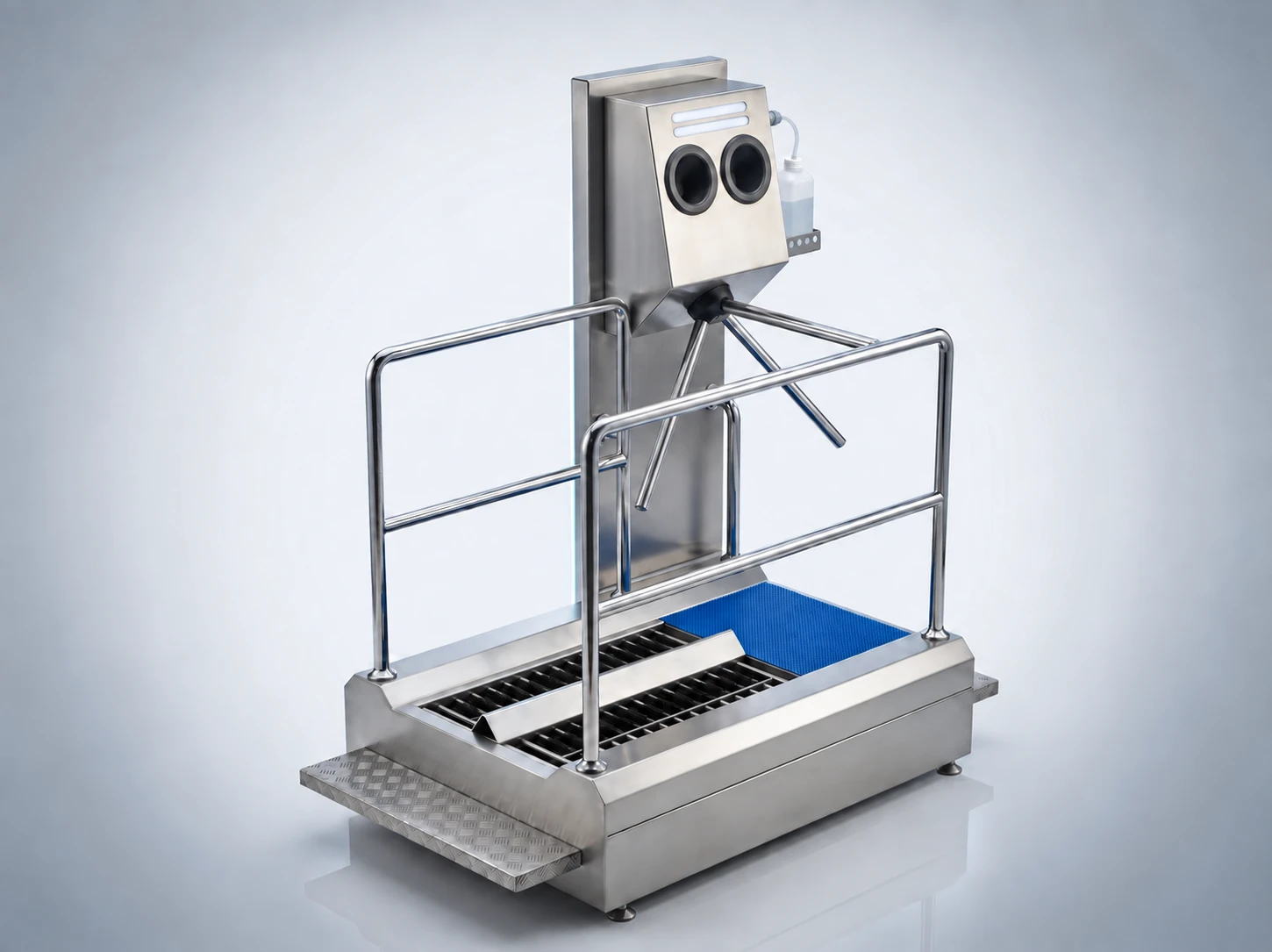
- DSE-EB — boot brush, washbasin: combines a sensor-operated hand washbasin and dual-hand disinfection with sole brushing on the move; recommended as the main unit at the filling and packing entrance.
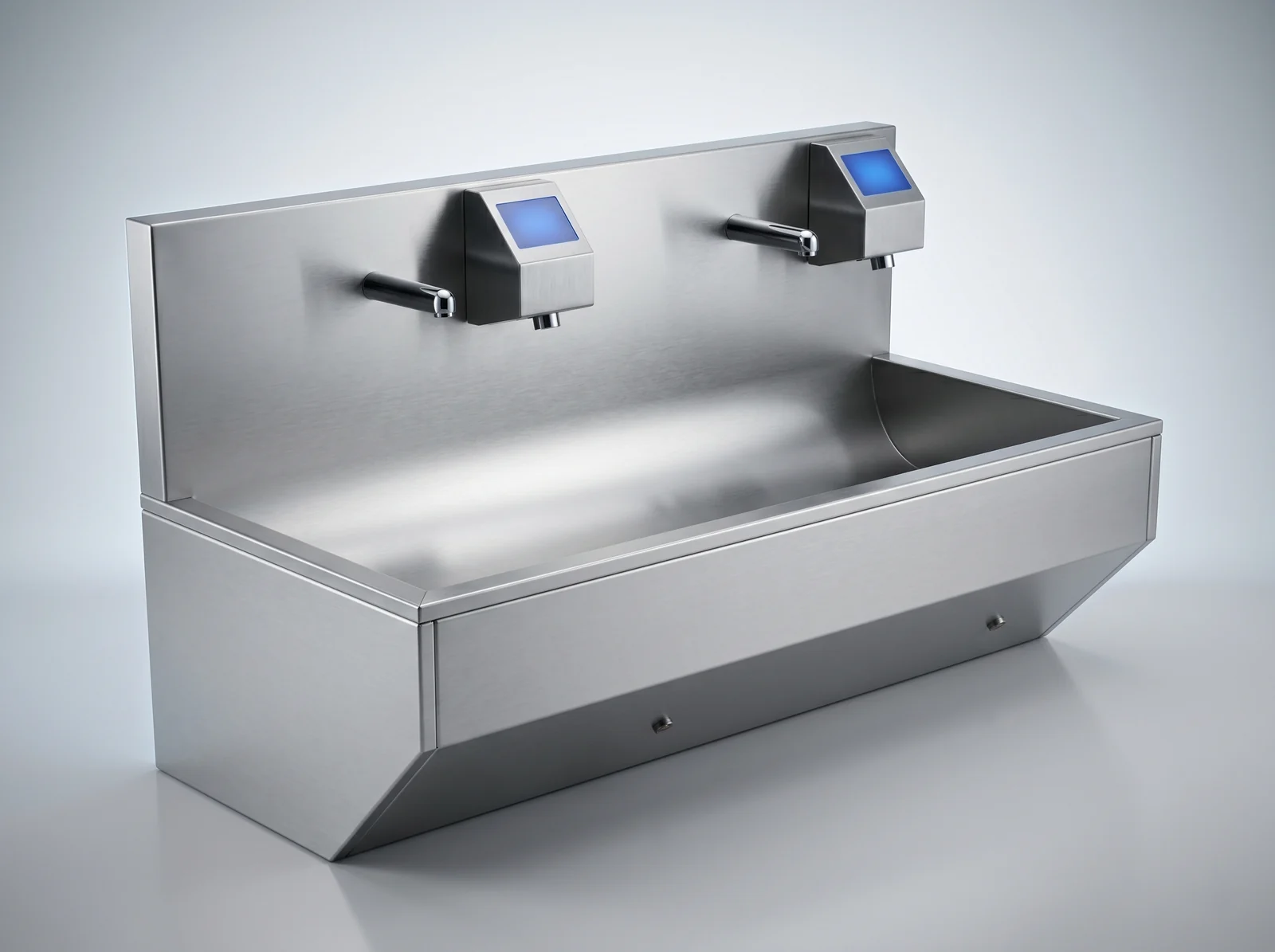
- LVS-S2 — wall-mounted, 2-station sensor-operated hand washbasin: adds a hand-washing point in the laboratory, changing room and intermediate passages; sensor water and soap prevent recontamination.
- DSE-B — variable brush-length turnstile: a compact solution for secondary entrances where sole cleaning and hand disinfection are enough; the 400, 600 or 800 mm brush option follows the personnel flow.
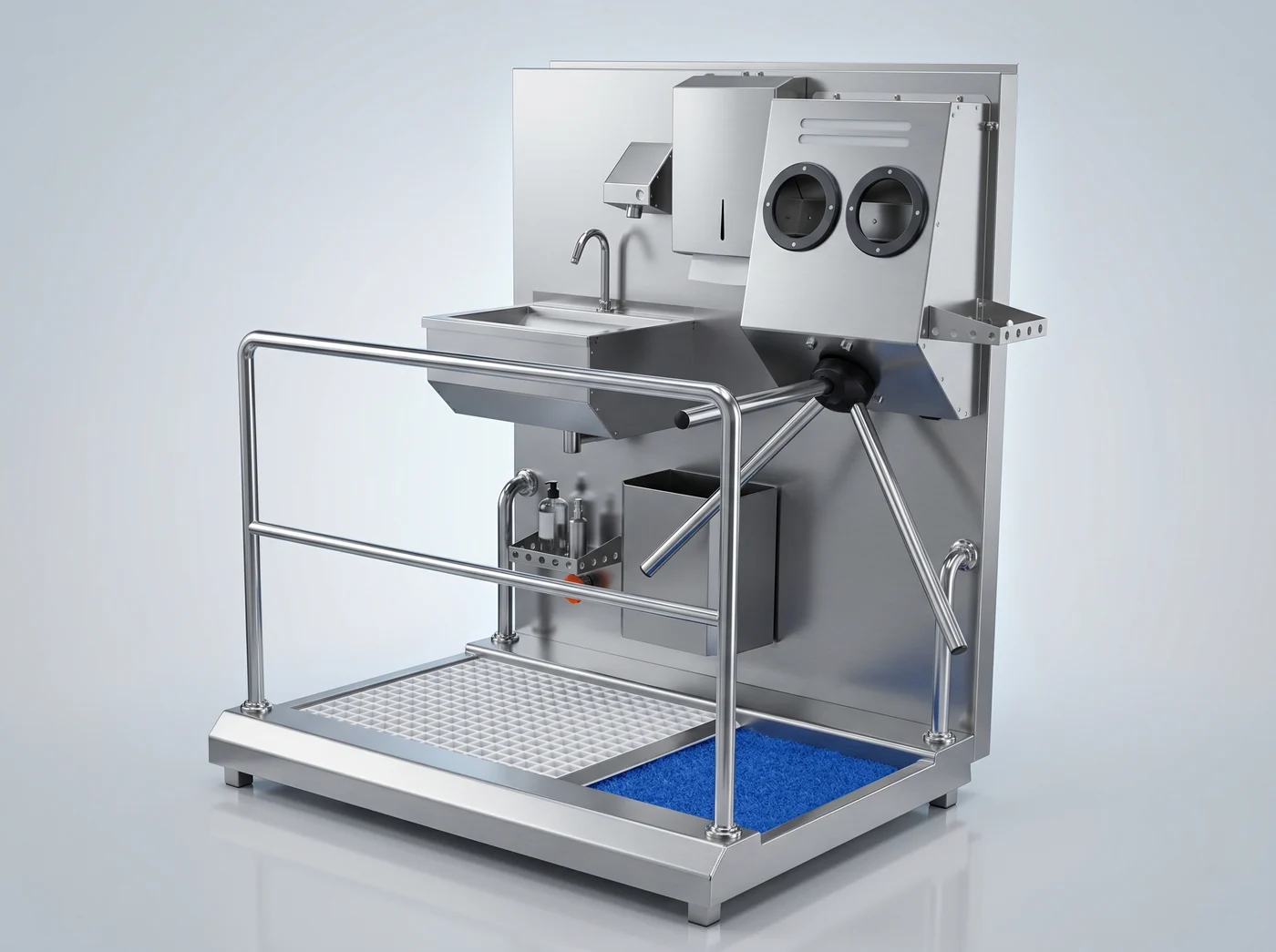
- HGE-M1 — footbath, washbasin, compact: offers a disinfectant footbath together with a washbasin in narrow intermediate corridors; the water and drain connection is prepared before installation.
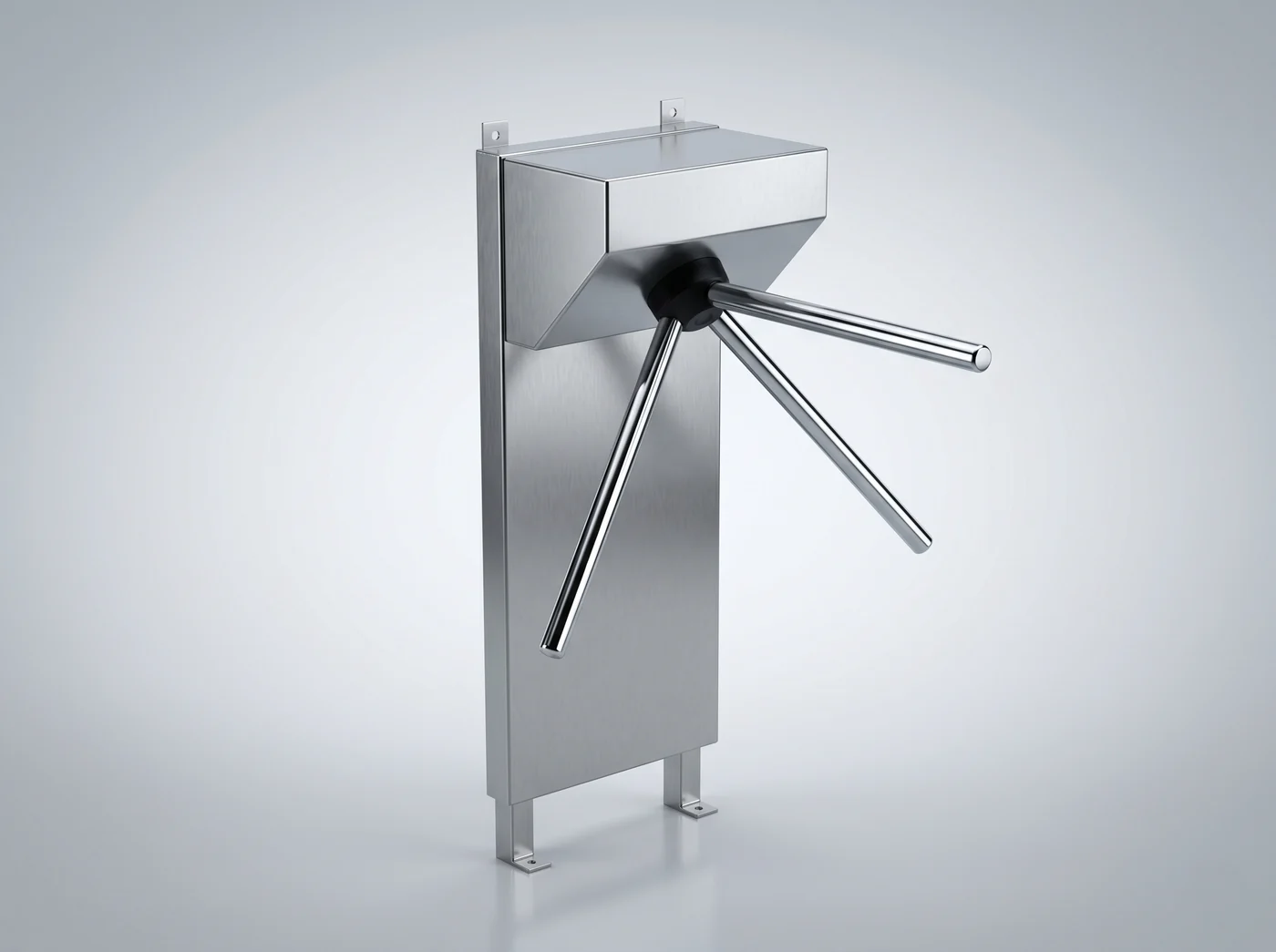
- TRN — one-way turnstile: separates the exit from the clean zone; it blocks passage in the wrong direction and therefore recontamination; the counting option records the number of passages.
Recommended units for this sector
Hygiene units frequently chosen for Dairy & Milk facilities.
Common questions in this sector
Why is a sensor-operated hand washbasin important in a dairy plant?
A sensor-operated hand washbasin reduces the risk of recontaminating washed hands through contact with taps or dispensers.
How is Listeria risk reduced at entry in a dairy plant?
Control at the entry point is not sufficient on its own but is an important link: an auditable crossing with hand and sole hygiene lowers the load carried in from outside. AISI 304 surfaces suit aggressive cleaning, which also reduces the risk of equipment harbouring the pathogen.
Which comes first — a footbath or a hand washbasin?
They address different risks: a hand washbasin supports hand hygiene, while a disinfectant footbath targets floor-borne contamination. In dairy plants they are usually planned together as part of the personnel entry line.