Stainless vs powder-coated vs HPL lockers
Stainless steel, powder-coated steel, HPL and plastic lockers compared for hygiene-audited changing rooms: moisture, corrosion, impact, fire, cleaning and cost.
In a wet, frequently washed changing room subject to hygiene audits, the safest choice is an AISI 304 stainless steel locker, because its corrosion resistance comes from the material itself rather than from a coating. Powder-coated steel lockers are an economical option for dry rooms, but once the coating is scratched, rust can start in a humid room. HPL resists moisture but takes impacts less well than steel; plastic does not rust but is weak against forced entry and combustible. In this article we compare the four materials on moisture, corrosion, impact, fire behaviour, cleaning and initial cost, and clarify from a manufacturer’s perspective which room each one suits.
Choose a locker material for the room’s humidity and cleaning regime. Three properties separate stainless steel (AISI 304), powder-coated steel, HPL and plastic lockers. The first is corrosion: stainless steel is protected by the material itself, while powder-coated steel relies on its coating, and rust can start wherever that coating is damaged. The second is impact and forced entry: stainless and powder-coated lockers both have a steel body; HPL takes impacts less well than steel, and plastic is weaker against forced entry. The third is fire behaviour: stainless steel is non-combustible, a coating is organic, HPL is organic-based with a fire class that depends on the product, and plastic is combustible. Stainless usually costs the most up front and powder-coated steel the least. Choose stainless for wet, frequently washed, audited changing rooms; powder-coated steel for dry rooms, offices and workshops; HPL or plastic for pools and sports facilities.
Why does the material matter in a hygiene-audited changing room?
In food, meat and dairy processing, pharmaceutical and cosmetics production and industrial kitchens, the changing room is the first control point before production. These rooms are humid and are washed often along with the floor and walls; the space beneath the lockers, their tops and their doors are part of the cleaning plan. Standards such as BRCGS Food Safety, IFS Food and ISO 22002-1:2025 ask for adequate, separate and cleanable storage in the changing area and expect workwear to be kept apart from outdoor clothing; they do not prescribe a locker material. The choice of material is therefore not a compliance requirement in itself, but a question of whether the locker will stay cleanable in those conditions for years.
The four materials side by side
The table below compares the general, well-established properties of the materials; it is not a comparison of specific products or brands. Two lockers made of the same material can behave differently depending on gauge, joints and fittings.
| Criterion | AISI 304 stainless steel | Powder-coated steel | HPL / compact laminate | Plastic |
|---|---|---|---|---|
| Moisture and corrosion | The material itself resists rust; no protective coating is needed. | Protected while the coating is intact; rust can start at scratches, edges and screw points. | Moisture-resistant with a non-porous surface. | Does not rust; moisture-resistant. |
| Impact and forced entry | Steel body. | Steel body; an impact can damage the coating. | Less impact-resistant than steel. | Weaker than steel against forced entry. |
| Fire behaviour | Non-combustible material. | The body is non-combustible; the coating is organic. | Organic-based; the fire class depends on the product. | Combustible. |
| Wet cleaning | Suited to wet cleaning; chlorine-based cleaners are not left on the surface and are rinsed off well. | An intact coating can be wiped; abrasive cleaning wears it down. | The surface can be wiped; edges and fixing points need separate checks. | Can be wiped; dirt can cling to a scratched surface. |
| Initial cost | Usually the highest of the four. | Usually the lowest. | Usually lower than stainless steel. | Usually lower than stainless steel. |
| Typical use | Wet, frequently washed changing areas subject to hygiene audits. | Dry changing rooms, offices and workshops. | Humid areas; sports and pool changing rooms. | Wet areas and outdoor use. |
Stainless steel: the protection is the material itself
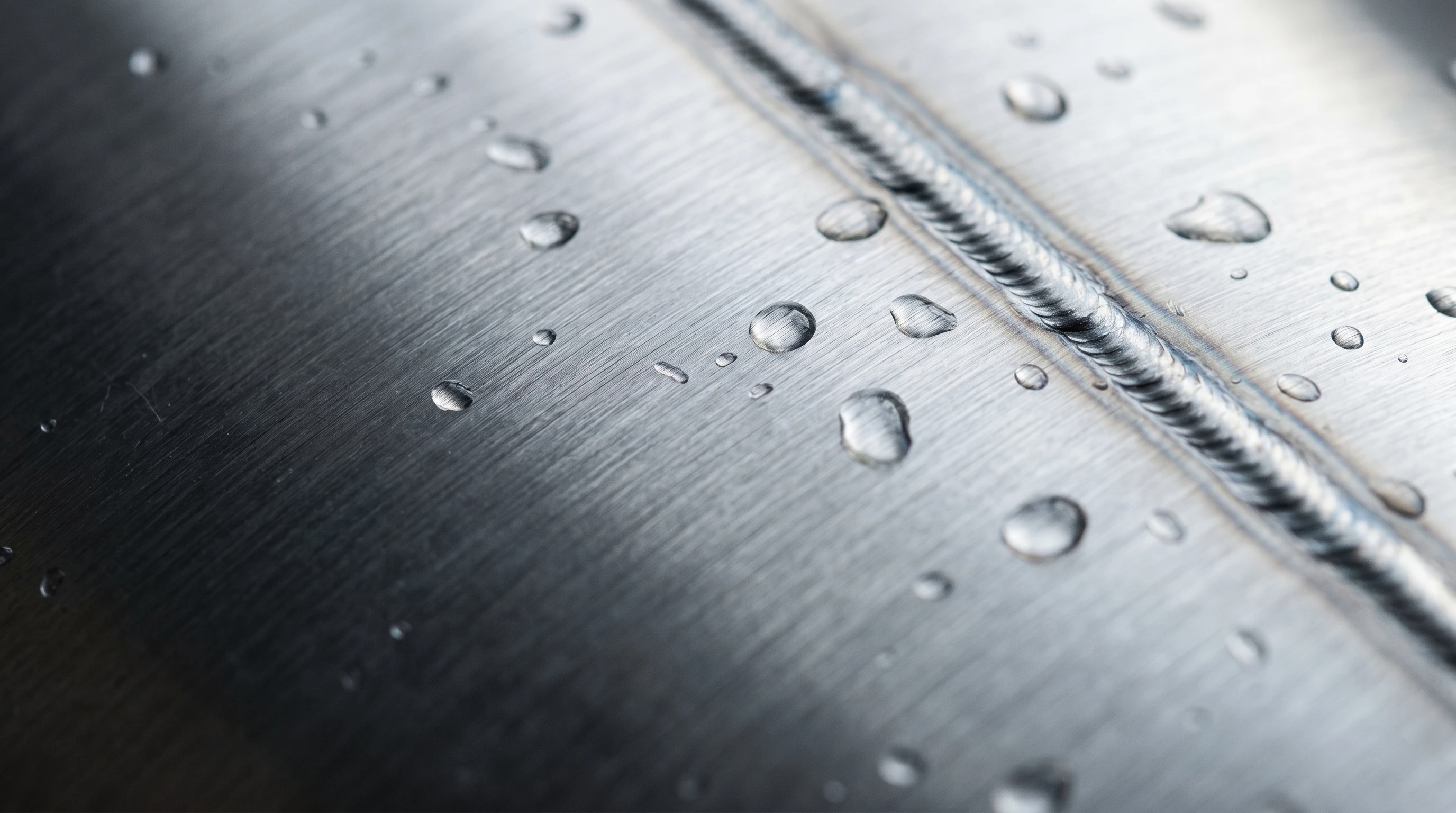
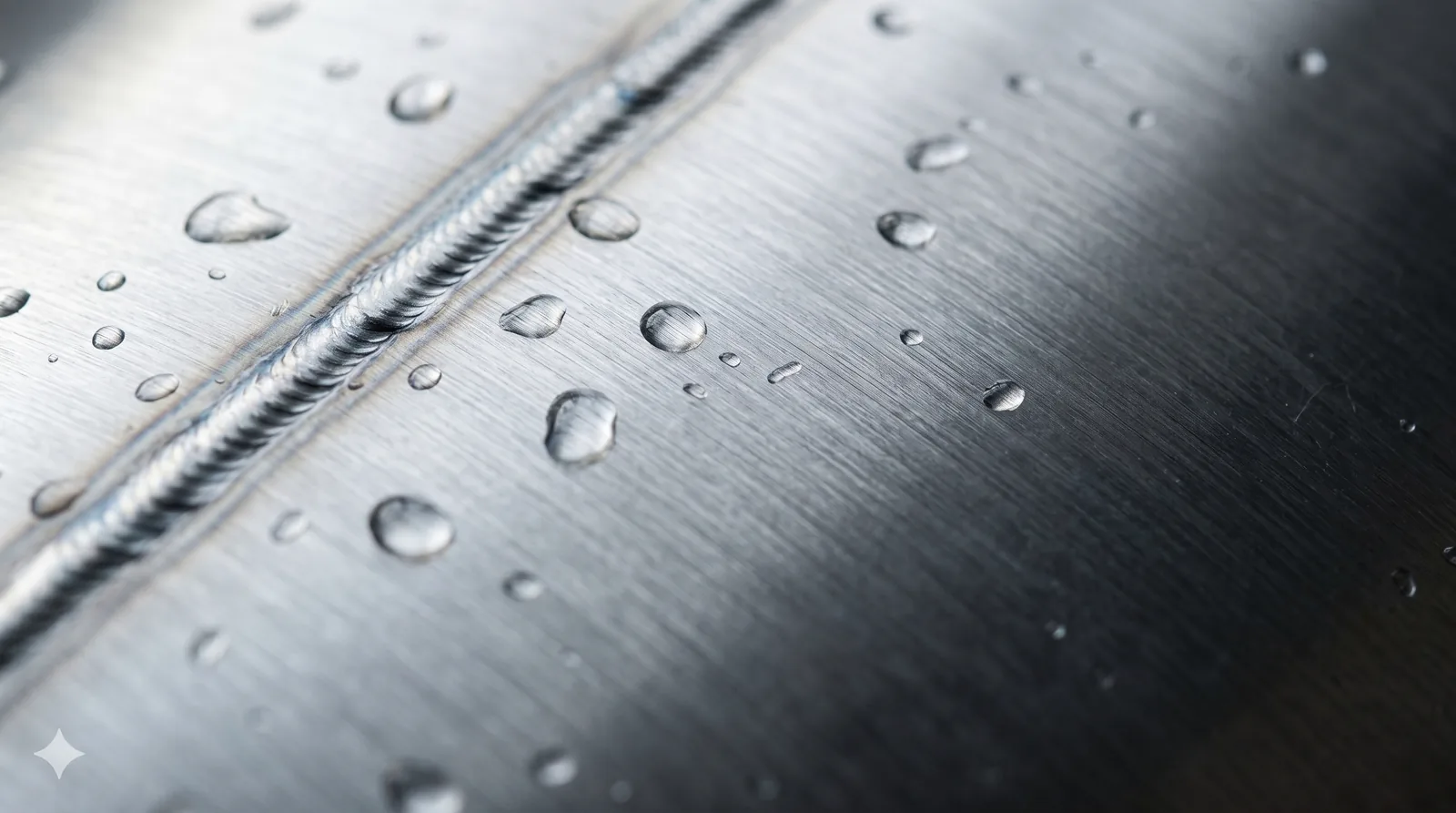
What protects stainless steel from corrosion is the thin, self-repairing chromium-oxide (passive) layer that chromium forms on the surface. This layer is not applied like a paint; even if it is scratched, it re-forms as long as there is oxygen. For a locker this means every surface exposed at a door edge, around a hinge or at the lock cut-out is the same material as the rest of the body; there is no separate coating to protect. The surface is non-porous and withstands humidity and frequent wiping.
For a changing room, AISI 304 is the sufficient and right grade. The molybdenum that sets 316 apart matters on brine or seafood lines with continuous chloride exposure; a changing room is not that kind of environment. We cover the difference between the two grades in detail in our 304 vs 316 article. The main drawback of a stainless steel locker is its initial cost; in return, the life of the body does not depend on the life of a coating.
Powder-coated steel: economical in dry rooms, coating-dependent in wet ones
A powder-coated locker is usually made from cold-rolled mild steel sheet with an electrostatic powder coating. As long as the coating is intact it keeps moisture away from the steel, but the corrosion resistance depends entirely on that coating. Door knocks, rubbing from keys and padlocks, screw points and cut edges are where the coating is damaged first. Once the coating is breached, rust can start at that point in a humid, frequently washed room and creep beneath the coating; blistered paint and rust staining make a surface that is hard to clean.
This does not make powder-coated steel a poor material: in dry changing rooms, offices and workshops it is an adequate solution with the lowest initial cost. The problem is placing the same locker in a hygiene zone where the humidity is high and the room is wet-cleaned.
HPL and plastic lockers: moisture-resistant, different on impact and fire
HPL / compact laminate
HPL (high-pressure laminate) is a board made by pressing resin-impregnated paper layers under heat and pressure; the thick, self-supporting type is called compact laminate. It does not rust, resists moisture and has a non-porous surface, which is why it is common in pool and sports changing rooms. On the other hand it is organic-based, its fire class depends on the product, and it takes impacts less well than steel. On an HPL locker, the material of the hinges, profiles and fixings that join the doors to the body is worth checking separately.
Plastic
Plastic lockers do not rust and resist moisture; they can be used in wet areas and outdoors. Their weak points are lower resistance to forced entry than steel and the fact that they are combustible. Dirt can cling to a scratched plastic surface, which matters in a hygiene zone that is wiped often.
Which material for which changing room?
- Wet, frequently washed changing room subject to hygiene audits (food, meat, dairy, pharmaceutical and cosmetics, industrial kitchens): stainless steel lockers.
- Dry changing room, office, workshop, warehouse: powder-coated steel lockers can be sufficient.
- Pools, sports facilities and similar humid areas: HPL or plastic lockers can be considered; check the fire class and the fixings separately.
- Different zones on one site: powder-coated steel in the office block and stainless steel in the production changing room puts the budget where the risk is.
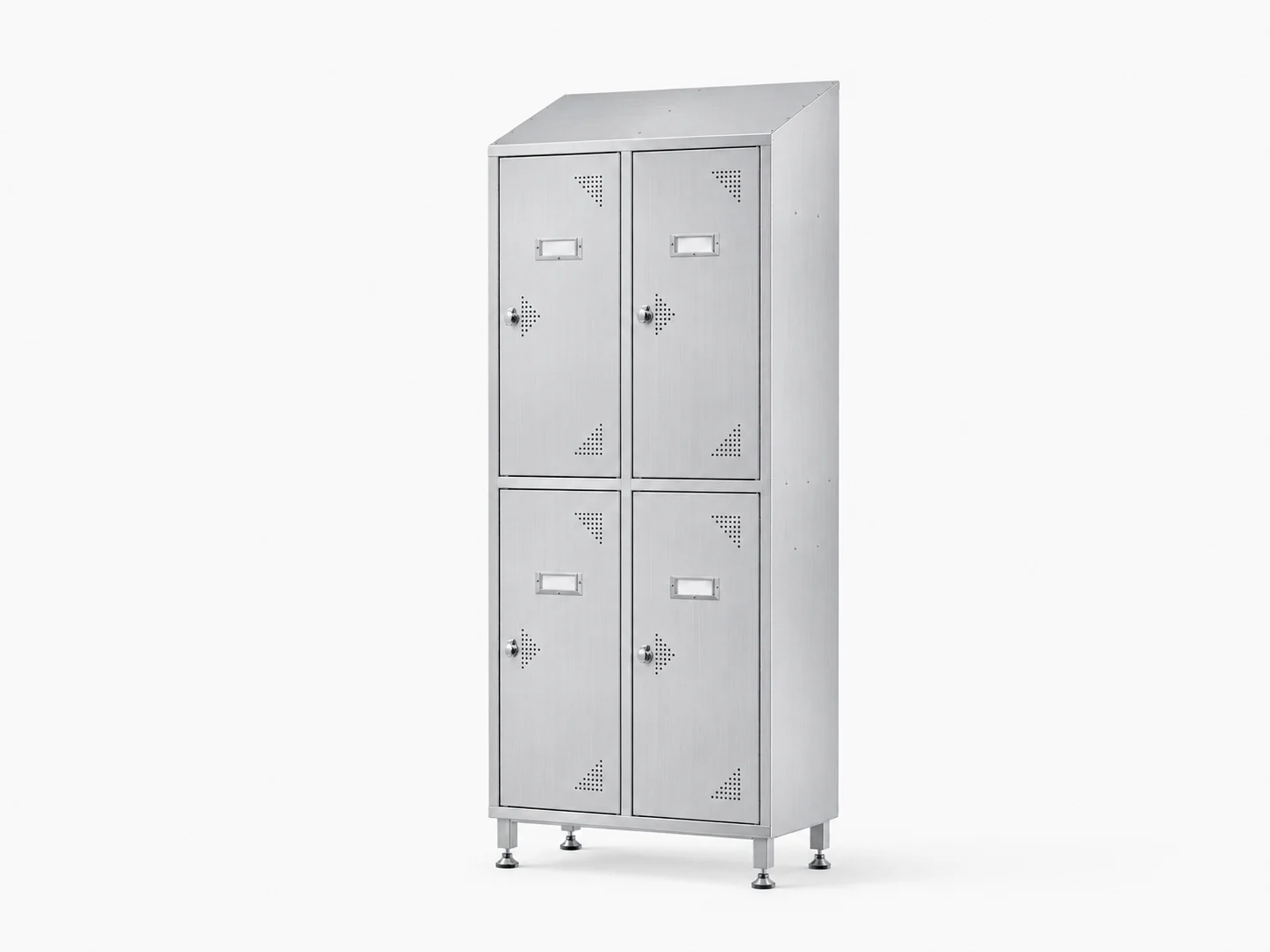
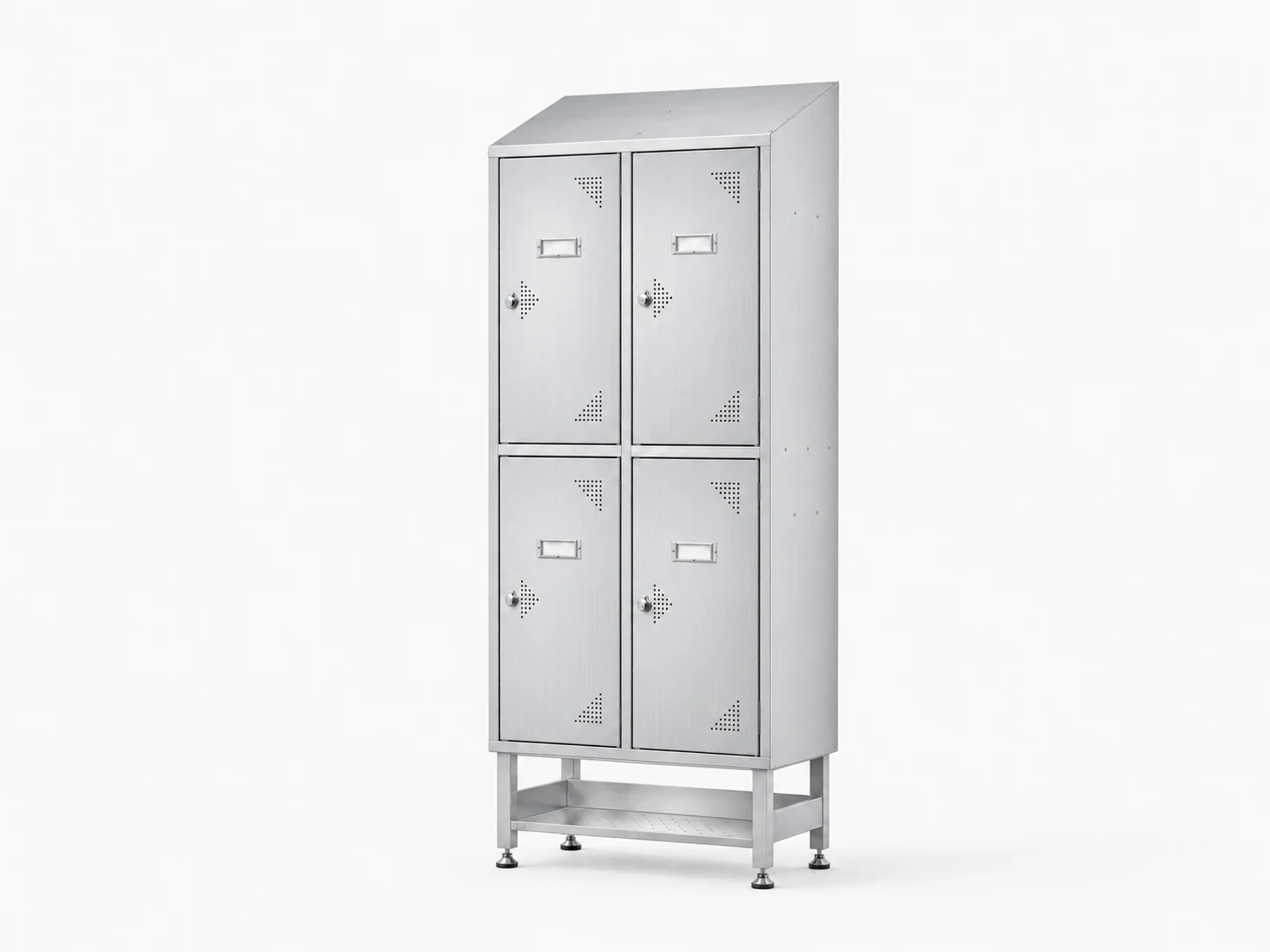
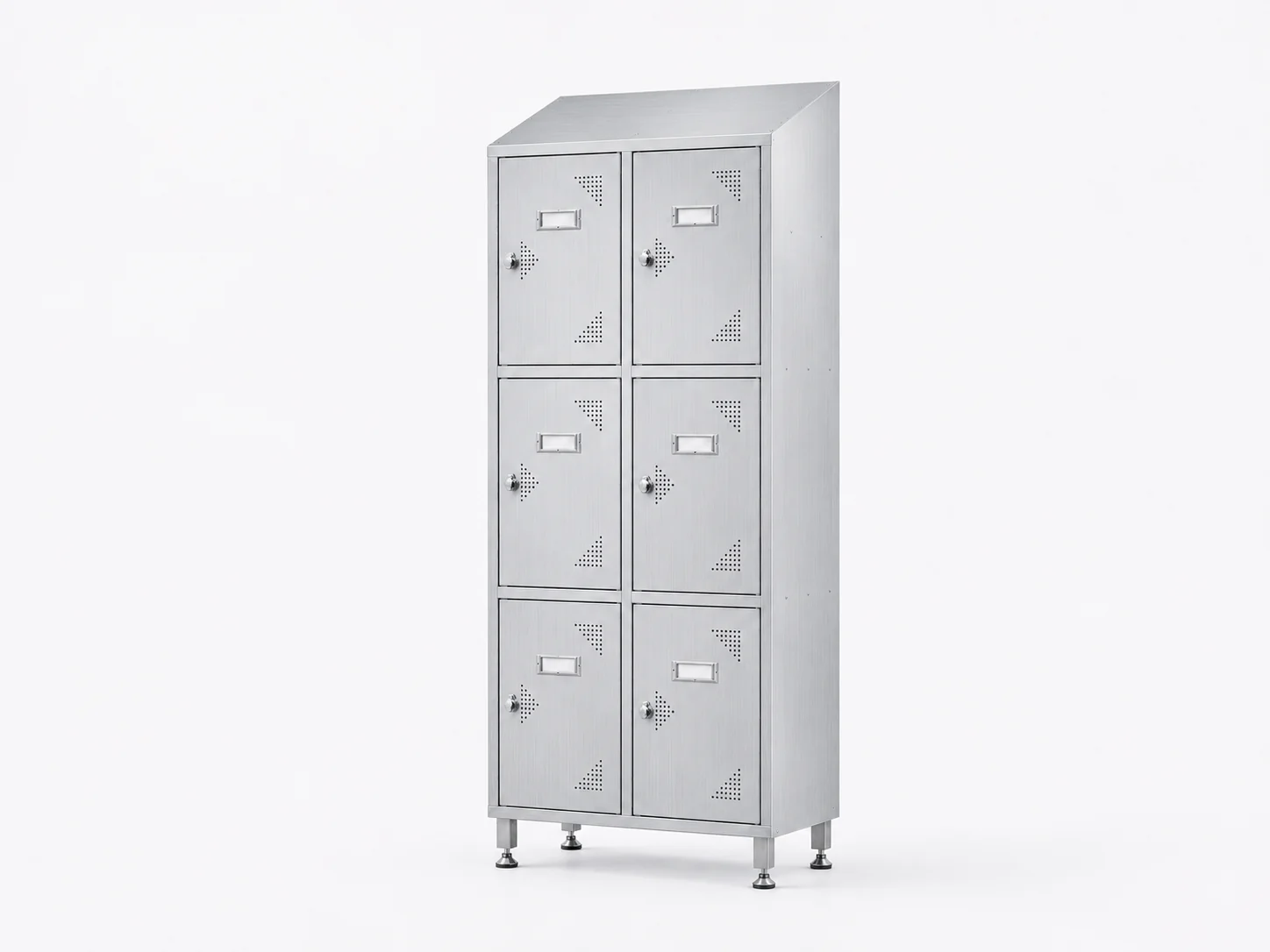
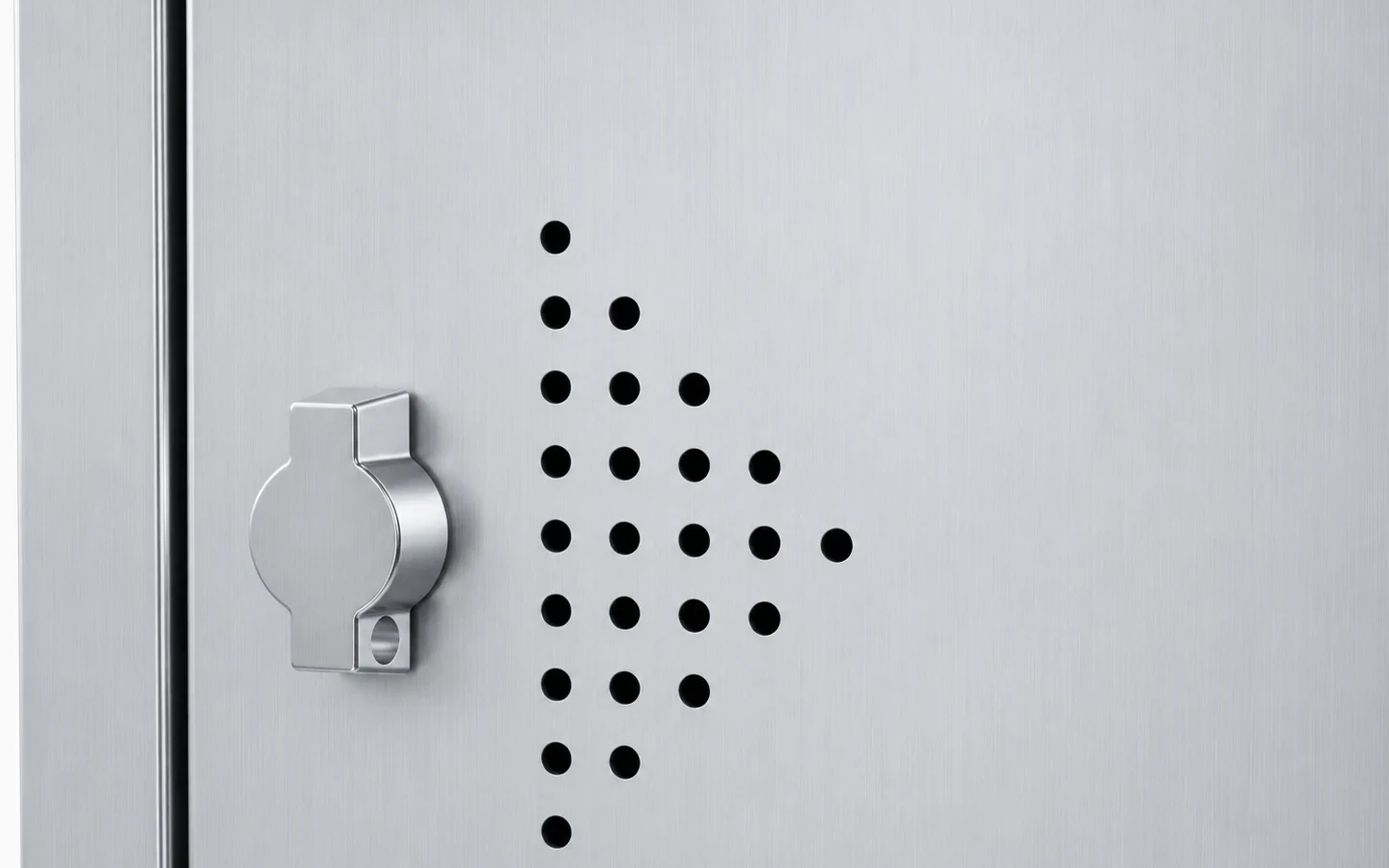
Material alone is not enough. On a locker in a hygiene zone, a sloping top (nothing and no dust collects on top), a raised body on legs (the floor beneath can be washed and the unit levelled on an uneven floor) and ventilated doors (less damp and odour in the closed compartment) matter as much as the material. Every Umran stainless steel locker is built with all three.
Initial cost or service life?
A stainless steel locker usually has the highest initial cost of the four options, and powder-coated steel usually the lowest. In a wet hygiene zone, however, the comparison should not rest on purchase price alone: a locker with a damaged, rusting coating raises questions in an audit and may need replacing early. We explain what determines the life of stainless equipment in our stainless steel hygiene equipment lifespan article. For locker count and type, see our changing room locker planning guide.
Conclusion: choose for the room’s conditions
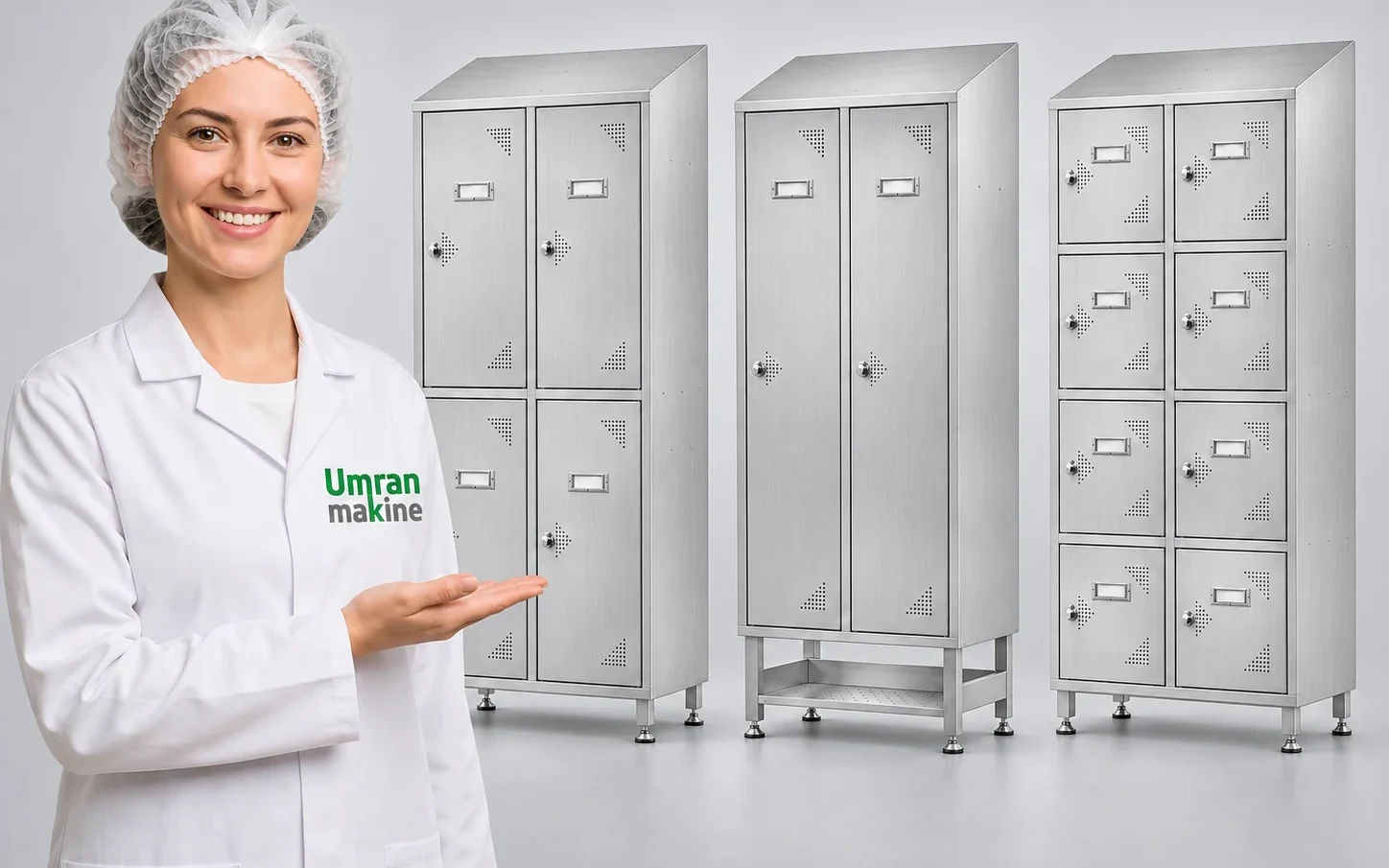
In a wet, frequently washed changing room subject to hygiene audits, the right answer is a stainless steel locker: its corrosion resistance does not depend on a coating, the surface is non-combustible, and it withstands humidity and frequent wiping. In dry rooms powder-coated steel, and in pools and sports facilities HPL or plastic, are reasonable options. Umran’s 2-tier, single-tier and shoe locker models are AISI 304 stainless steel throughout, from body and doors to frame. Share your changing-room conditions and headcount, and we will settle the right layout together.
Frequently asked questions
Do lockers in a food plant have to be stainless steel?
No. Standards such as BRCGS Food Safety, IFS Food and ISO 22002-1:2025 ask for adequate, separate and cleanable storage in the changing area; they do not prescribe a locker material. Stainless steel is one dependable way of meeting the requirement in wet, frequently washed changing rooms. Suitability is decided by the site’s risk assessment and the auditor.
Why do powder-coated steel lockers rust?
On a powder-coated locker only the coating protects the steel. When the coating is damaged at a scratch, a knock, a cut edge or a screw point, the steel meets moisture and rust can start there, especially in frequently washed rooms. In dry rooms the risk is low.
Can HPL lockers be used in humid areas?
Yes. HPL resists moisture and has a non-porous surface, and it is common in pool and sports changing rooms. It takes impacts less well than steel, is organic-based and has a fire class that depends on the product. The material of the hinges and fixings should be checked separately.
Stainless steel lockers: 304 or 316?
AISI 304 is sufficient for a changing room. The molybdenum in 316 matters in environments with continuous chloride exposure, such as brine or seafood lines. In a changing room it is enough not to leave chlorine-based cleaners on the surface and to rinse them off well.
How are stainless steel lockers cleaned?
Wipe the surfaces with a neutral detergent solution and a soft cloth, rinse with clean water and dry. Do not leave chlorine-based cleaners on the surface, and do not use steel wool or carbon-steel brushes. On doors with an electronic lock, do not direct water at the lock.
Why do stainless steel lockers cost more than powder-coated ones?
Stainless steel costs more than carbon steel sheet because of the chromium and nickel in the alloy, and it takes more care to work. That is why the initial cost is usually higher. In return, its corrosion resistance does not depend on a coating, so in a wet hygiene zone the locker’s life is not limited by the life of its paint.