Stainless Steel Locker and Shoe Locker Families
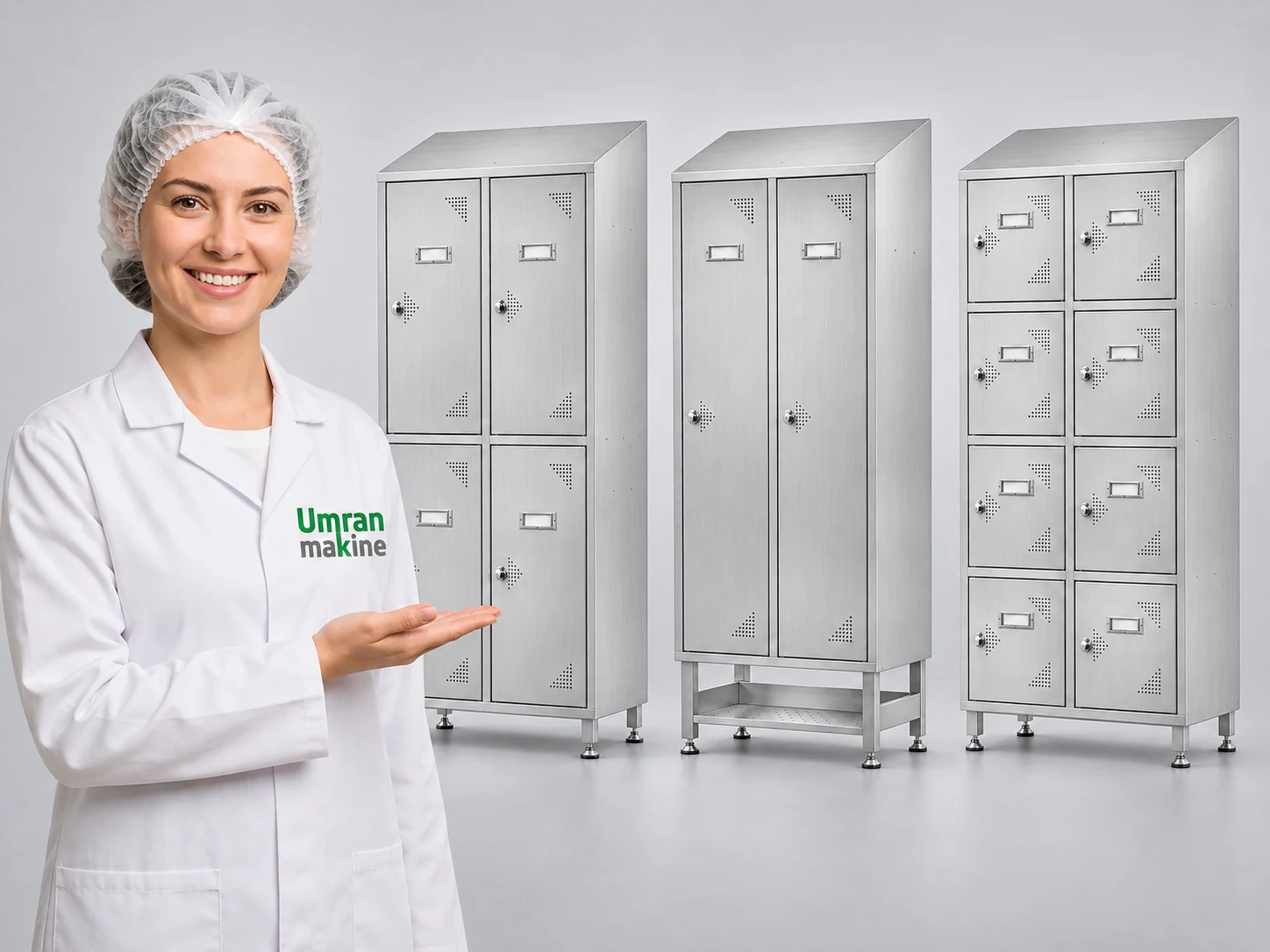
6 families, 24 models — each family is built in four widths and priced for your project.
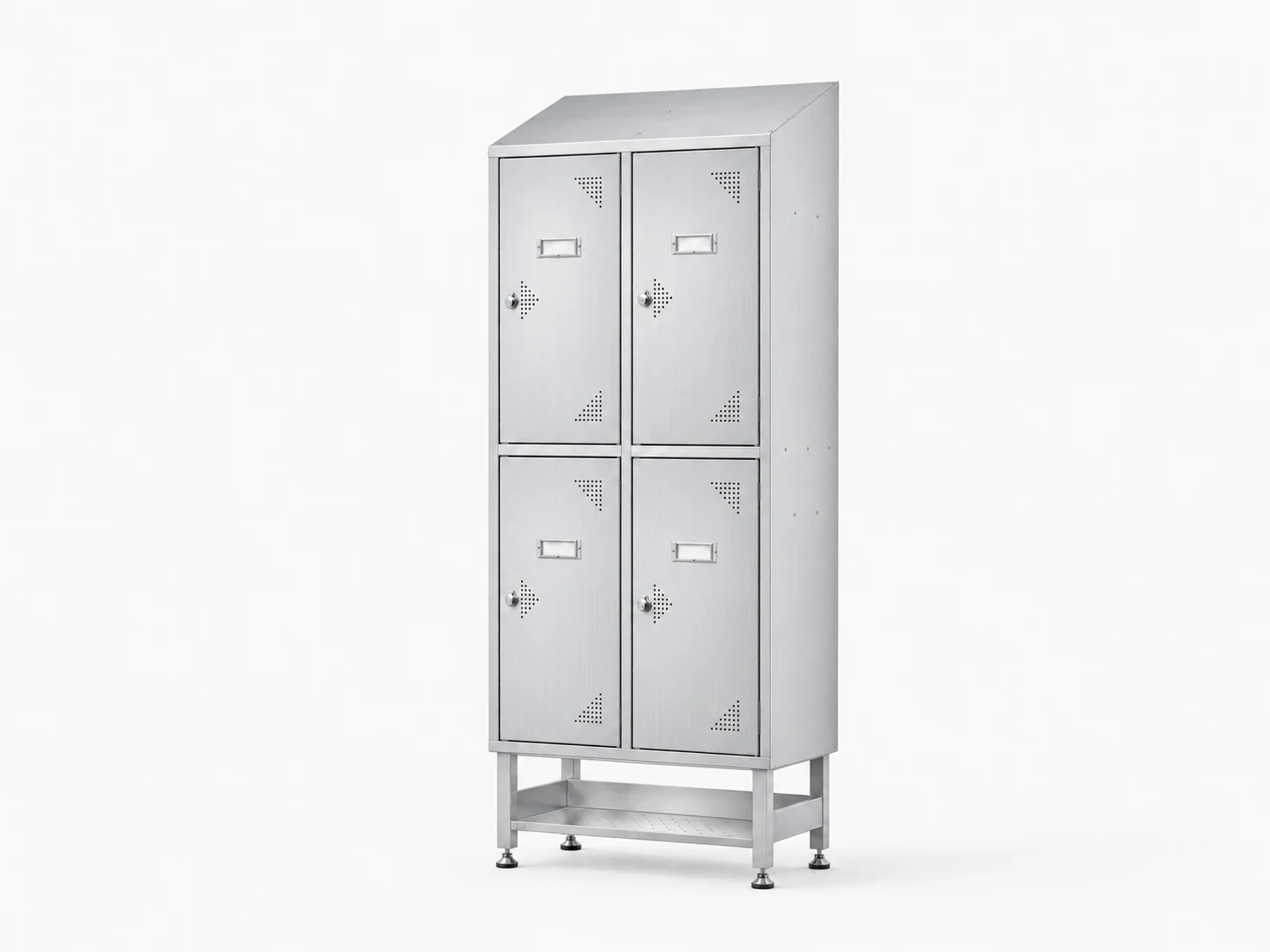
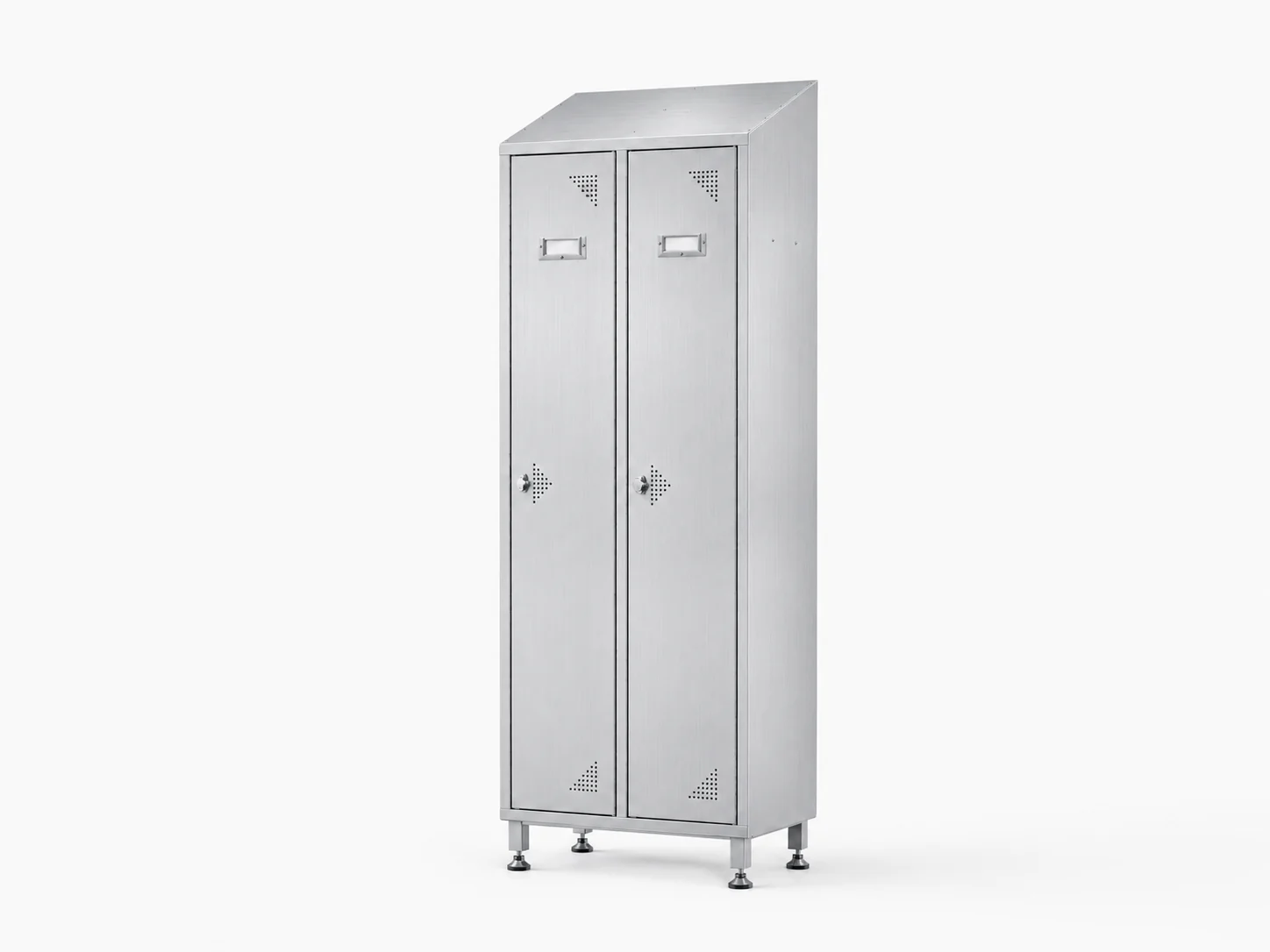
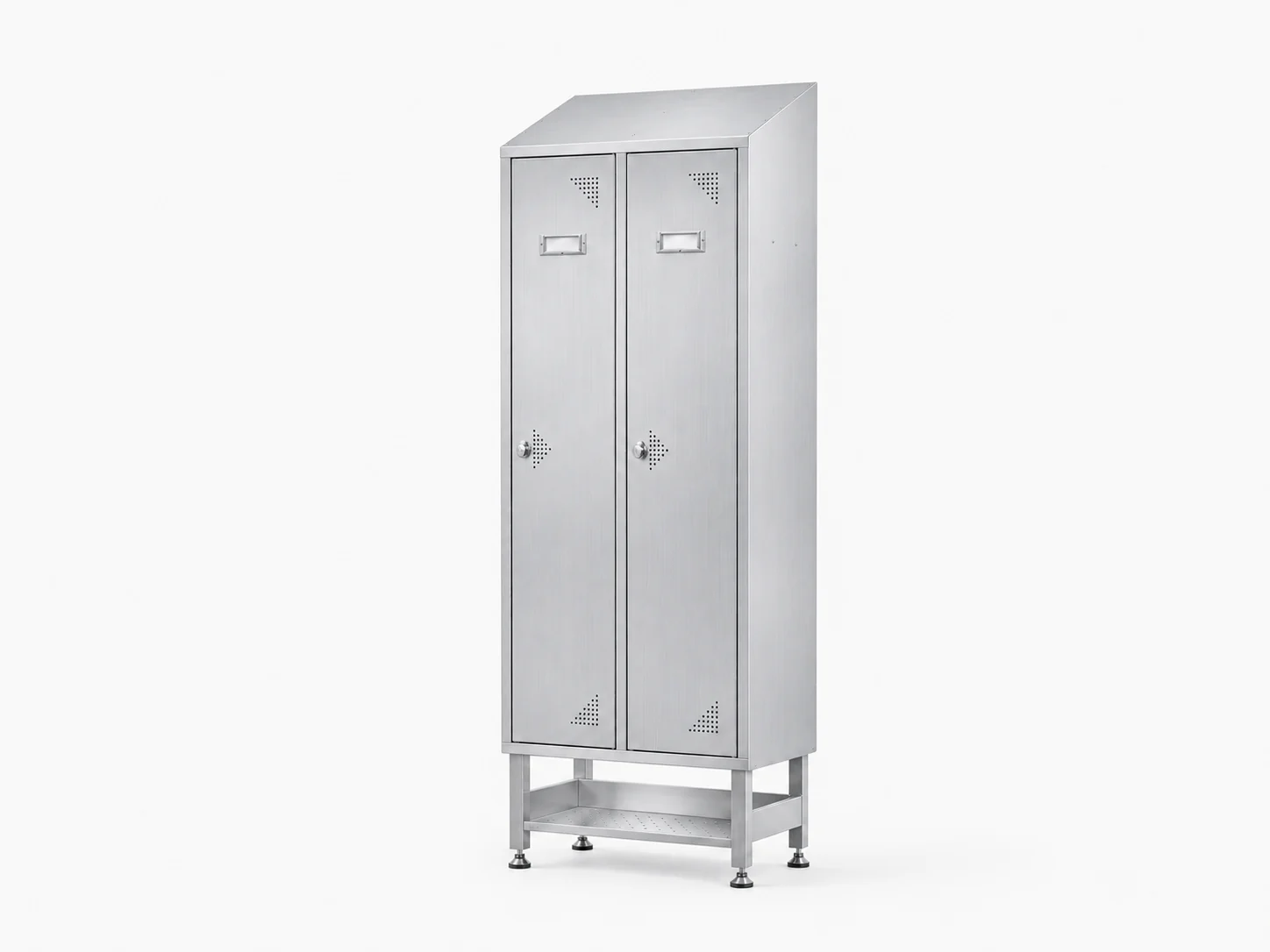
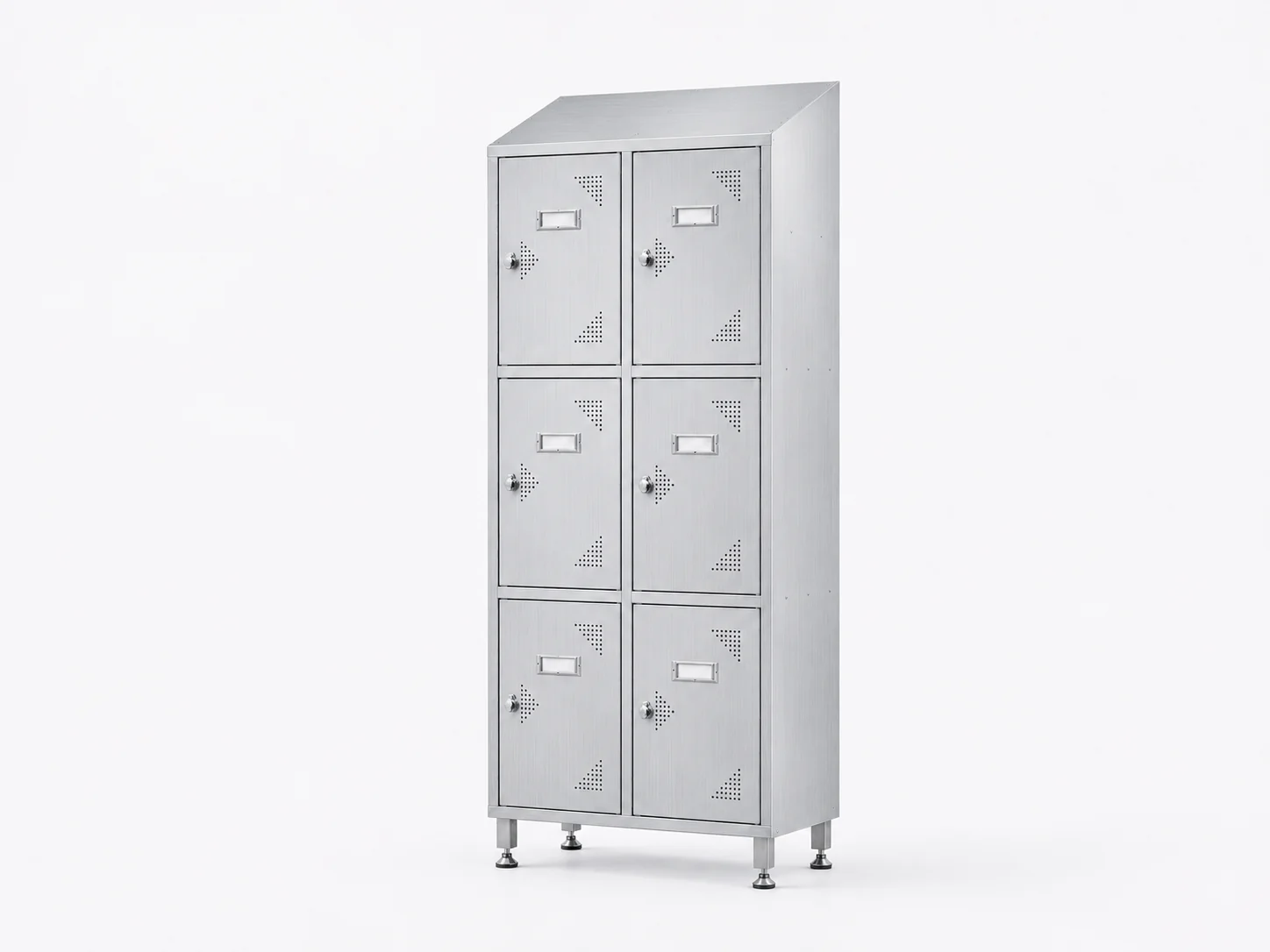
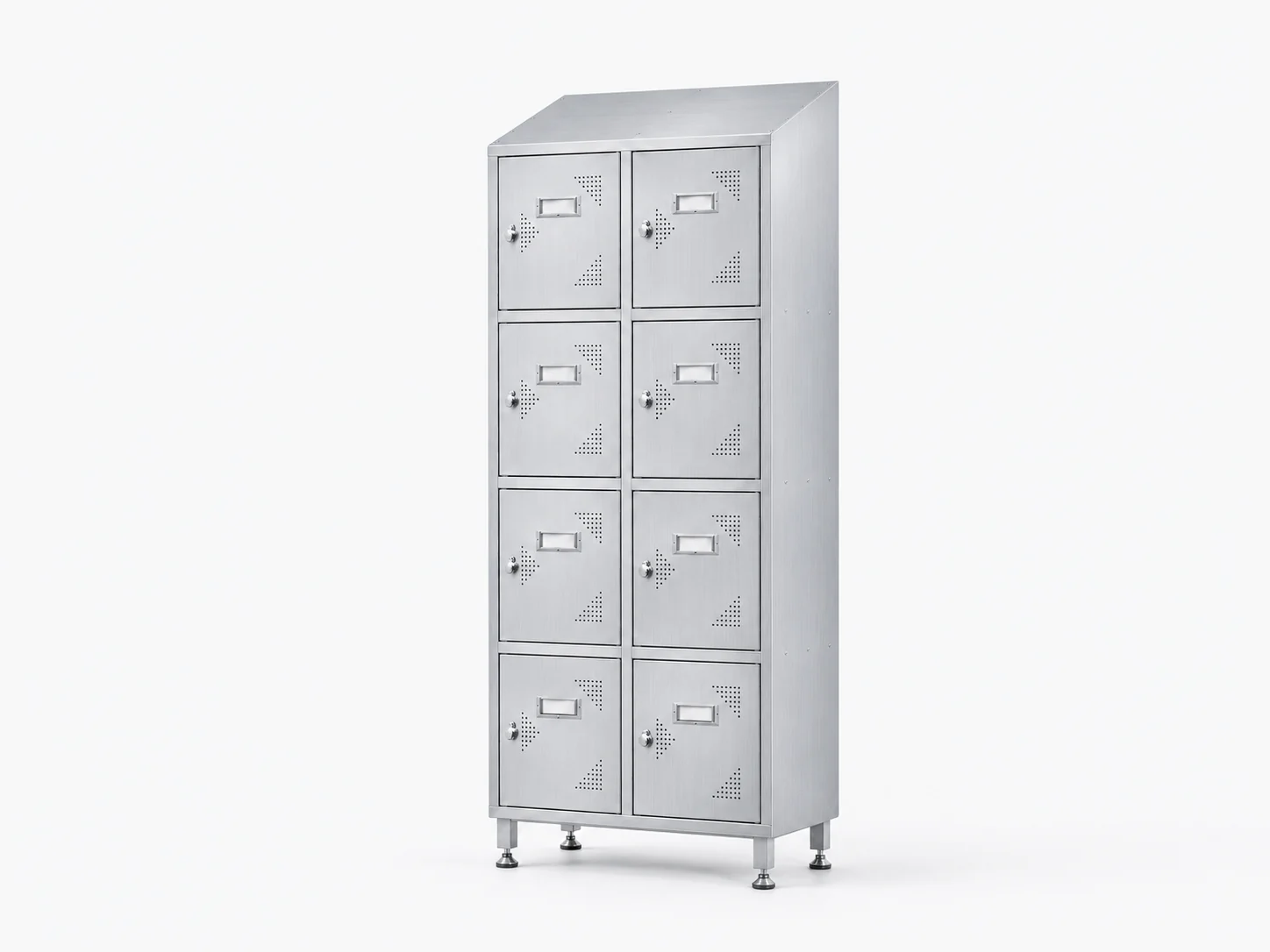
Size table of all 24 models
Every model is 420 mm deep, 1870 mm high at the front and 2040 mm at the rear. Each door or compartment is assigned to one person.
| Model code | Product family | Doors / compartments = persons | Overall W × D × H (mm) |
|---|---|---|---|
| SD2x1 | 2-Tier Stainless Steel Locker | 2 | 417 × 420 × 2040 |
| SD2x2 | 2-Tier Stainless Steel Locker | 4 | 804 × 420 × 2040 |
| SD2x3 | 2-Tier Stainless Steel Locker | 6 | 1191 × 420 × 2040 |
| SD2x4 | 2-Tier Stainless Steel Locker | 8 | 1578 × 420 × 2040 |
| SD2x1-A | 2-Tier Stainless Steel Locker with Shoe Shelf | 2 | 417 × 420 × 2040 |
| SD2x2-A | 2-Tier Stainless Steel Locker with Shoe Shelf | 4 | 804 × 420 × 2040 |
| SD2x3-A | 2-Tier Stainless Steel Locker with Shoe Shelf | 6 | 1191 × 420 × 2040 |
| SD2x4-A | 2-Tier Stainless Steel Locker with Shoe Shelf | 8 | 1578 × 420 × 2040 |
| SD1x1 | Single-Tier Stainless Steel Locker | 1 | 367 × 420 × 2040 |
| SD1x2 | Single-Tier Stainless Steel Locker | 2 | 704 × 420 × 2040 |
| SD1x3 | Single-Tier Stainless Steel Locker | 3 | 1041 × 420 × 2040 |
| SD1x4 | Single-Tier Stainless Steel Locker | 4 | 1378 × 420 × 2040 |
| SD1x1-A | Single-Tier Stainless Steel Locker with Shoe Shelf | 1 | 367 × 420 × 2040 |
| SD1x2-A | Single-Tier Stainless Steel Locker with Shoe Shelf | 2 | 704 × 420 × 2040 |
| SD1x3-A | Single-Tier Stainless Steel Locker with Shoe Shelf | 3 | 1041 × 420 × 2040 |
| SD1x4-A | Single-Tier Stainless Steel Locker with Shoe Shelf | 4 | 1378 × 420 × 2040 |
| AD3x1 | 3-Tier Stainless Steel Shoe Locker | 3 | 417 × 420 × 2040 |
| AD3x2 | 3-Tier Stainless Steel Shoe Locker | 6 | 804 × 420 × 2040 |
| AD3x3 | 3-Tier Stainless Steel Shoe Locker | 9 | 1191 × 420 × 2040 |
| AD3x4 | 3-Tier Stainless Steel Shoe Locker | 12 | 1578 × 420 × 2040 |
| AD4x1 | 4-Tier Stainless Steel Shoe Locker | 4 | 417 × 420 × 2040 |
| AD4x2 | 4-Tier Stainless Steel Shoe Locker | 8 | 804 × 420 × 2040 |
| AD4x3 | 4-Tier Stainless Steel Shoe Locker | 12 | 1191 × 420 × 2040 |
| AD4x4 | 4-Tier Stainless Steel Shoe Locker | 16 | 1578 × 420 × 2040 |
Each door or compartment is assigned to one person. Dimensions in millimetres; the height is taken at the rear edge of the sloping top. The lock type ends the model code (-K1 standard spring-latch lock, -K2 electronic keypad, -K3 keyed).
Where are stainless steel lockers used?
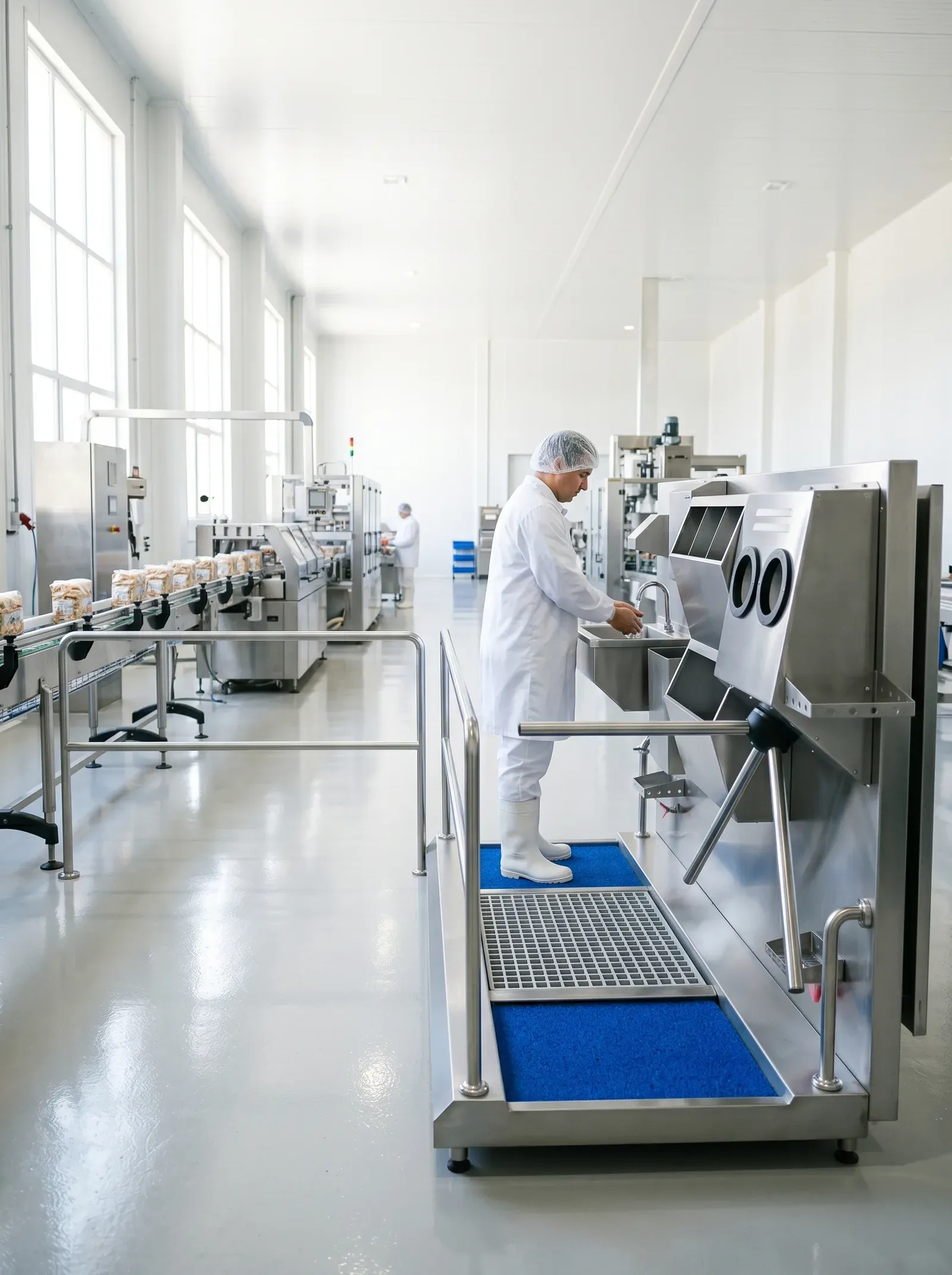
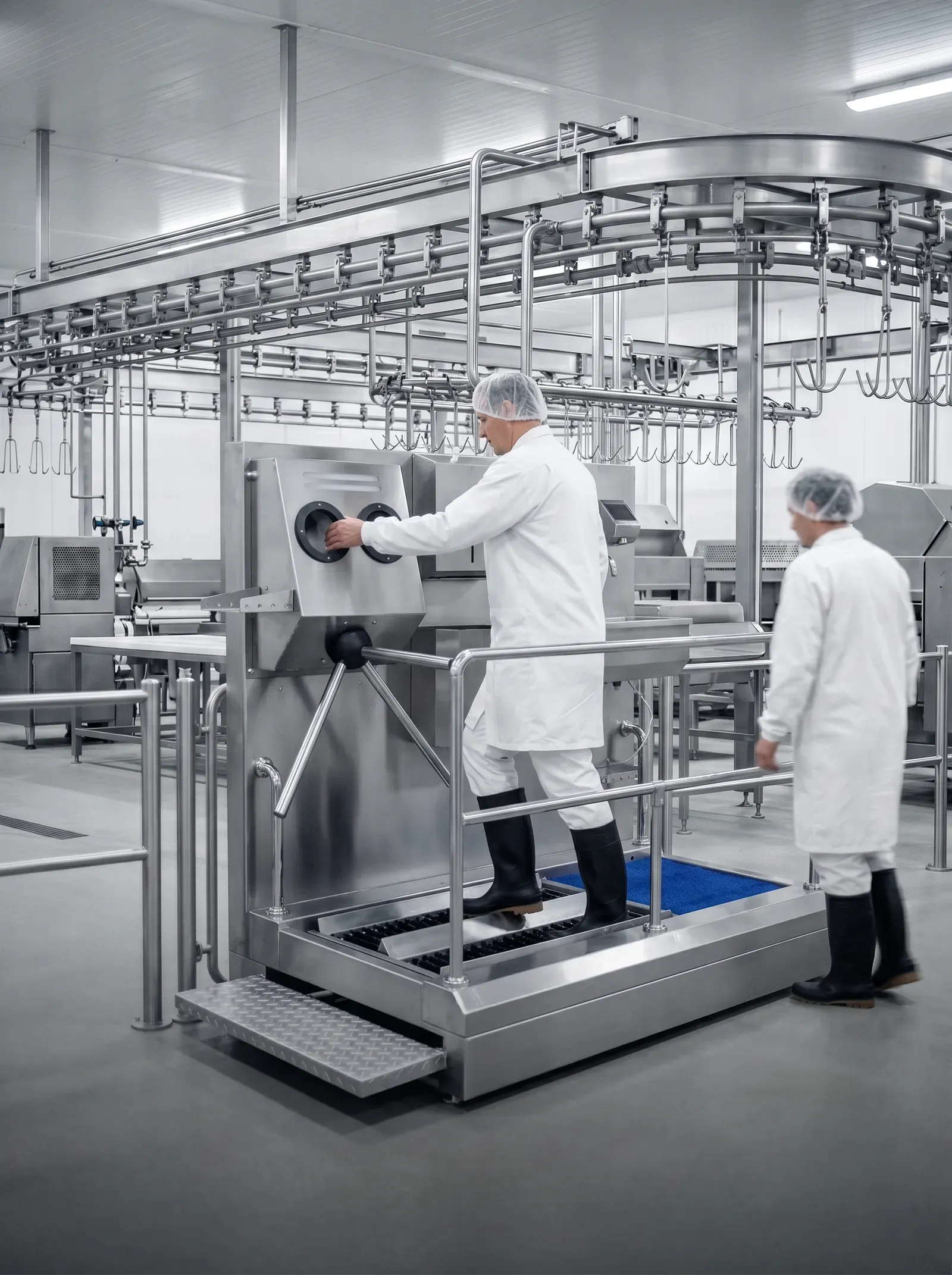
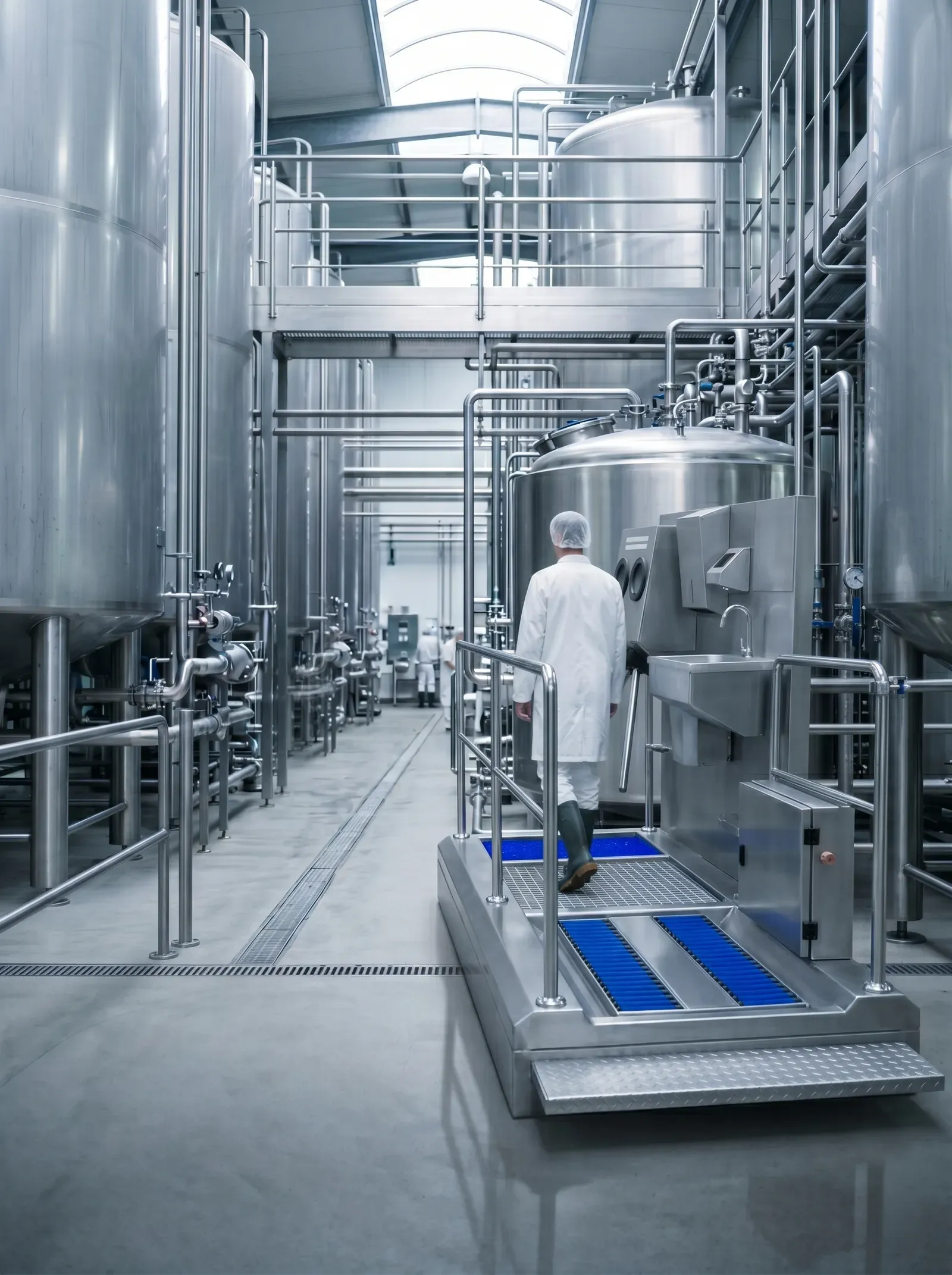
In food, meat and dairy processing, pharmaceutical and cosmetics production and industrial kitchens, the changing room is the first control point before the production area. These rooms are humid and washed often, and the floor beneath the lockers, their tops and their surroundings are all part of the cleaning plan. Stainless steel staff lockers are specified for these conditions: they have no painted or galvanised panels, and the surface does not depend on a coating.
Three details that define the hygienic design
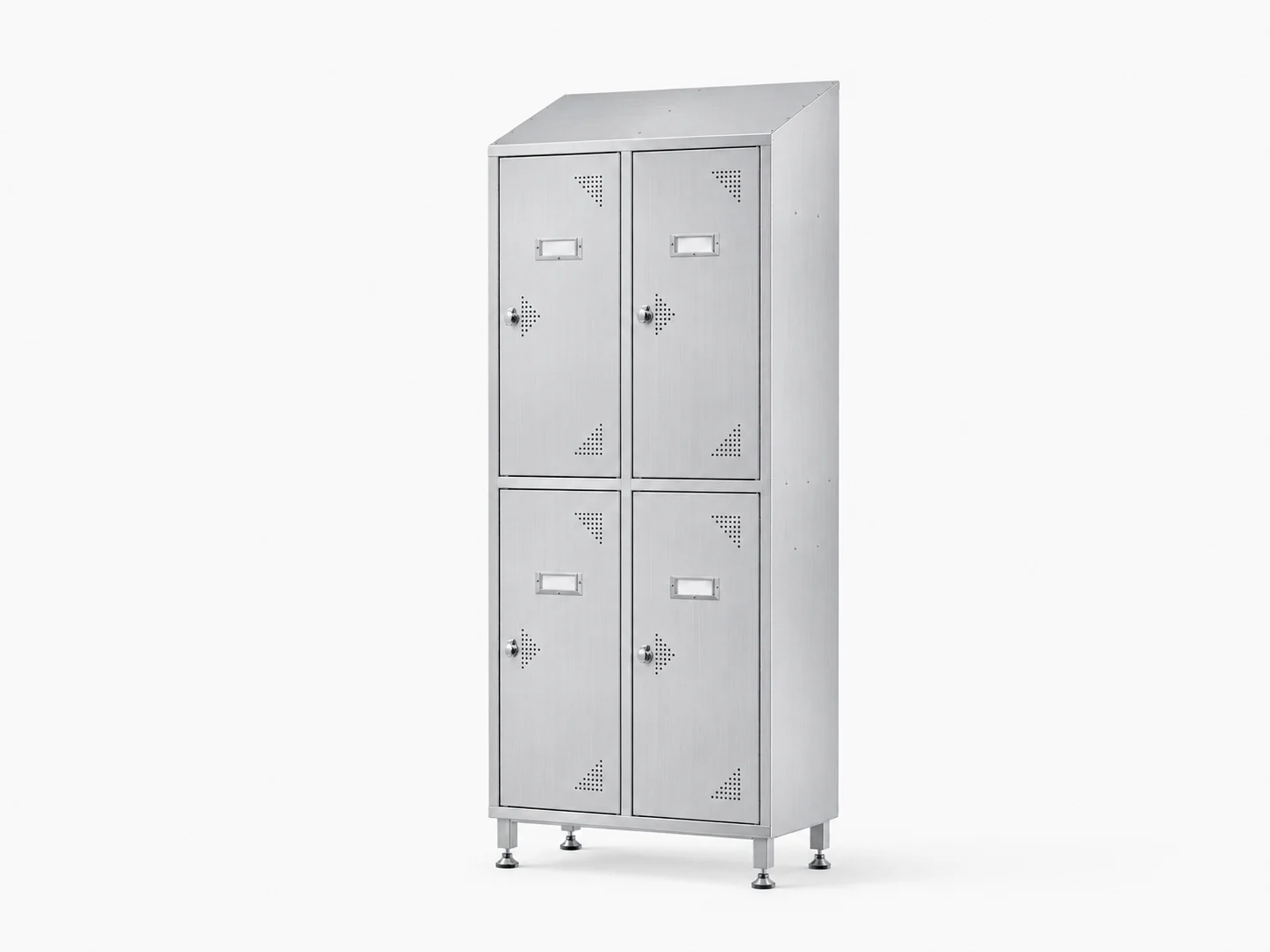
- Sloping top: it stops items being left on the locker and reduces dust build-up, so one of the first surfaces an auditor checks stays easy to keep clean.
- Raised on legs: the frame stands on adjustable feet, so the floor beneath can be washed and the unit levelled on uneven floors.
- Ventilated doors: the ventilation pattern keeps air moving in the closed compartment, reducing damp and odours. Every door also carries a name holder.
Product families
- SD2 — 2-tier (double-tier) locker: two stacked compartments per column; 2, 4, 6 or 8 doors.
- SD2A — 2-tier locker with shoe shelf: the same locker with an open shoe shelf under the body.
- SD1 — single-tier (full-height) locker for long garments; 1 to 4 doors, one to four wide.
- SD1A — single-tier locker with shoe shelf: the full-height locker with an open shoe shelf under the body.
- AD3 — 3-tier shoe locker: 3, 6, 9 or 12 compartments; taller compartments for boots and work shoes.
- AD4 — 4-tier shoe locker: 4, 8, 12 or 16 compartments; the most shoe compartments per wall.
One body, one dimension system
All 24 models are 420 mm deep and 2040 mm high, so clothing lockers and shoe lockers line up in one row. Width follows the number of columns: 2-tier lockers and shoe lockers are 417, 804, 1191 and 1578 mm wide; single-tier lockers are 367, 704, 1041 and 1378 mm. The body, doors, shelves and frame are all AISI 304 stainless steel.
Lock options
The standard lock is a spring-latch lock with a padlock eye; it catches when the door closes and takes a padlock. An electronic keypad lock or a keyed cam lock is available as an option. The lock type is fixed at order time, because the door cut-out is made for the selected lock.
Direct from the manufacturer, built to the project
The lockers are designed and manufactured in Umran Makine’s own workshop in Pendik, İstanbul. Beyond the standard sizes, width, number of columns and interior layout can be adapted to the project; a changing-room plan and the number of staff who need a locker are enough for a quotation.
2-tier, single-tier, shoe-shelf or shoe locker: which one?
Garment length, wall length and where footwear is kept decide the choice. All four share the same depth and height, so they can be combined in one row.
| Locker type | When to choose it | Key figures |
|---|---|---|
| 2-tier locker (SD2) | When the most people have to be served along a limited wall length. | 4 doors in 804 mm; a shelf and hanger rail in every compartment. |
| Single-tier locker (SD1) | When long coats, overalls or jackets should hang at full length. | 2 doors in 704 mm; full-length hanging space with a shelf above. |
| Locker with shoe shelf (SD2A, SD1A) SD1A | When shoes or boots should stay out of the clothing compartment, on an open shelf below the locker. | An open, perforated shoe shelf under the body; overall dimensions stay the same. |
| Shoe locker (AD3, AD4) AD4 | When each person needs a small lockable compartment for shoes, boots or personal items. | Taller compartments on 3-tier, more compartments on 4-tier units; 3–16 compartments per unit. |
Stainless steel, powder-coated steel, HPL or plastic lockers: material comparison
The table summarises general material properties; it is not a comparison of brands or products. The right material depends on how humid the changing area is, how it is cleaned and the budget.
| Criterion | AISI 304 stainless steel | Powder-coated steel | HPL / compact laminate | Plastic |
|---|---|---|---|---|
| Moisture and corrosion | The material itself resists rust; no protective coating is needed. | Protected while the coating is intact; rust can start at scratches, edges and screw points. | Moisture-resistant with a non-porous surface. | Does not rust; moisture-resistant. |
| Impact and forced entry | Steel body. | Steel body; an impact can damage the coating. | Less impact-resistant than steel. | Weaker than steel against forced entry. |
| Fire behaviour | Non-combustible material. | The body is non-combustible; the coating is organic. | Organic-based; the fire class depends on the product. | Combustible. |
| Initial cost | Usually the highest of the four. | Usually the lowest. | Usually lower than stainless steel. | Usually lower than stainless steel. |
| Typical use | Wet, frequently washed changing areas subject to hygiene audits. | Dry changing rooms, offices and workshops. | Humid areas; sports and pool changing rooms. | Wet areas and outdoor use. |
Related sectors

Common questions about stainless steel lockers for hygienic changing rooms
What are the stainless steel lockers made of?
The body, doors, shelves, hanger rail and frame are AISI 304 stainless steel; no painted or galvanised panels are used. AISI 304 resists corrosion in damp, frequently washed changing rooms. Material details, including sheet gauges, are in the customer technical file supplied with the quotation.
What is the difference between stainless steel and powder-coated steel lockers?
On a powder-coated locker the coating protects the steel; if it is damaged at a scratch, edge or screw point, rust can start in a humid room. On a stainless steel locker the corrosion resistance comes from the material itself, not from a coating. In return, stainless steel usually costs more up front, and a coated locker can be sufficient in a dry changing room.
Why do hygienic lockers have a sloping top?
A flat locker top becomes a surface where items and dust collect and cleaning gets skipped. A sloping (sloped) top stops items being left there, reduces dust build-up and is easier to wipe. Every Umran locker has a sloping top.
Why are the lockers raised on legs, and how high off the floor are they?
A raised body lets the floor beneath be cleaned and the unit be levelled on an uneven floor. On shoe-shelf models the body is raised further and an open shoe shelf sits beneath it, with room to clean under the shelf too.
What are the dimensions of the lockers?
Every model is 420 mm deep, 1870 mm high at the front and 2040 mm at the rear. 2-tier lockers and shoe lockers are 417, 804, 1191 and 1578 mm wide; single-tier lockers are 367, 704, 1041 and 1378 mm wide. The table on this page lists the door or compartment count (persons) and the overall size of all 24 models.
How many people does one locker unit serve?
Each door is assigned to one person: a 4-door unit serves four people. If the site procedure requires workwear and outdoor clothing to be stored separately, two compartments can be assigned per person, which halves the number of people served. The number of units is planned from the total number of staff who need a locker.
Should I choose a 2-tier or a single-tier locker?
Garment length and wall length decide. The 2-tier SD2 serves four people in 804 mm and suits short workwear. The single-tier SD1 needs 1378 mm for the same four people, but its full-height compartment lets long coats, overalls or jackets hang at full length.
What is a locker with a shoe shelf, and when is it used?
On a shoe-shelf model the locker body is raised and an open, perforated shoe shelf is fitted beneath it. Footwear stays out of the clothing compartment, airs in the open and is kept off the floor. The overall dimensions do not change. Where footwear has to be locked away, a shoe locker (AD3, AD4) is the choice.
Which lock options are available?
The standard lock is a spring-latch lock with a padlock eye; it catches when the door closes and takes a padlock. The options are an electronic keypad lock and a keyed cam lock. The lock type is fixed at order time, because the door cut-out is made for the selected lock.
Do BRCGS, IFS or ISO 22000 audits require stainless steel lockers?
No. Standards such as BRCGS Food Safety, IFS Food and ISO 22002-1 ask for adequate, separate and cleanable storage in the changing area and expect workwear to be kept apart from outdoor clothing. They do not prescribe a locker material, and there is no product-level approval for lockers. Stainless steel is one way of meeting the requirement in wet, frequently washed rooms. Suitability is decided by the site’s risk assessment and the auditor.
How are stainless steel lockers cleaned?
Wipe the surfaces with a neutral detergent solution and a soft cloth, rinse with clean water and dry. Do not leave chlorine-based cleaners on the surface, and do not use steel wool or carbon-steel brushes. On doors with an electronic lock, do not direct water at the lock.
What does the price of a stainless steel locker depend on?
The price depends on the model family (2-tier, single-tier, shoe-shelf or shoe locker), the number of columns and therefore doors or compartments, the lock type and the order quantity. The standard spring-latch lock is included in the model price; an electronic keypad or keyed lock adds a per-door surcharge. Delivery location, freight and custom sizes are also reflected in the quotation. Send a request list with the model codes and head count and we will price it for your site.
What do 2-tier, single-tier and 1- to 4-wide mean?
Tier counts the compartments stacked in one column: a 2-tier (double-tier) locker has two per column, a single-tier (full-height) locker has one. Columns are what UK suppliers call a nest of 1–4 and US suppliers call 1- to 4-wide; in UK catalogues a “4 door locker” usually means four doors stacked in one column. On our pages the door or compartment count is the total for the unit and equals the number of users: SD2x3 is 2-tier and 3 wide with 6 doors.
Can you make custom sizes?
Yes. Because the lockers are made in our own workshop, width, number of columns, compartment layout and lock type can be adapted to the project. Quantity and lead time are set at the quotation stage from the changing-room plan and headcount.