The hygiene scenario in meat & poultry
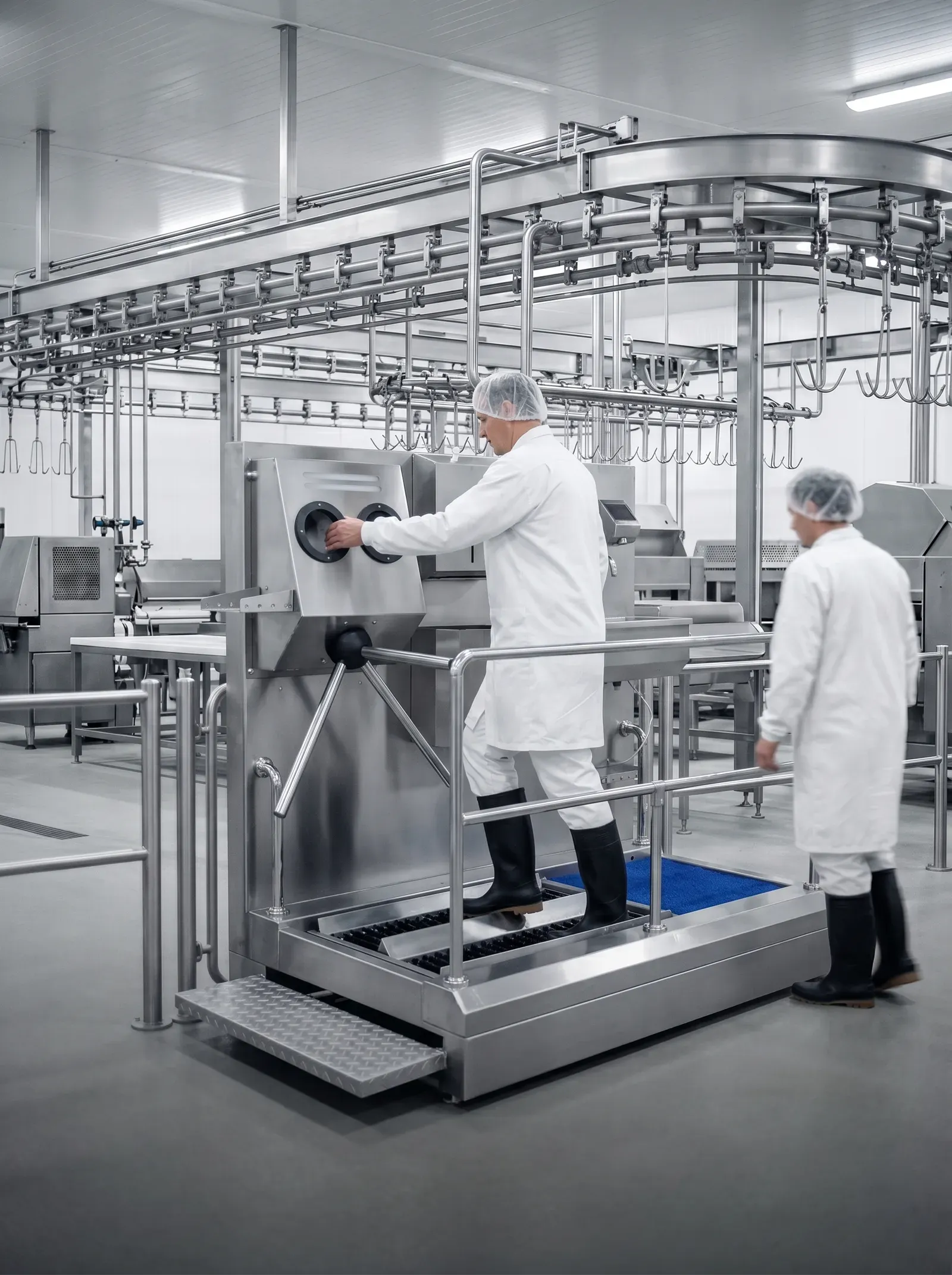
Blood, tissue and organic residue accumulate on floors and boots; in these areas hand hygiene alone is not enough — sole and boot washing are also required.
-
Pathogens such as Salmonella and Campylobacter pose high risk in poultry processing; the shoe sole is a significant carrier.
-
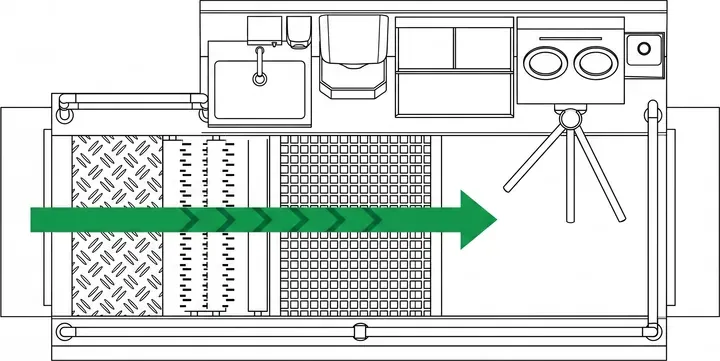
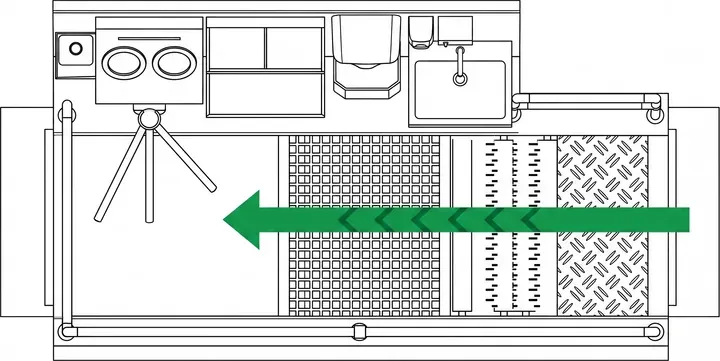
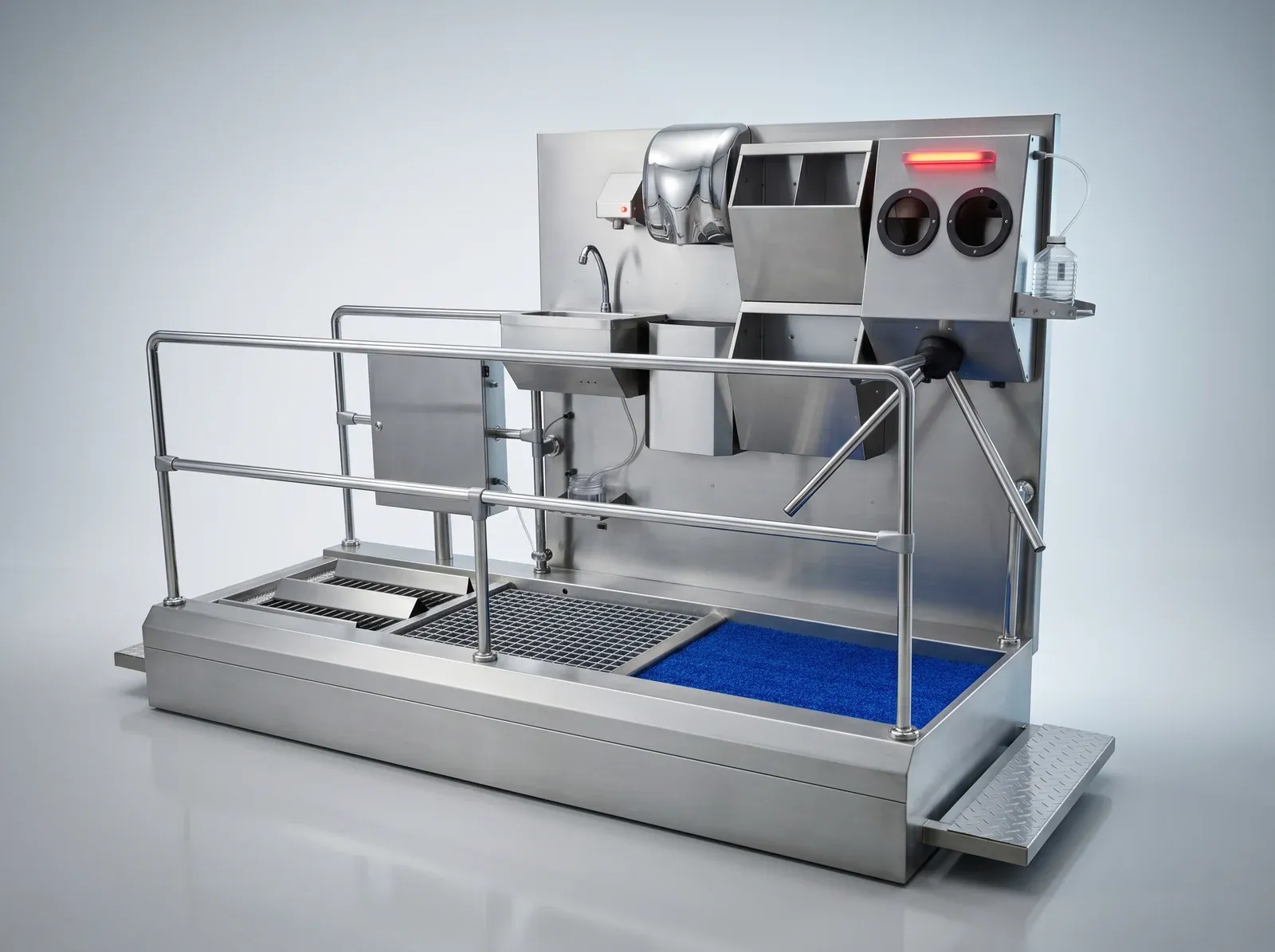
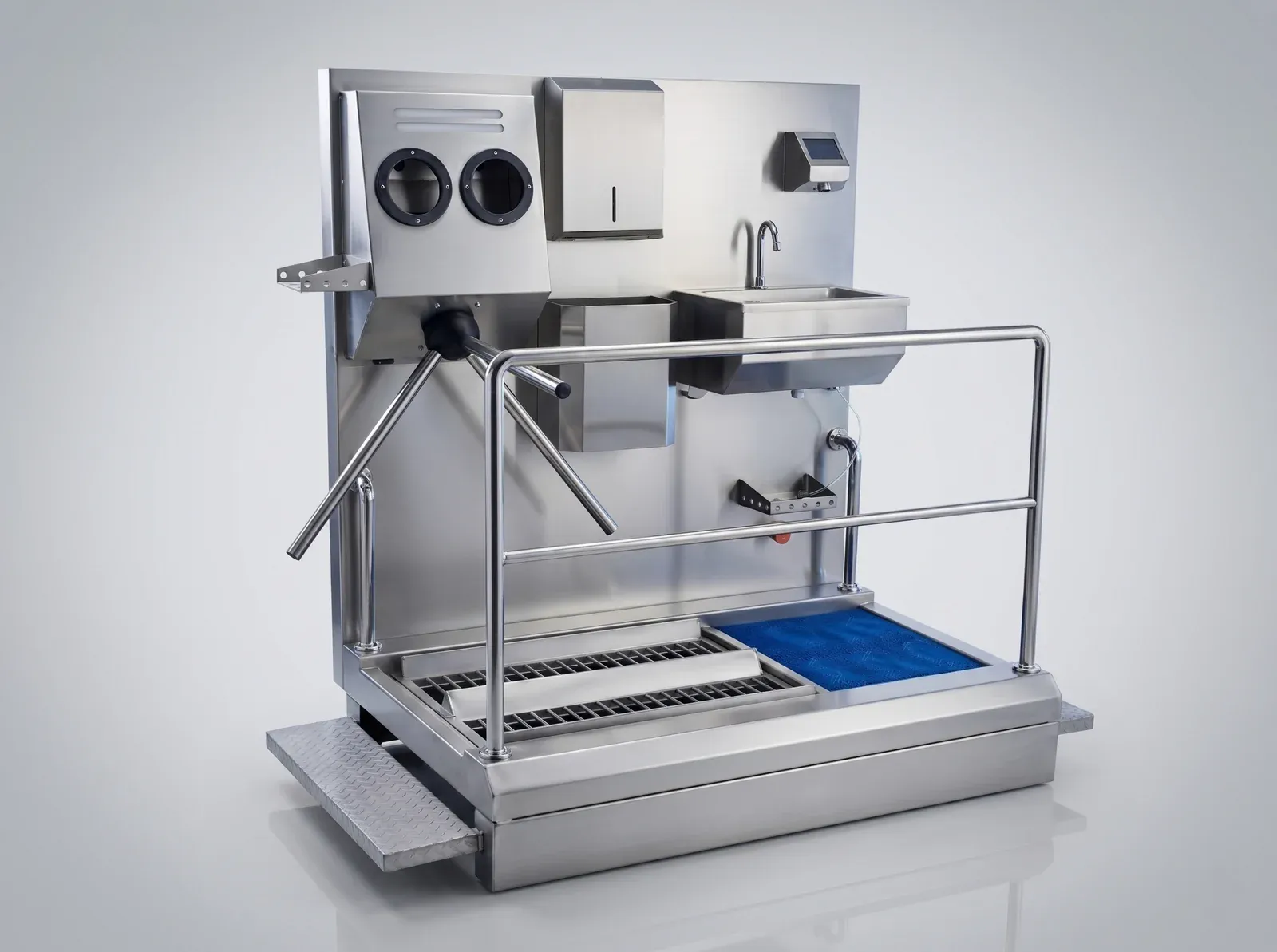
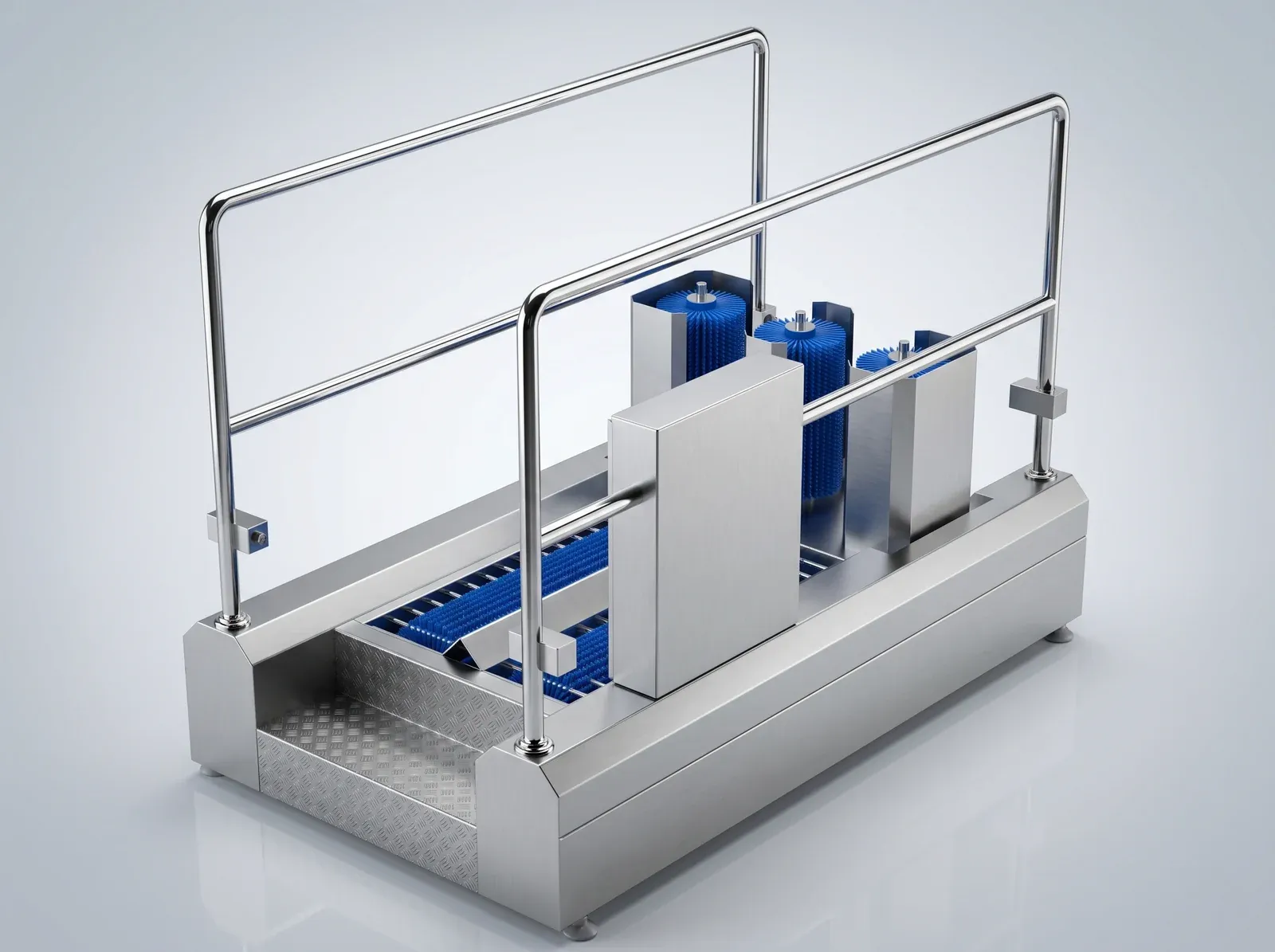
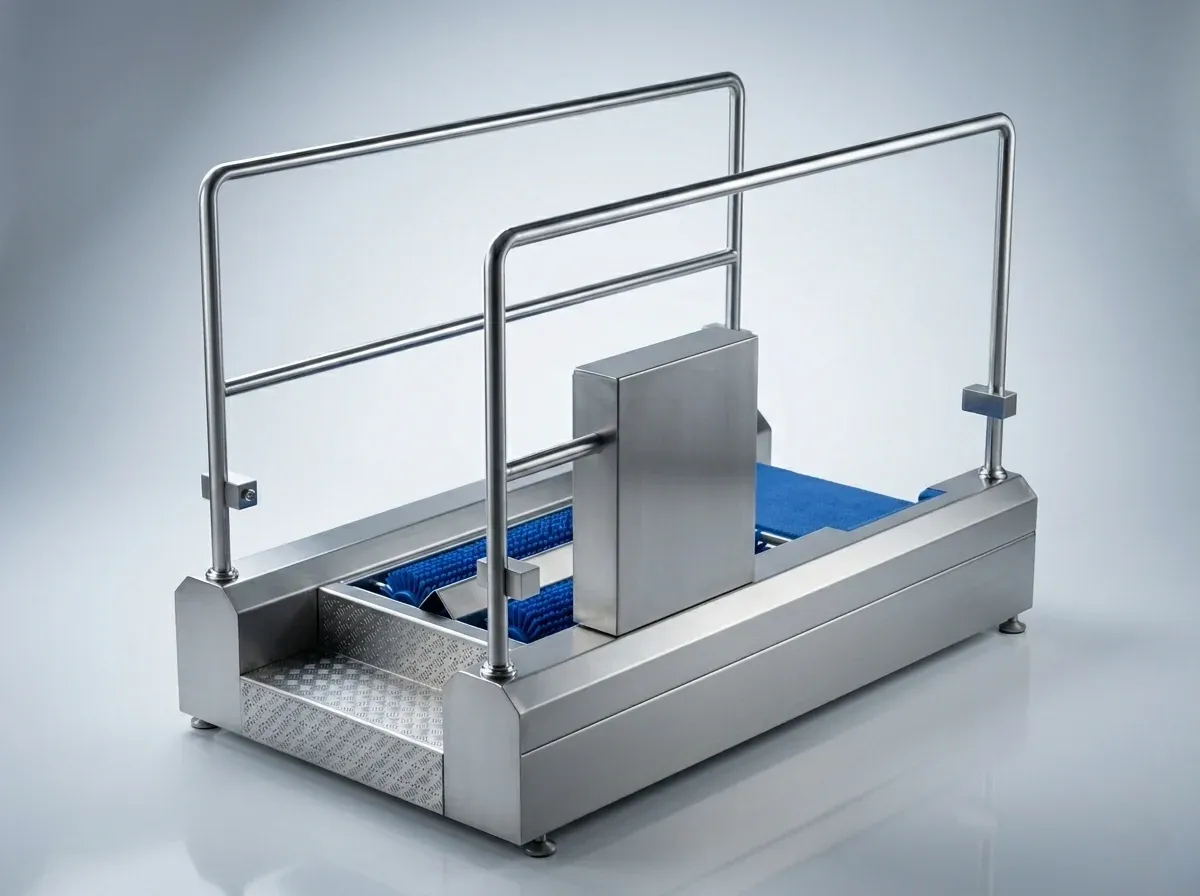
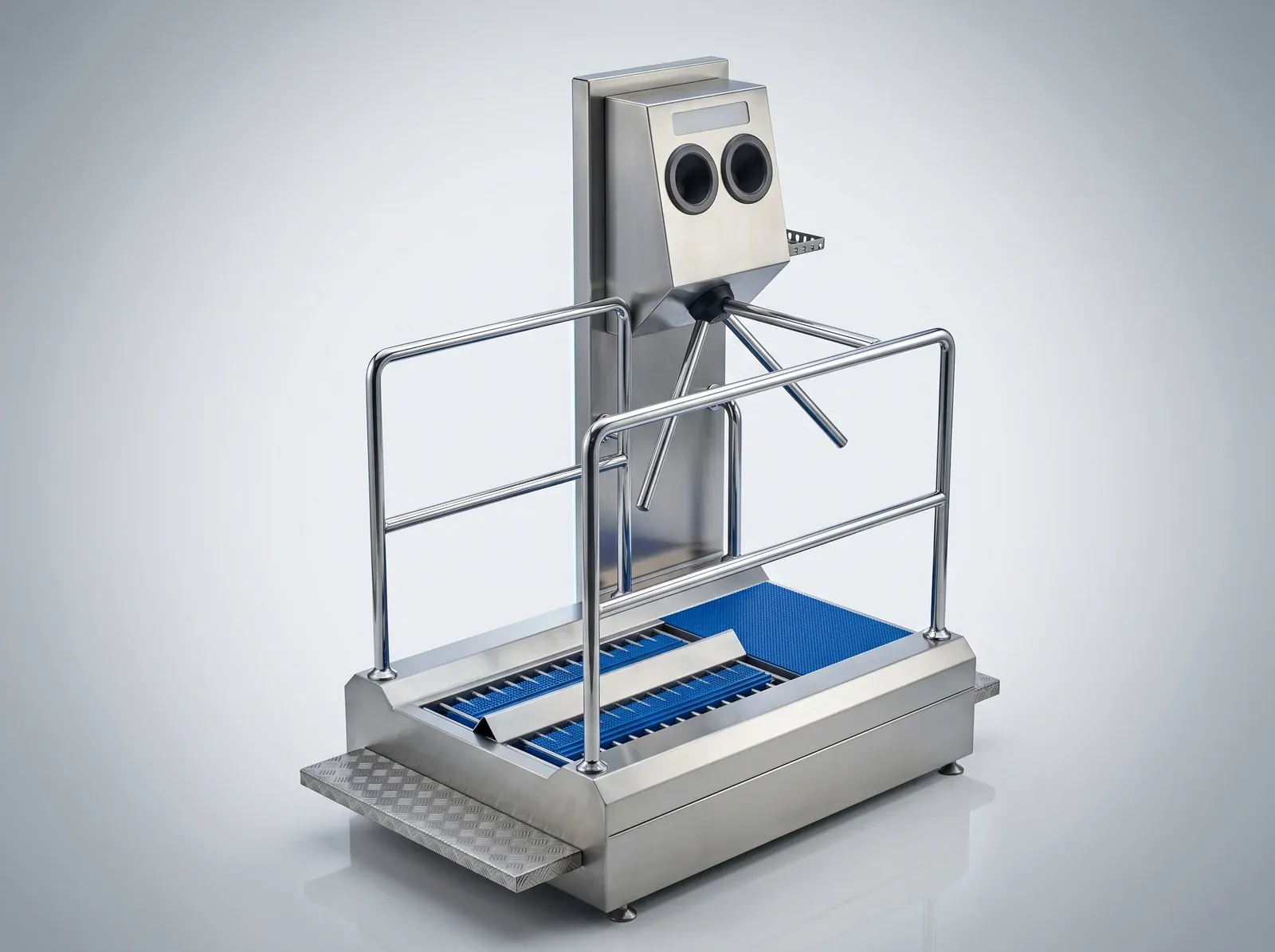
Barriers with motorized cylindrical brushes mechanically clean sole residue — disinfectant alone is not enough.
-
Fully automatic boot washers clean both side and sole surfaces with a water-detergent spray.
-
Under high humidity and organic load, the AISI 304 stainless body stays hygienic and durable.
Recommended units for this sector
Hygiene units frequently chosen for Meat & Poultry facilities.
Common questions in this sector
Brush barrier or a separate boot washer?
If sole cleaning is part of the crossing, a brush barrier solves it on one line. For boot side surfaces and heavier soiling, a separate fully automatic boot washer is added.
What throughput is needed in a meat plant?
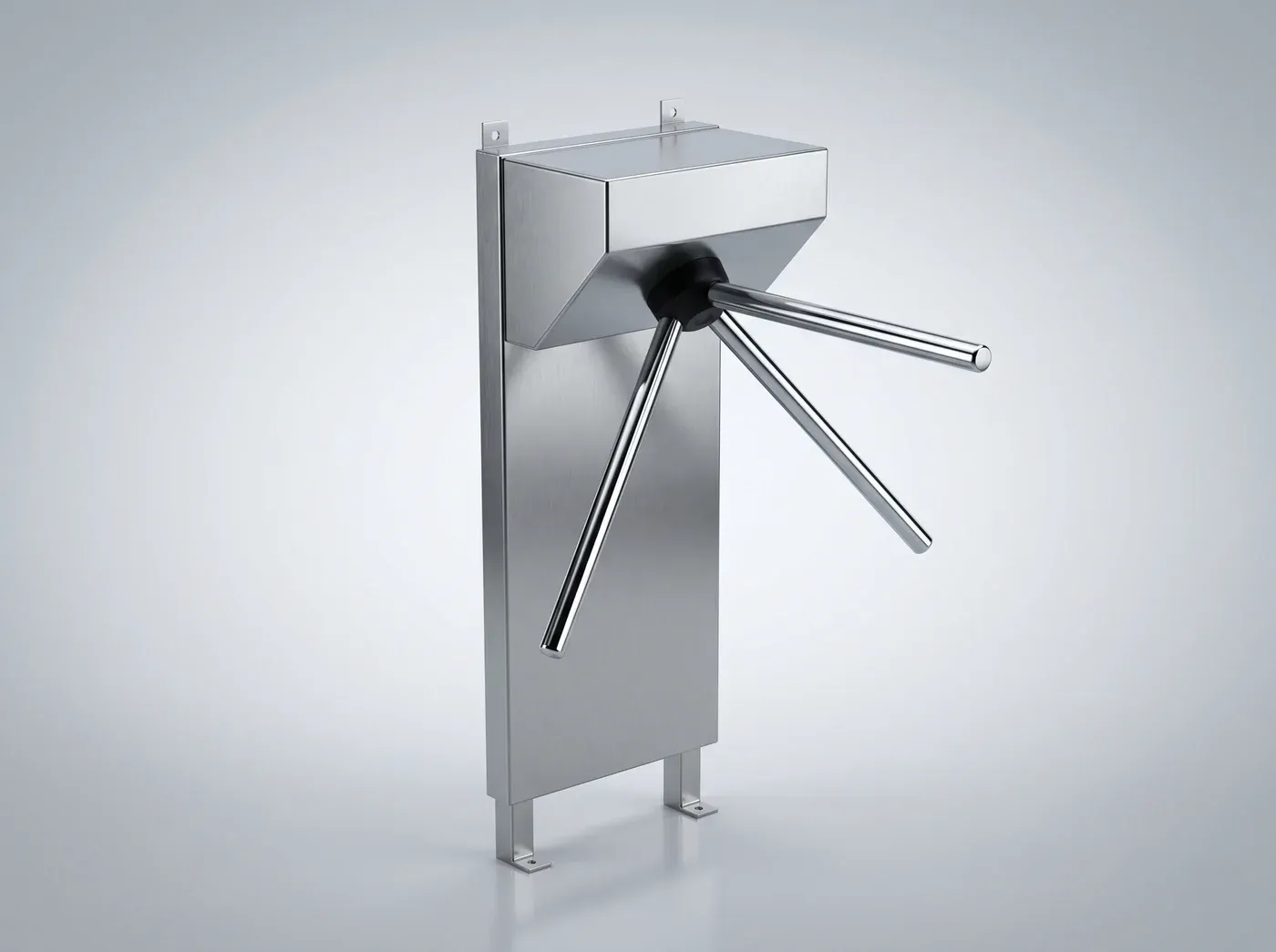
Staff must enter quickly at shift start; a single-lane turnstile mechanically passes ≈ 25–30 people per minute, but the real capacity including hand washing is lower. The exact figure is confirmed in the quote by configuration.
Why is sole cleaning so critical in poultry processing?
For pathogens such as Salmonella and Campylobacter the shoe sole is a significant carrier. Until organic residue on the sole is mechanically removed, a sanitizer cannot reach beneath it; this is why a motorized brush or boot washer is preferred.