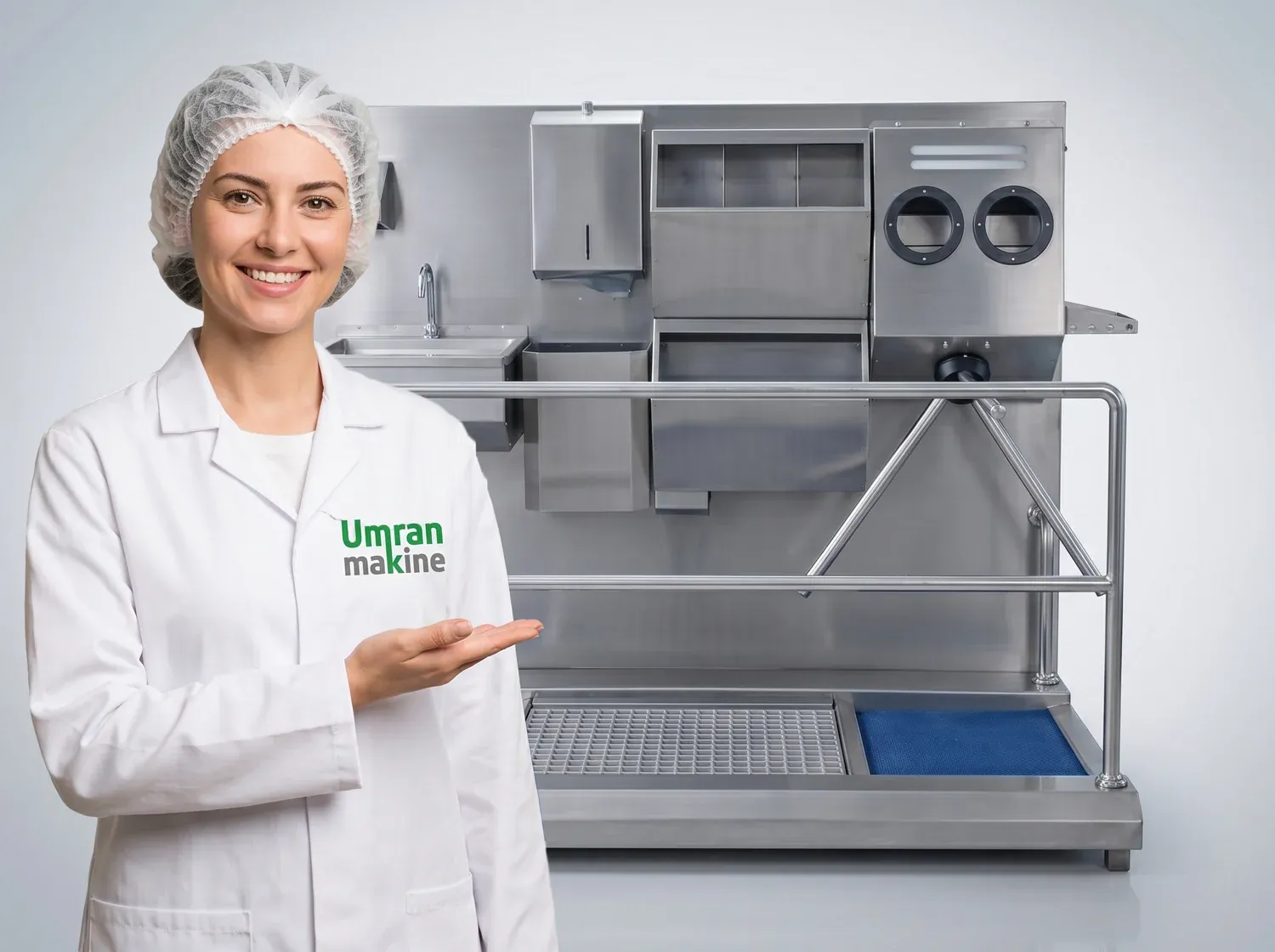
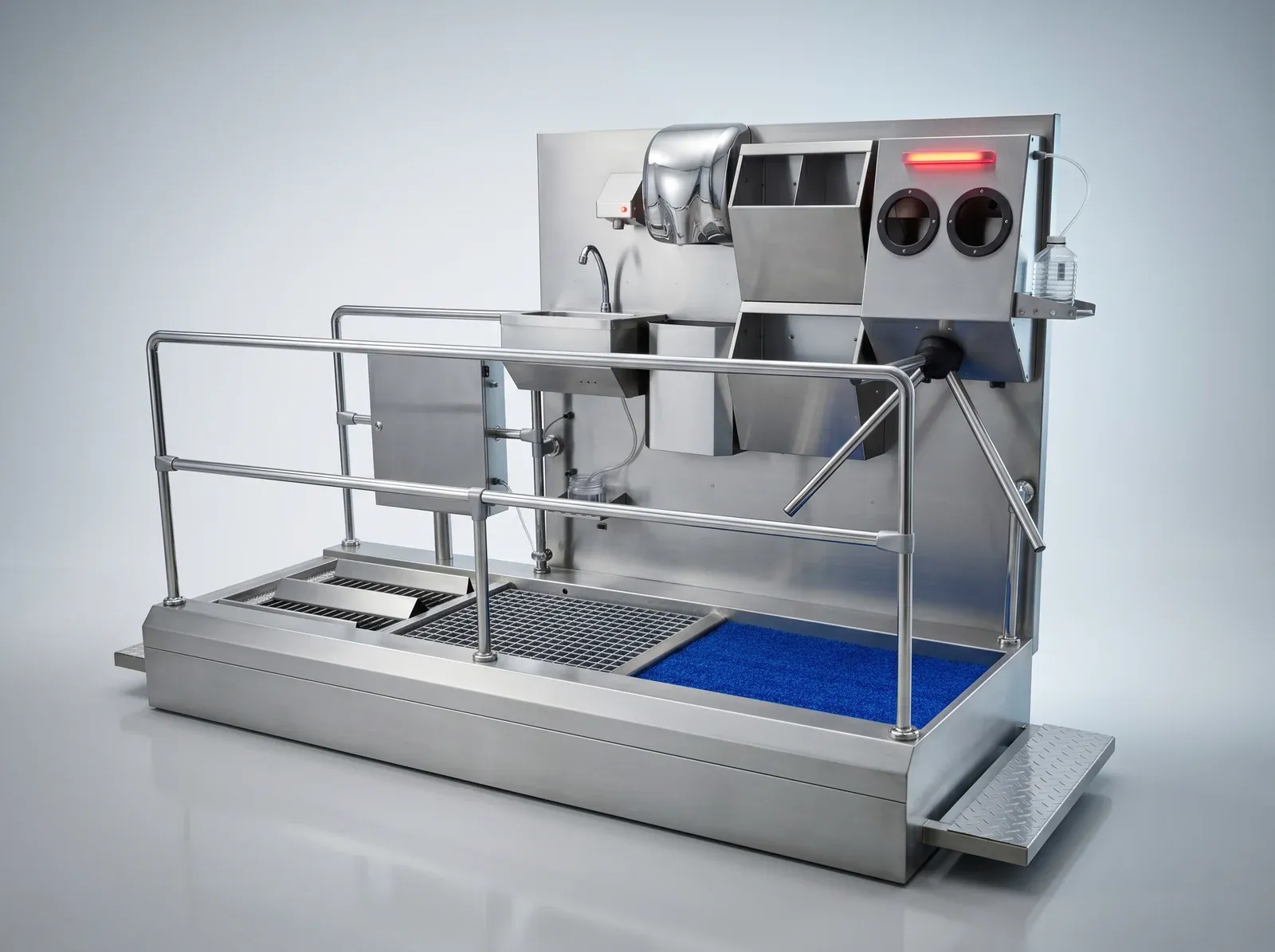
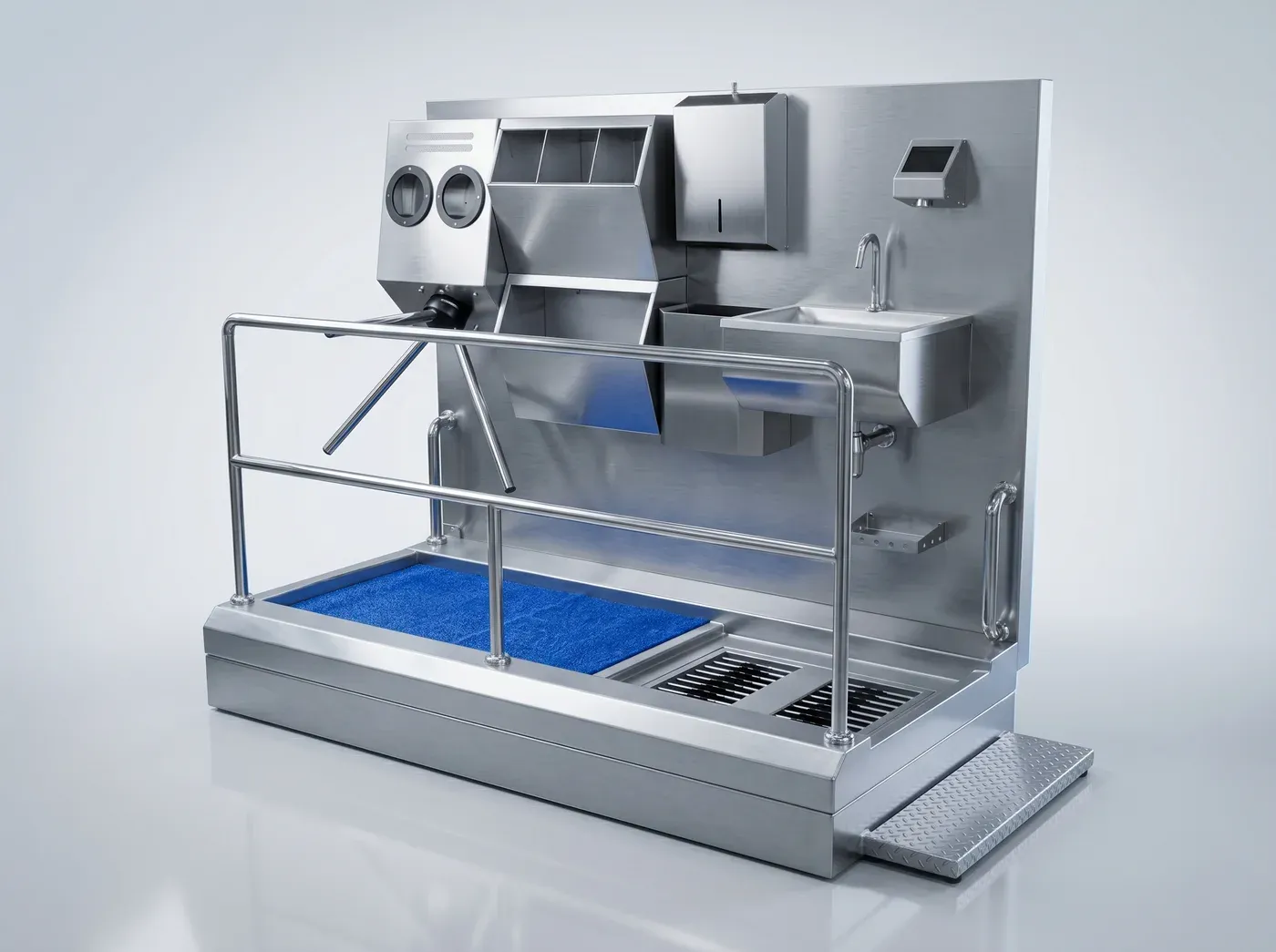
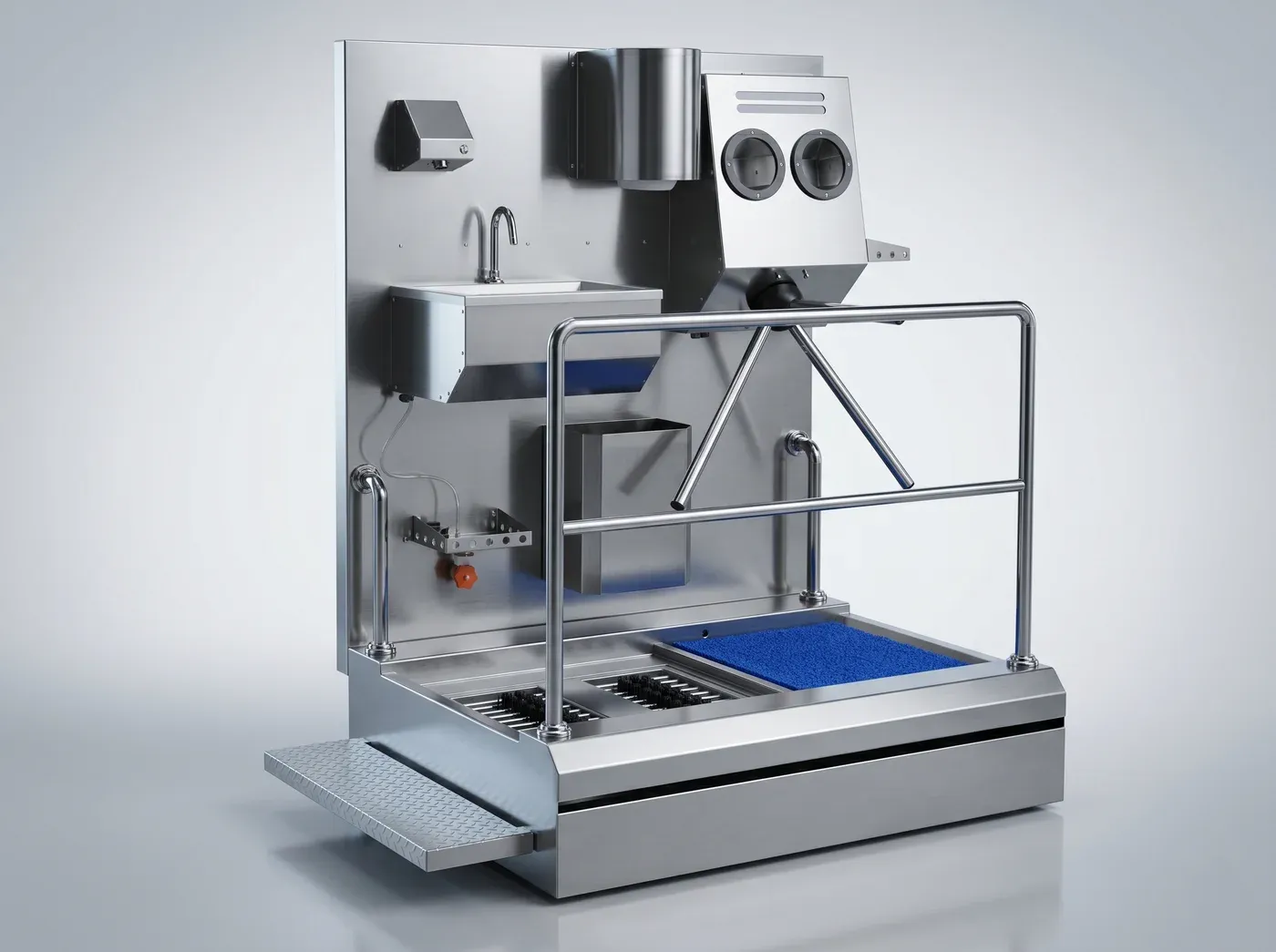
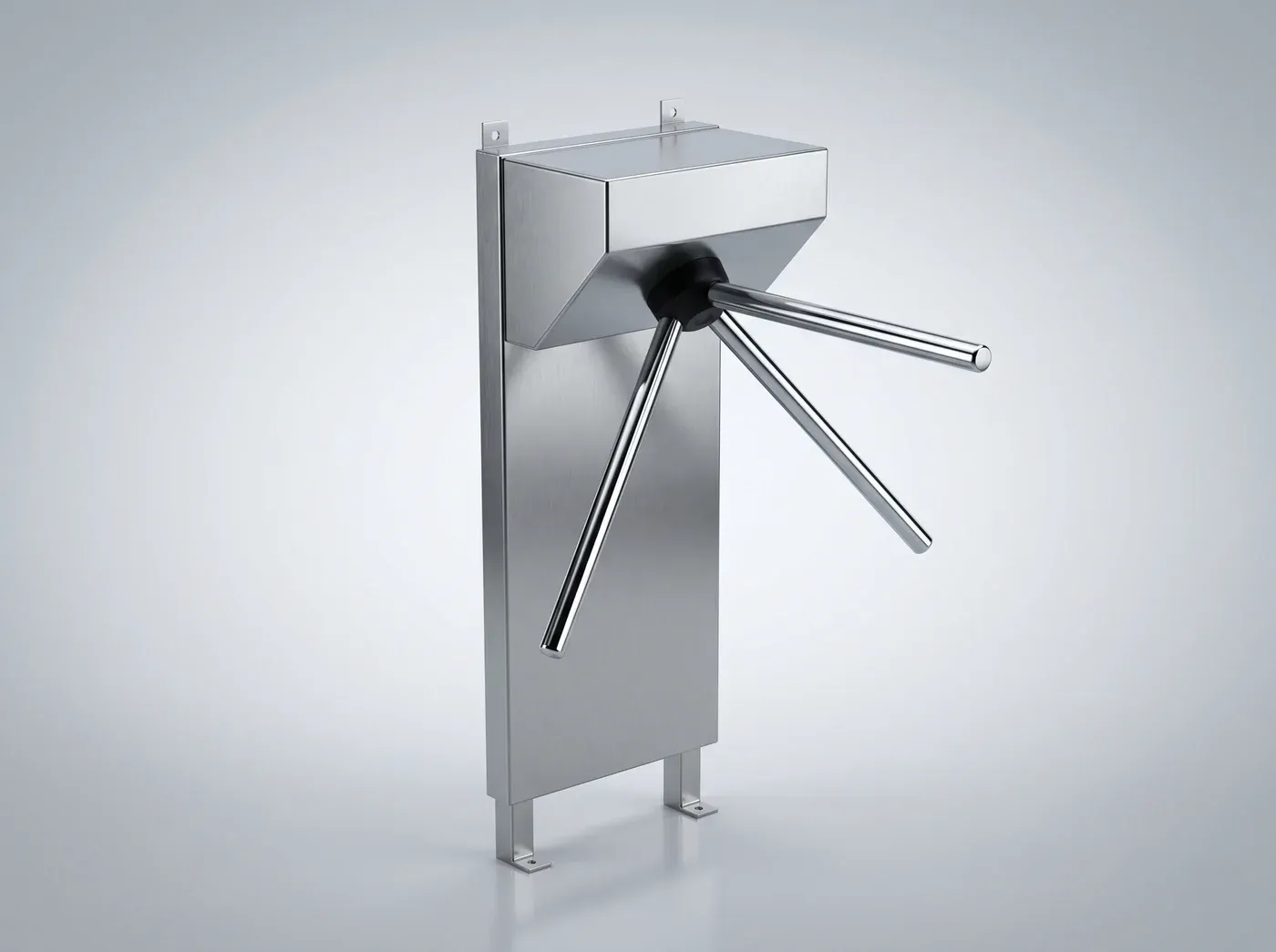
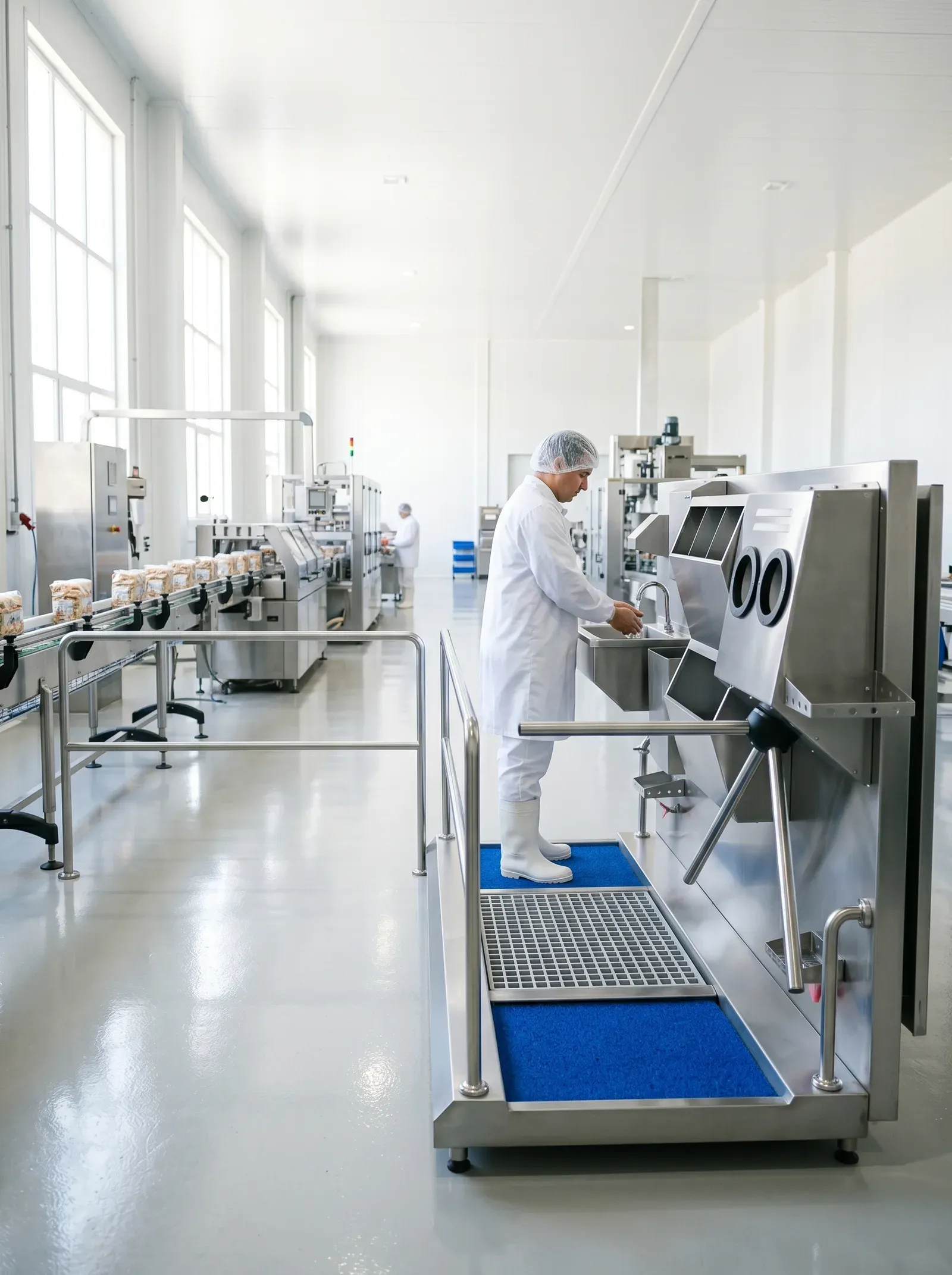
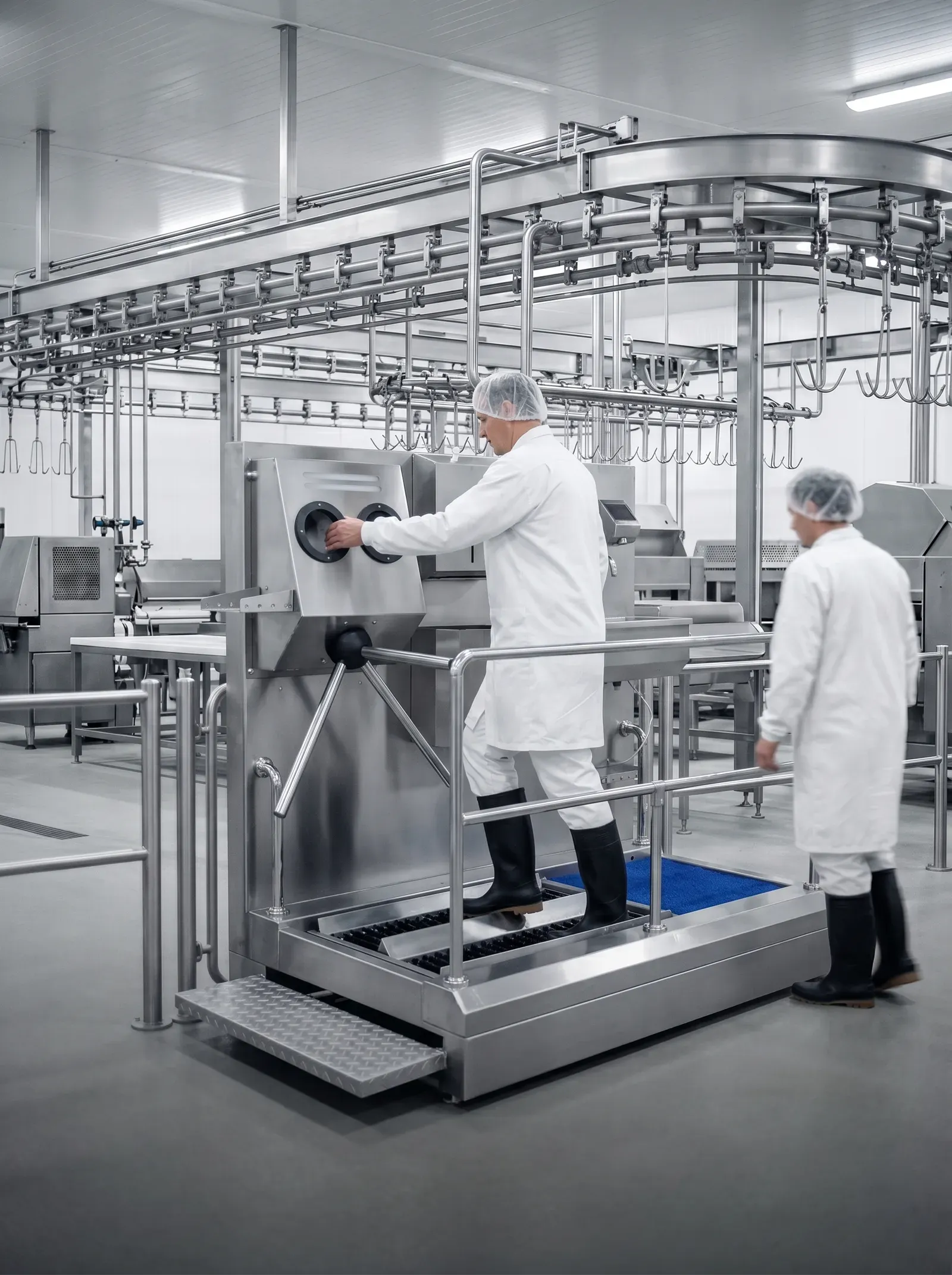
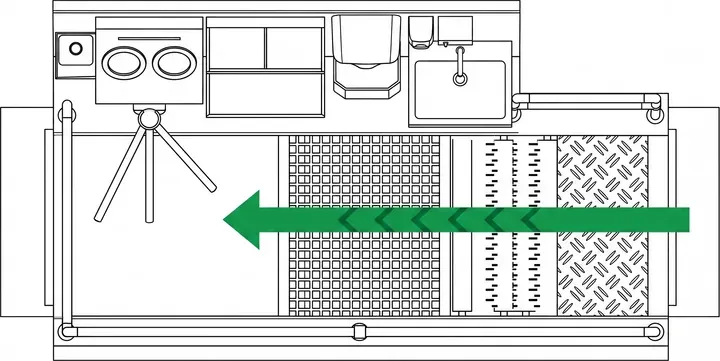
A hygiene barrier is a stainless-steel entry unit that combines hand disinfection, sole cleaning and turnstile passage on a single line at the staff entrance to a clean production area. Umran’s AISI 304 barrier family is configured for every scale — from a narrow corridor to a busy shift entry.
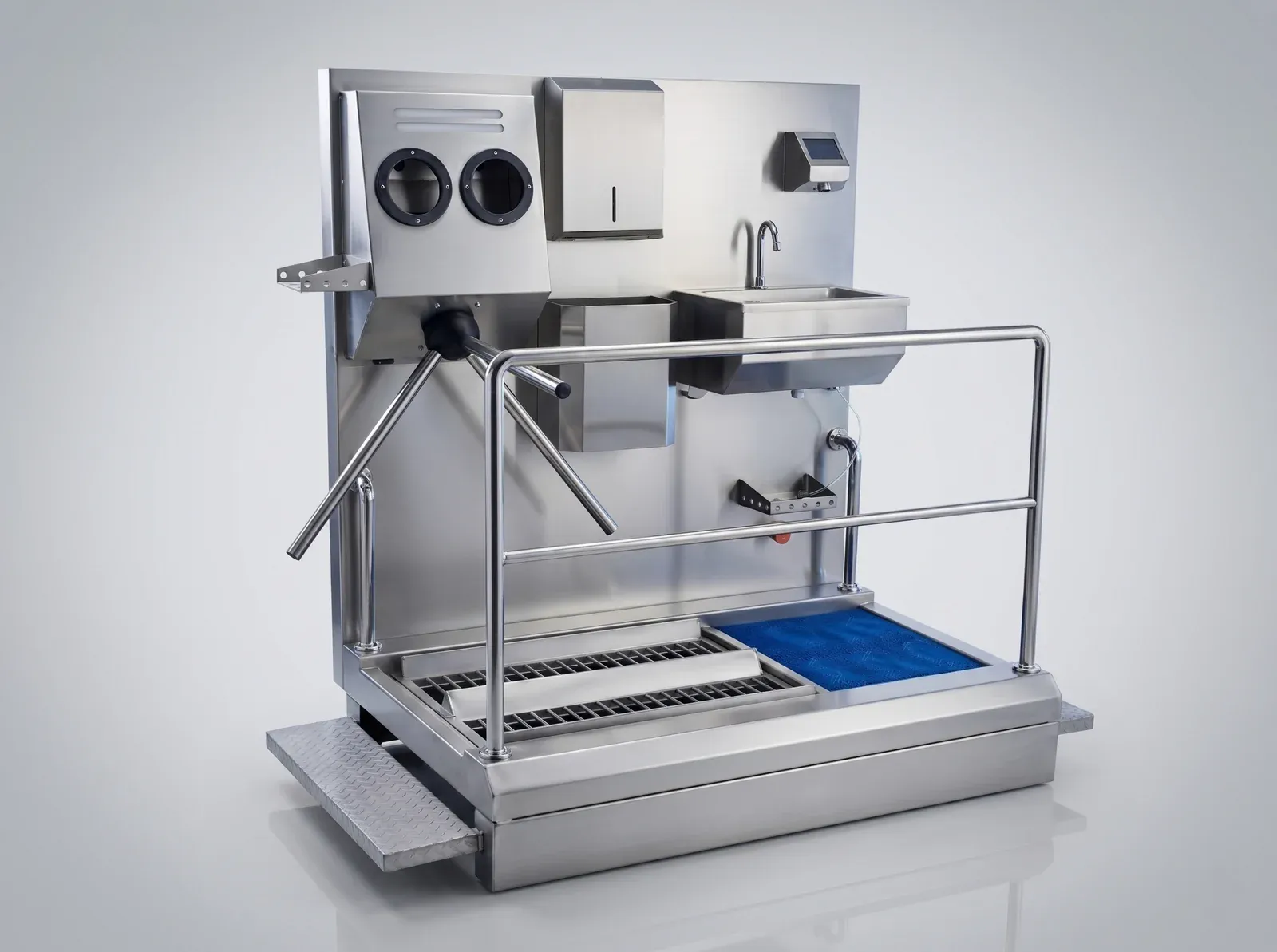
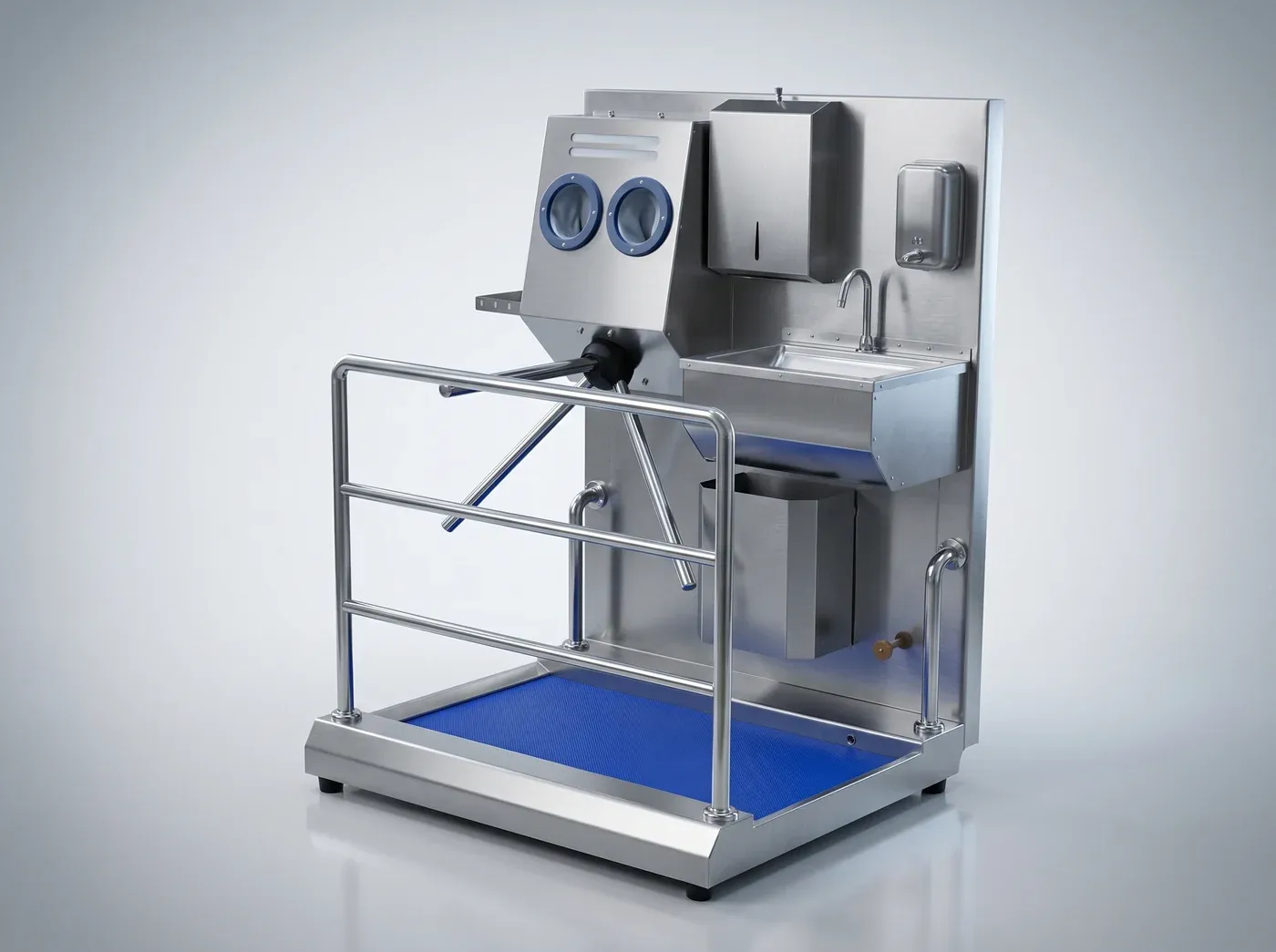
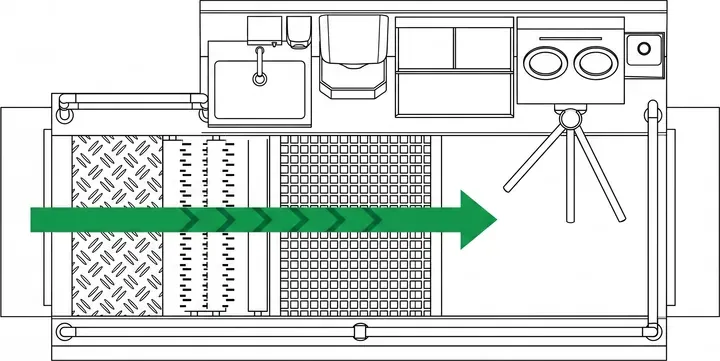
A fully equipped hygiene barrier that brings sole brushing, a disinfectant footbath, sensor-operated handwashing and disinfection, and a BGM box together in one line.
A barrier turns the hygiene step from optional into mandatory and auditable: the turnstile releases only once hand disinfection and/or sole cleaning is complete. This lowers, at the entry point, the microbial load carried from outside into the production area through staff circulation — and turns the crossing into a documentable control point for food-safety audits.
Product family and configuration
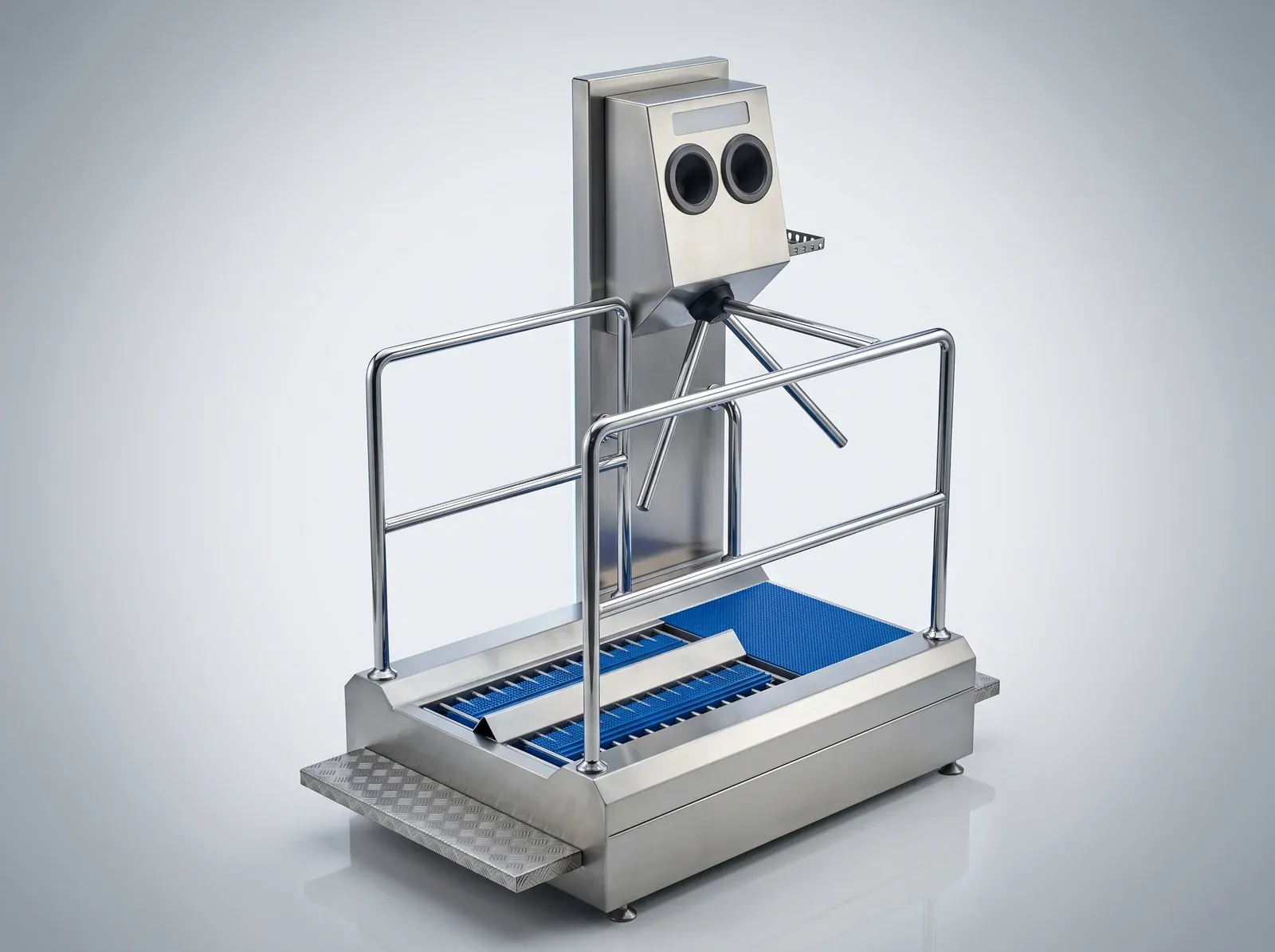
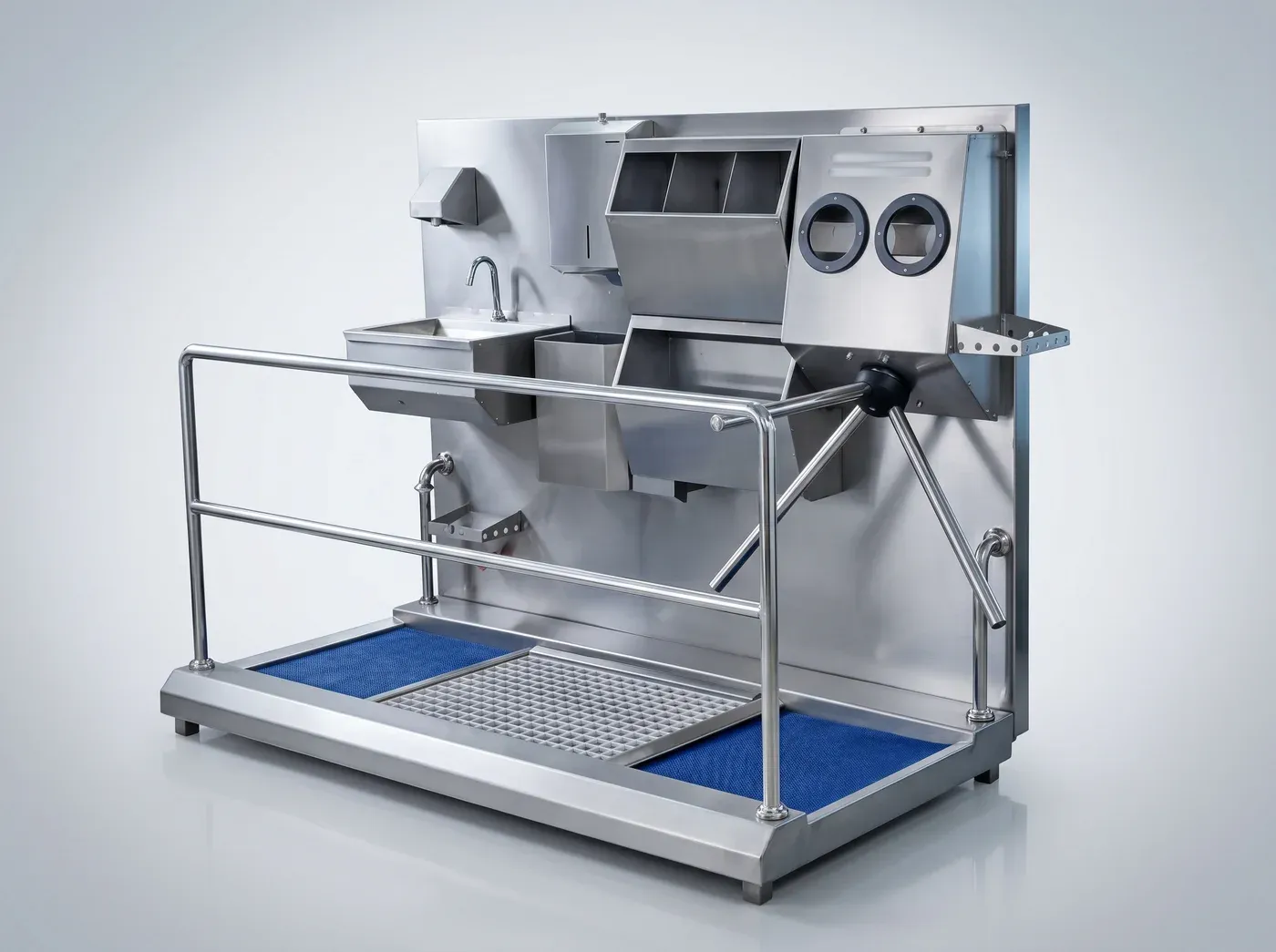
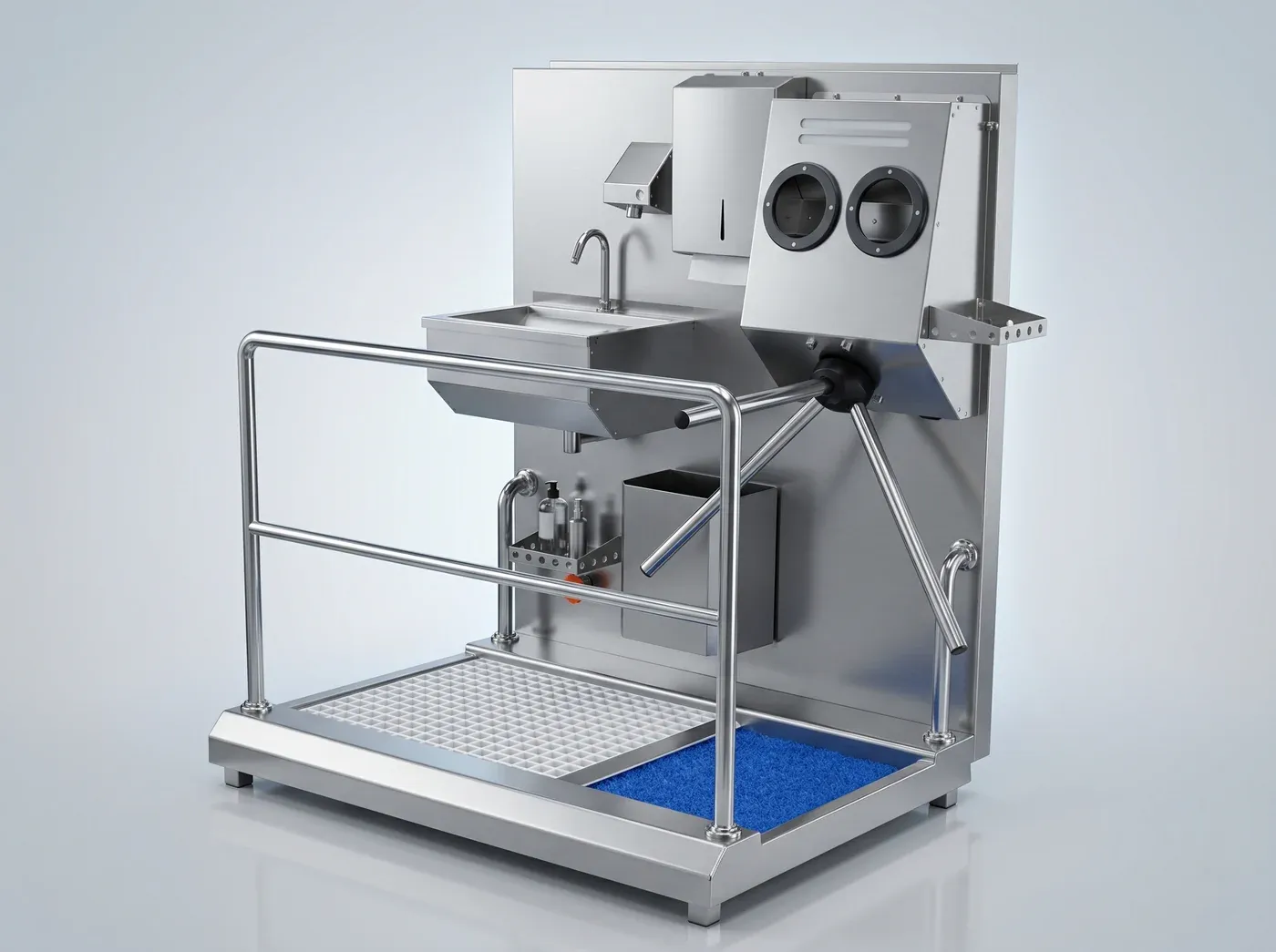
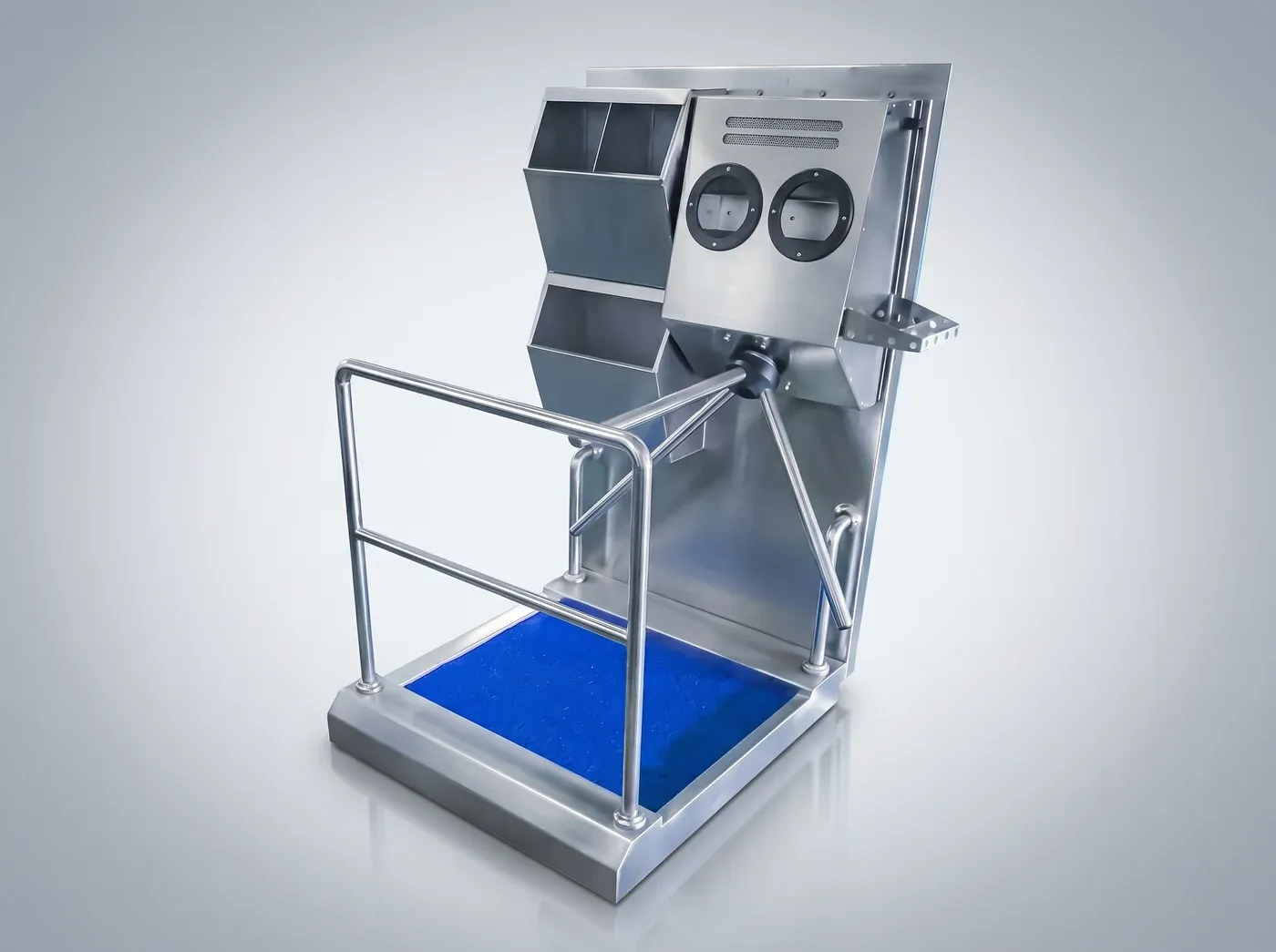
The Umran hygiene barrier family ranges from 70 cm single-entry units to fully equipped 300 cm lines. Sole cleaning is solved one of two ways: a footbath (a sanitizer-filled crossing) or a motorized cylindrical brush (mechanical sole/boot cleaning). Depending on the model, a sensor washbasin, a dual-sensor hand sanitizer and a hairnet/overshoe/mask (BGM) box are included.
Brush models (HGB-M, HGB-L, DSE-B, DSE-EB): motorized cylindrical sole brushes; for areas with heavy organic residue.
Full spec (HGS-EB): unites brush, footbath, washbasin and turnstile on one line.
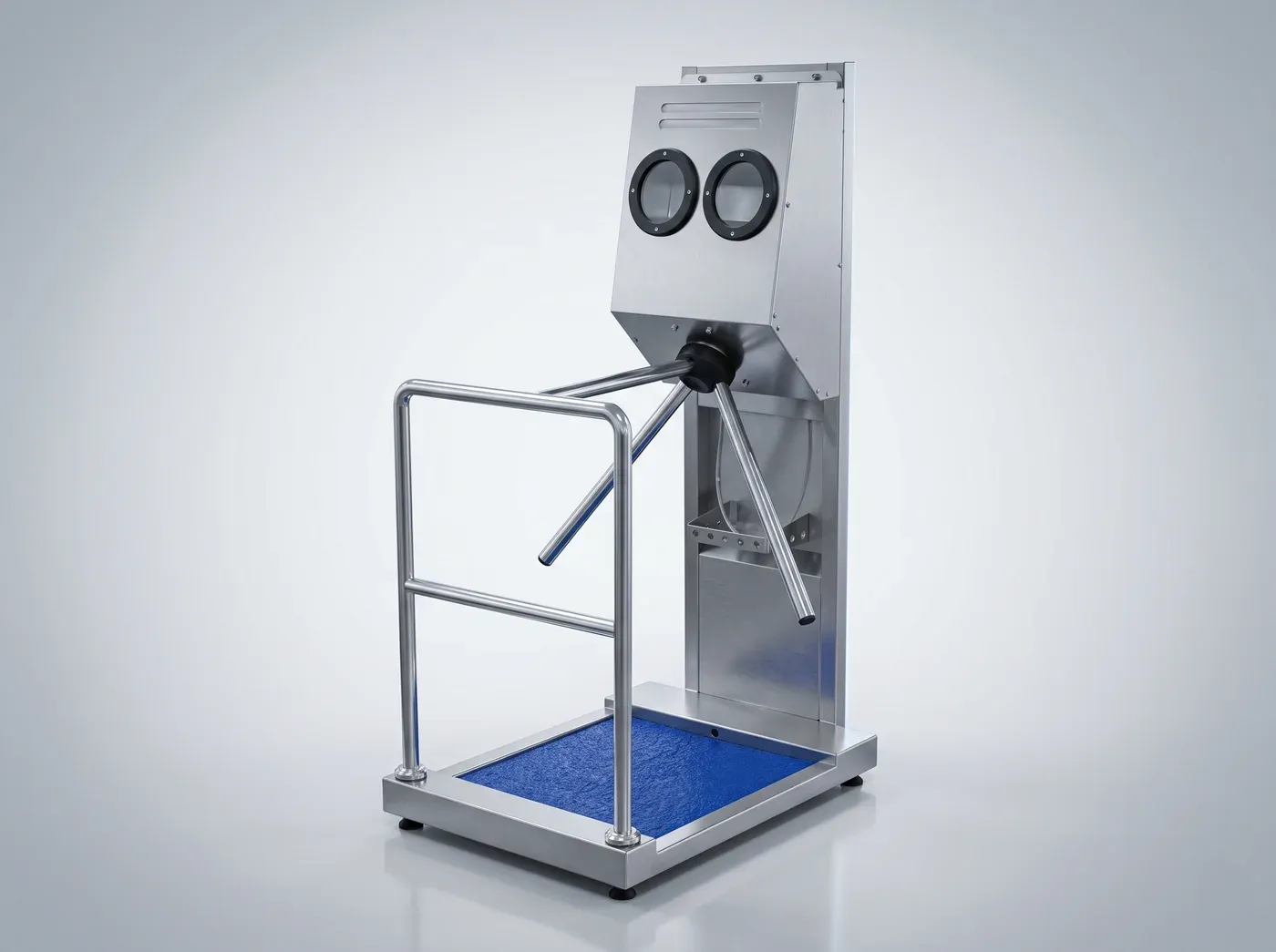
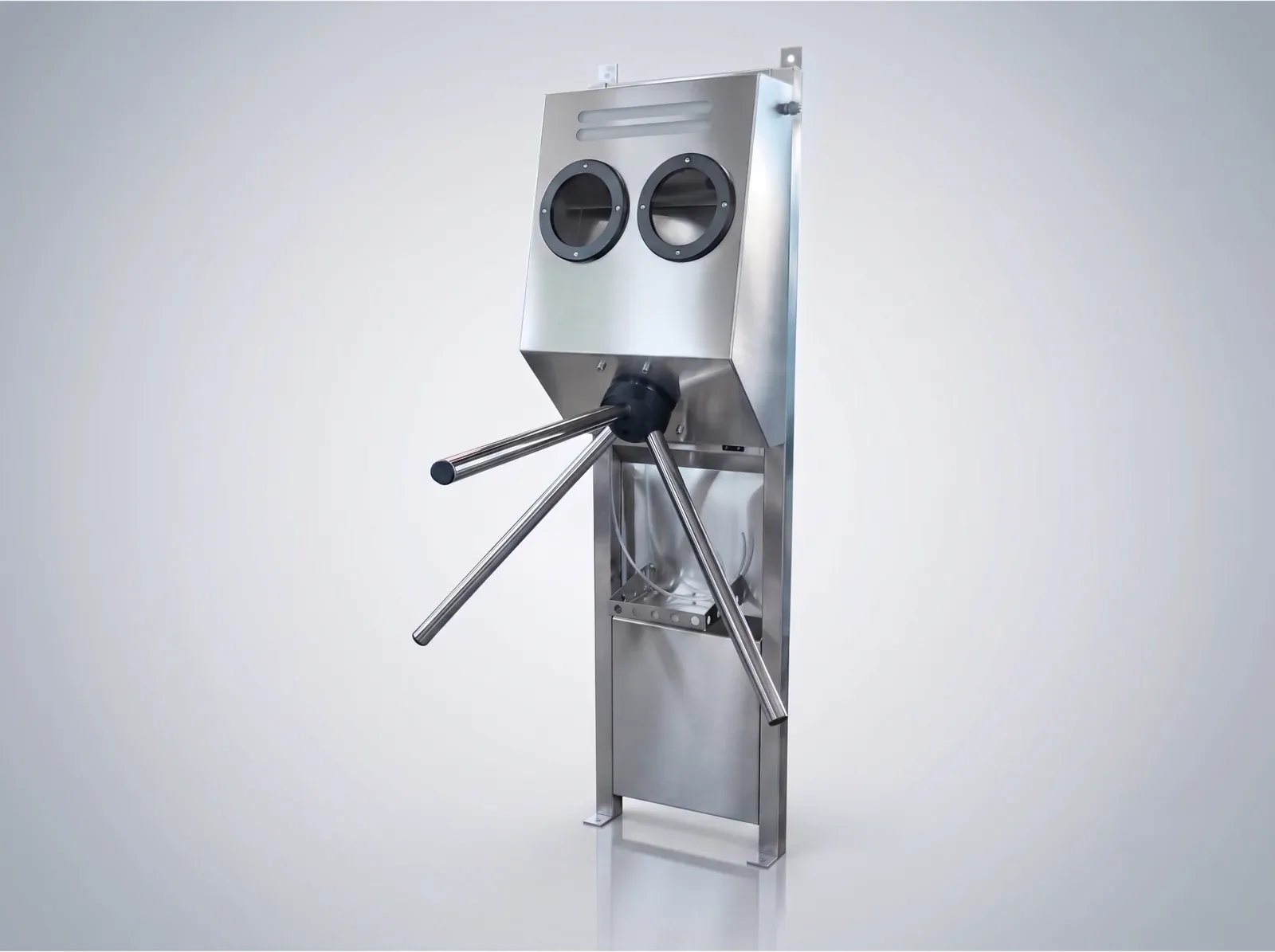
Turnstile-only (DSE): a dual-tank hand sanitizer releases the tripod turnstile; with an optional hygiene mat.
How to choose the right barrier
The choice follows the facility’s physical and operational conditions. The main criteria:
Clean-area dimensions and entry count: in a narrow corridor, configure a compact line through the entry/exit hygiene barrier; for a busy shift, distribute boot washers, touchless sinks, BGM boxes, a hygiene barrier or hygiene turnstile, and a one-way exit turnstile across a wider area, or configure multiple compact hygiene lines.
Sole-cleaning need: a footbath for light soiling, a motorized brush for heavy organic soiling (meat, poultry).
Throughput: a single-lane turnstile mechanically passes ≈ 25–30 people per minute; the real capacity including hand washing is lower and is set by configuration.
Common questions about personnel hygiene stations and barriers
Are a hygiene barrier and a hygiene turnstile the same thing?
Not exactly. A hygiene turnstile is a single component that releases passage only after hand disinfection. A hygiene barrier is a complete crossing line that combines the turnstile with sole cleaning (footbath or brush), a washbasin and dispenser units.
Should I choose a footbath or a brush model?
It depends on how heavy the sole soiling is. A footbath handles light-to-moderate soiling via a sanitizer crossing; a motorized cylindrical brush mechanically cleans soles in areas with heavy organic residue, such as meat and poultry. For very heavy soiling a separate boot washer can be added.
Is a hygiene barrier mandatory for HACCP?
HACCP does not mandate a specific device; it requires that cross-contamination risk at staff entry be controlled. A hygiene barrier is the most common way to make that control mandatory and auditable.
Let's specify the right personnel hygiene stations and barriers configuration for your facility
Tell us your sector and headcount; we’ll prepare a technical sheet and quote within 1 business day.
We use necessary technologies to keep the site and forms secure. With your permission, we can measure site performance, improve our content and provide a more relevant experience. You can change your preferences at any time.