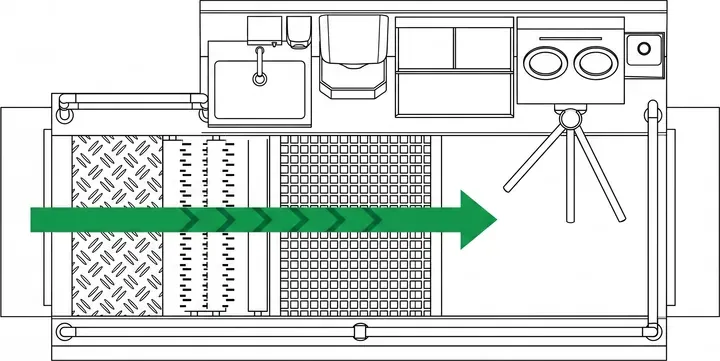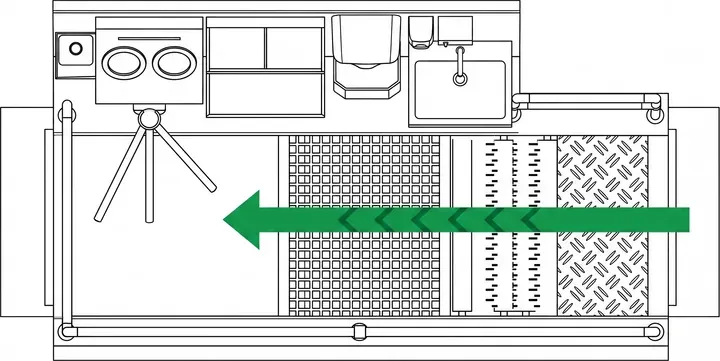
The hygiene scenario in dairy
Milk and dairy are media favourable to microbial growth; hygiene discipline at staff entry directly affects product safety.
-
Pathogens such as Listeria, which grow even when cold, can be carried into the clean zone by uncontrolled staff passage.
-
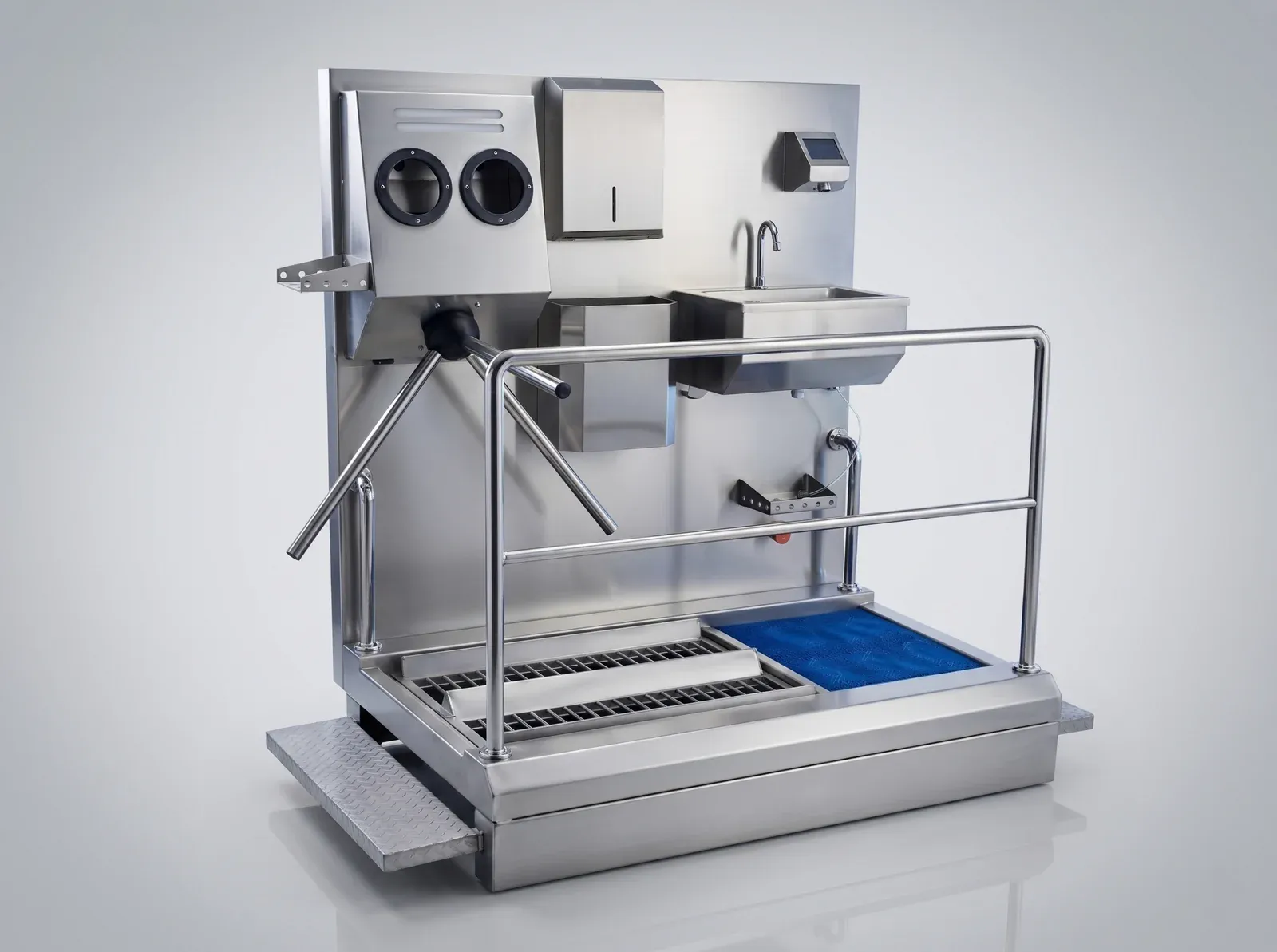
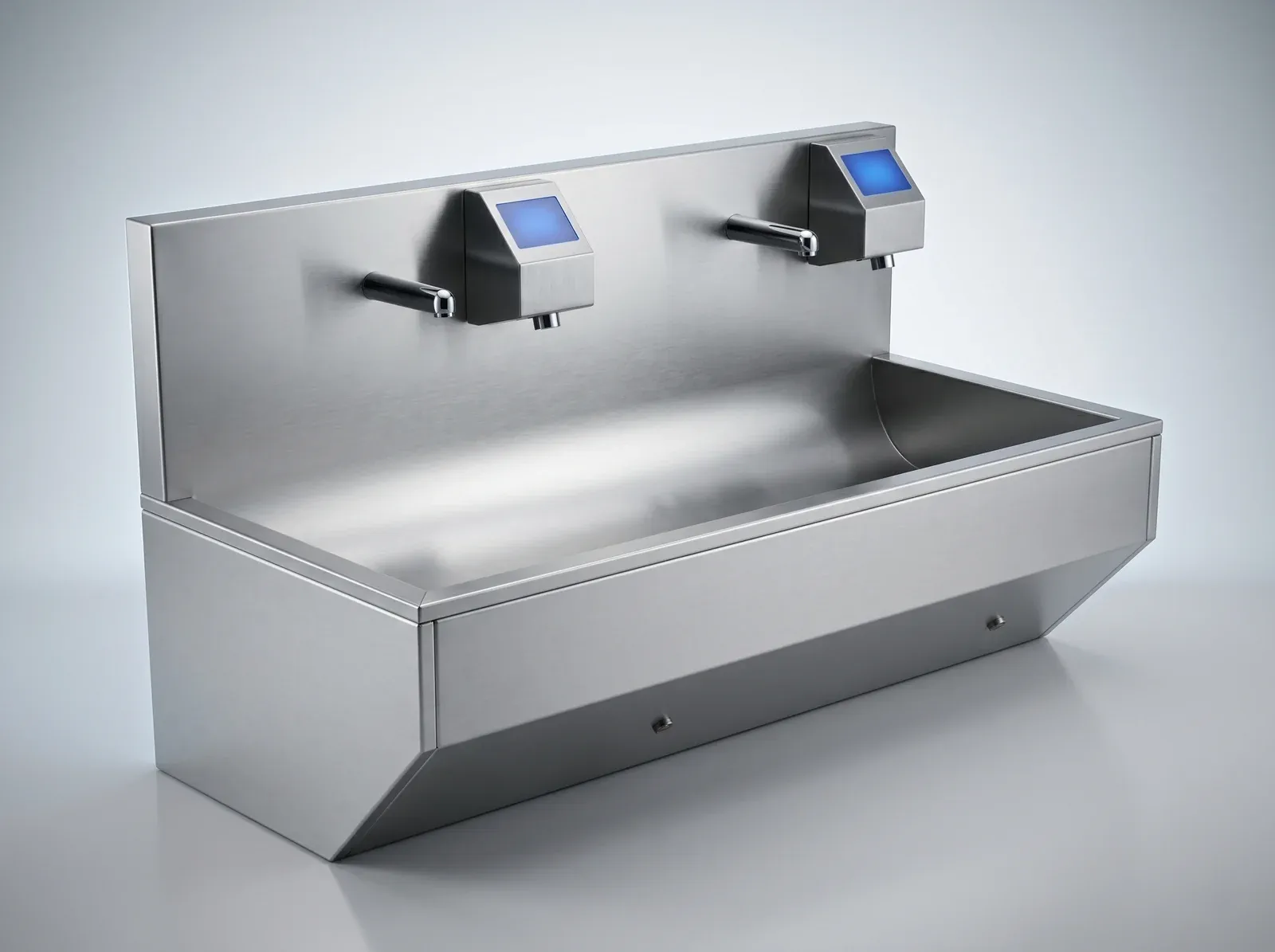
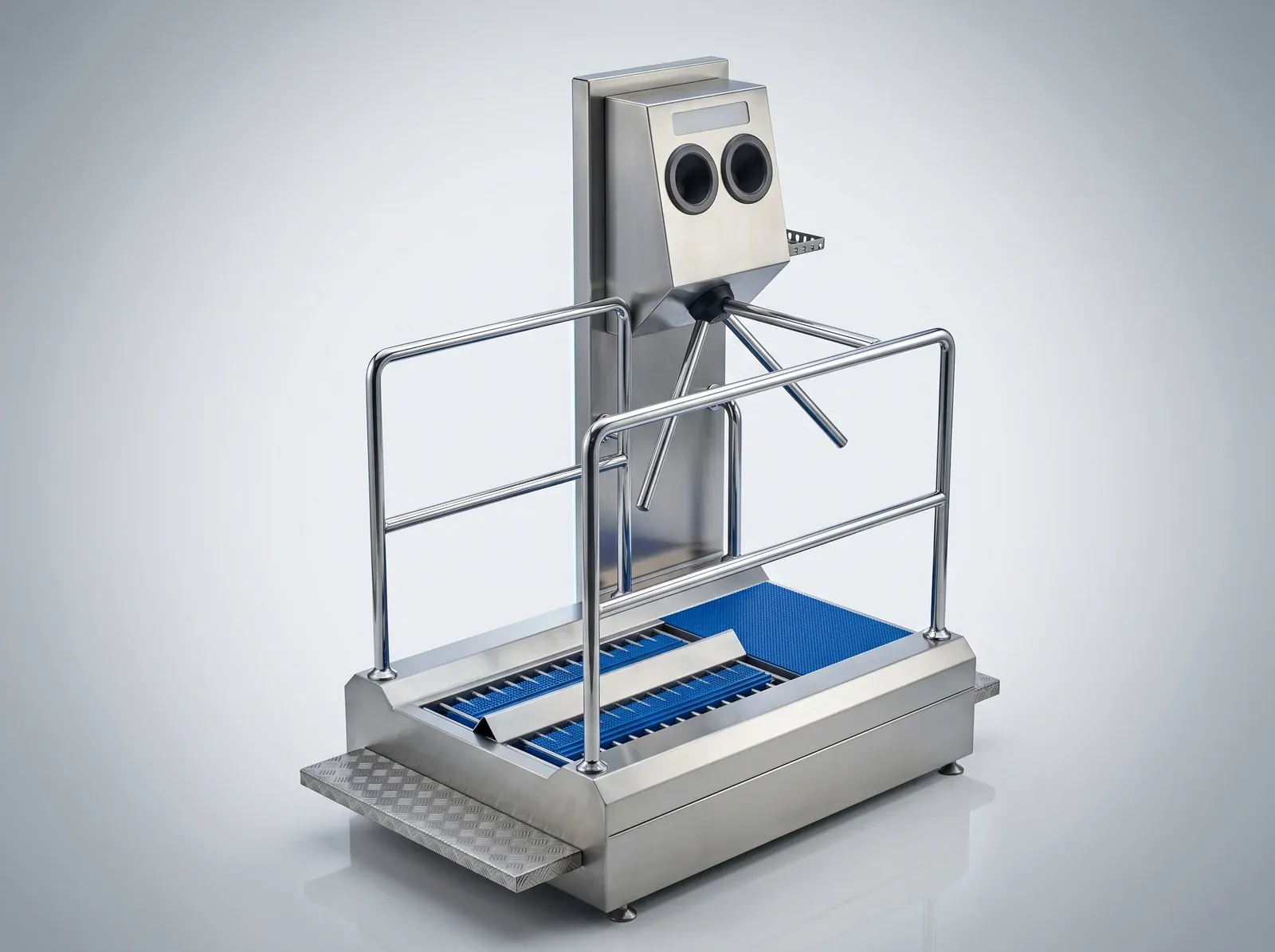
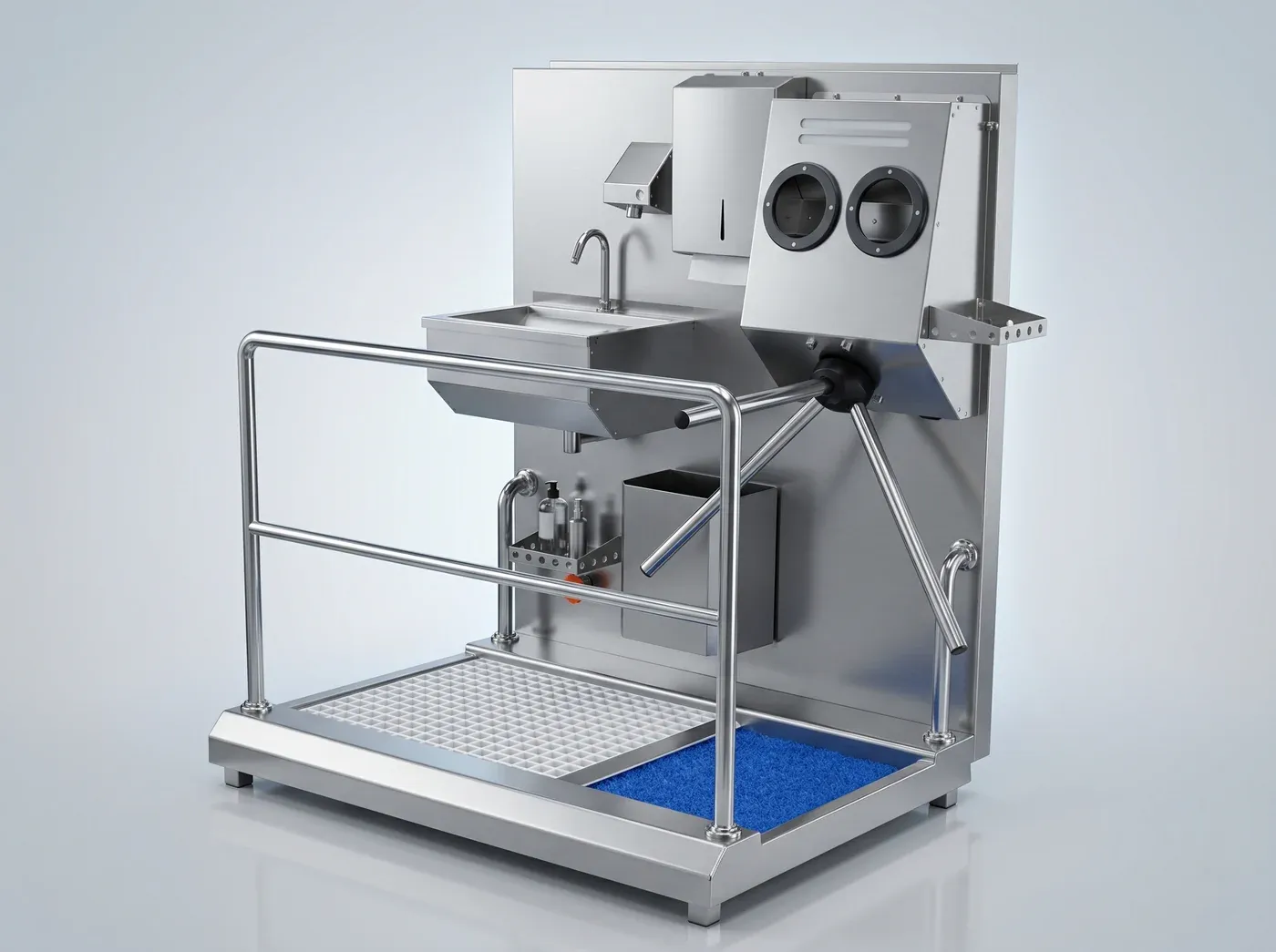
Sensor hand disinfection and touchless sinks reduce hand microbial load without contact.
-
A sole-disinfection pool stops floor-borne contamination at the entry point.
-
With all surfaces in AISI 304 stainless, the units withstand aggressive cleaning and disinfection cycles.
Recommended units for this sector
Hygiene units frequently chosen for Dairy & Milk facilities.
Common questions in this sector
Why is a touchless sink important in a dairy plant?
A touchless sink prevents the washed hand from being re-contaminated by touching the tap or dispenser. Sensor water and soap lower cross-contamination risk.
How is Listeria risk reduced at entry in a dairy plant?
Control at the entry point is not sufficient on its own but is an important link: an auditable crossing with hand and sole hygiene lowers the load carried in from outside. AISI 304 surfaces suit aggressive cleaning, which also reduces the risk of equipment harbouring the pathogen.
Which comes first — a sole pool or a touchless sink?
They address different risks: a touchless sink targets hand hygiene, a sole-disinfection pool targets floor-borne contamination. In dairy plants the two are usually planned together as part of the crossing line.