The hygiene scenario in meat & poultry
Blood, tissue and organic residue accumulate on floors and boots; in these areas hand hygiene alone is not enough — sole and boot cleaning are also required.
-
Pathogens such as Salmonella and Campylobacter pose high risk in poultry processing; the shoe sole is a significant carrier.
-
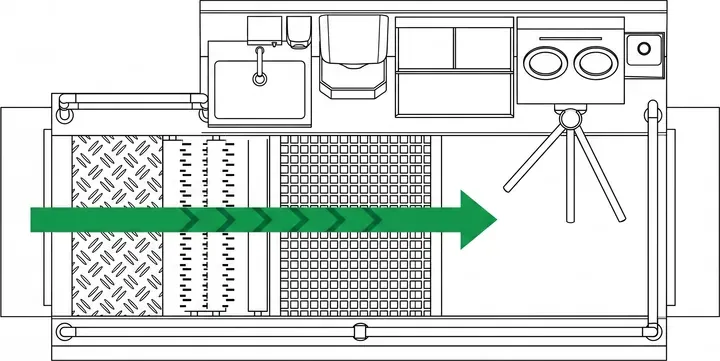
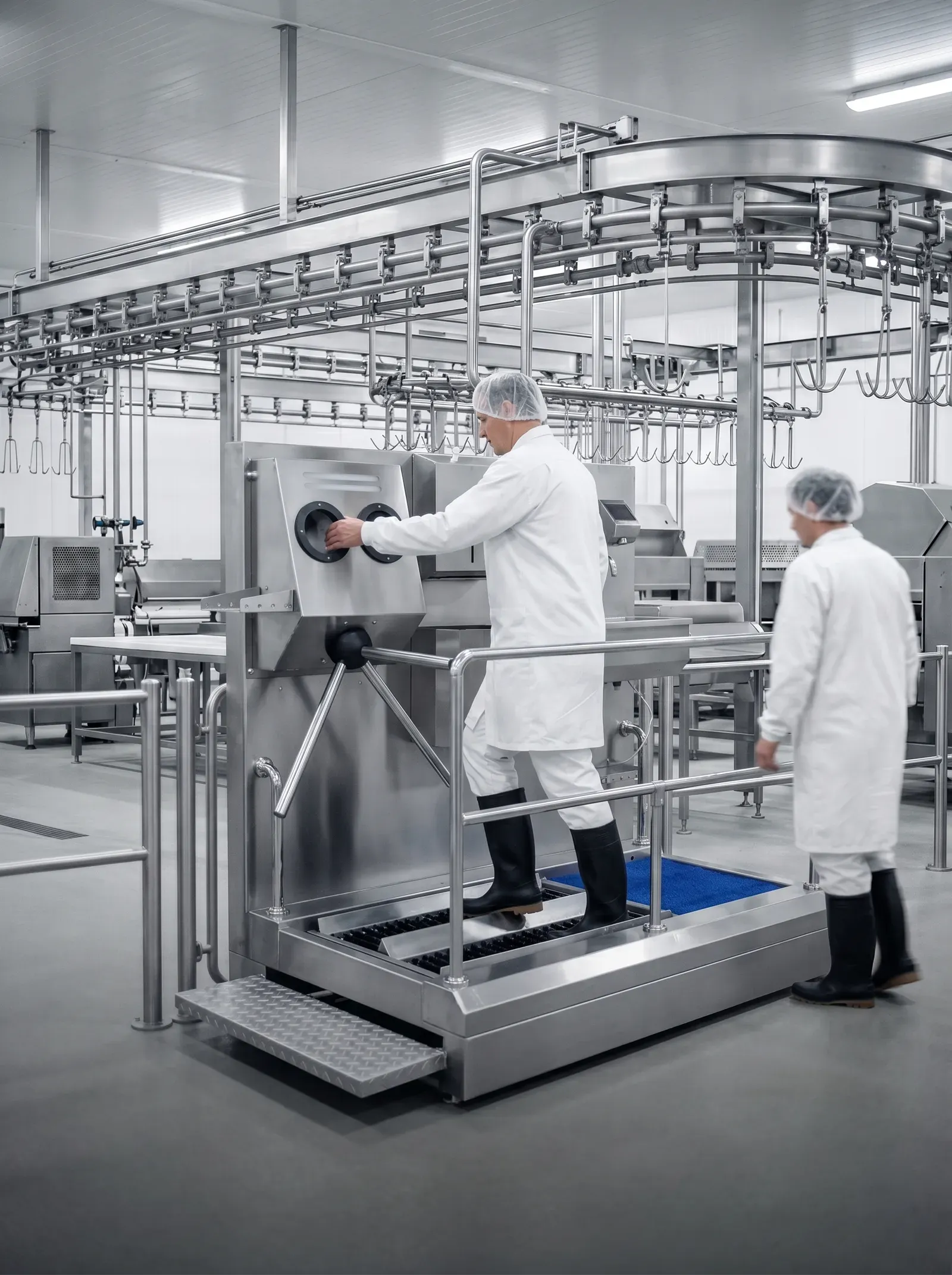
Hygiene stations with motorized cylindrical brushes mechanically clean sole residue — disinfectant alone is not enough.
-
Fully automatic boot washers clean both side and sole surfaces with a water-detergent spray.
-
Under high humidity and organic load, the AISI 304 stainless body stays hygienic and durable.
The compliance framework in meat and poultry
- HACCP: personnel movement between slaughter, cutting and packing areas is the main route of cross-contamination; the prerequisite programme makes hand and footwear hygiene mandatory at these crossings and expects proof that it is applied.
- BRCGS and IFS Food: separate hygiene points, footwear change or washing and auditable hand hygiene are expected for entry to high-risk and high-care areas; a turnstile crossing records that the step was not skipped.
- Salmonella and Campylobacter control: in poultry processing the shoe sole is a significant carrier. Until organic residue on the sole is mechanically removed, disinfectant cannot reach beneath it; this is why motorized brushes or a boot washer are needed.
- Turkish Food Codex Regulation and Food Hygiene Regulation: personnel hygiene, protective clothing and hand-washing facility requirements for meat businesses are defined in national legislation and checked in official inspections.
- High-care and high-risk separation: separate hygiene lines should be planned for entry to raw and cooked product areas, and staff must not move between zones without changing footwear and clothing. A one-way turnstile enforces this separation physically and fixes the direction of passage.
Recommended entry configuration
The line we recommend in a meat and poultry plant solves sole cleaning mechanically, cleans boot side surfaces with a separate machine and separates the exit from the clean zone.
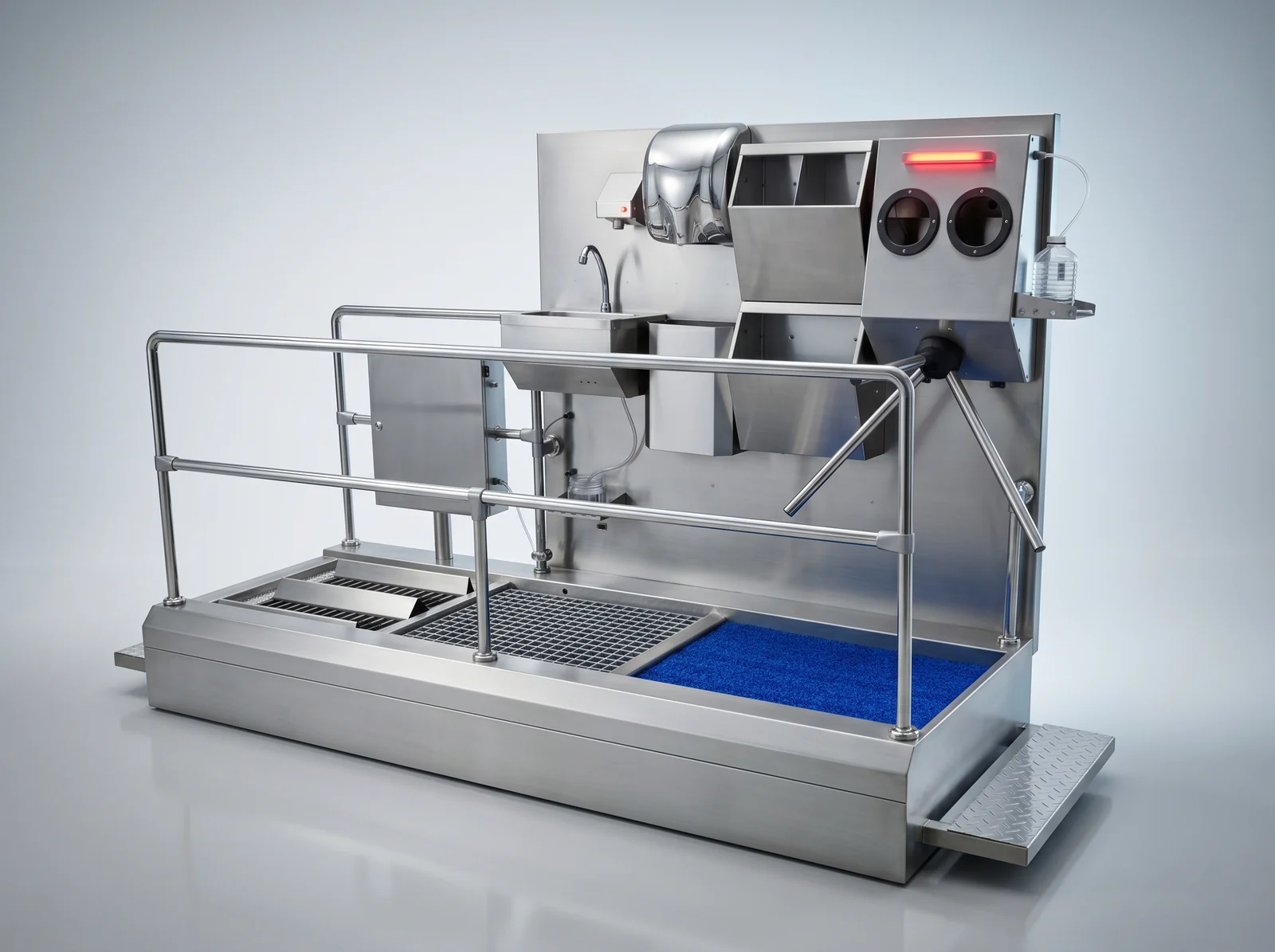
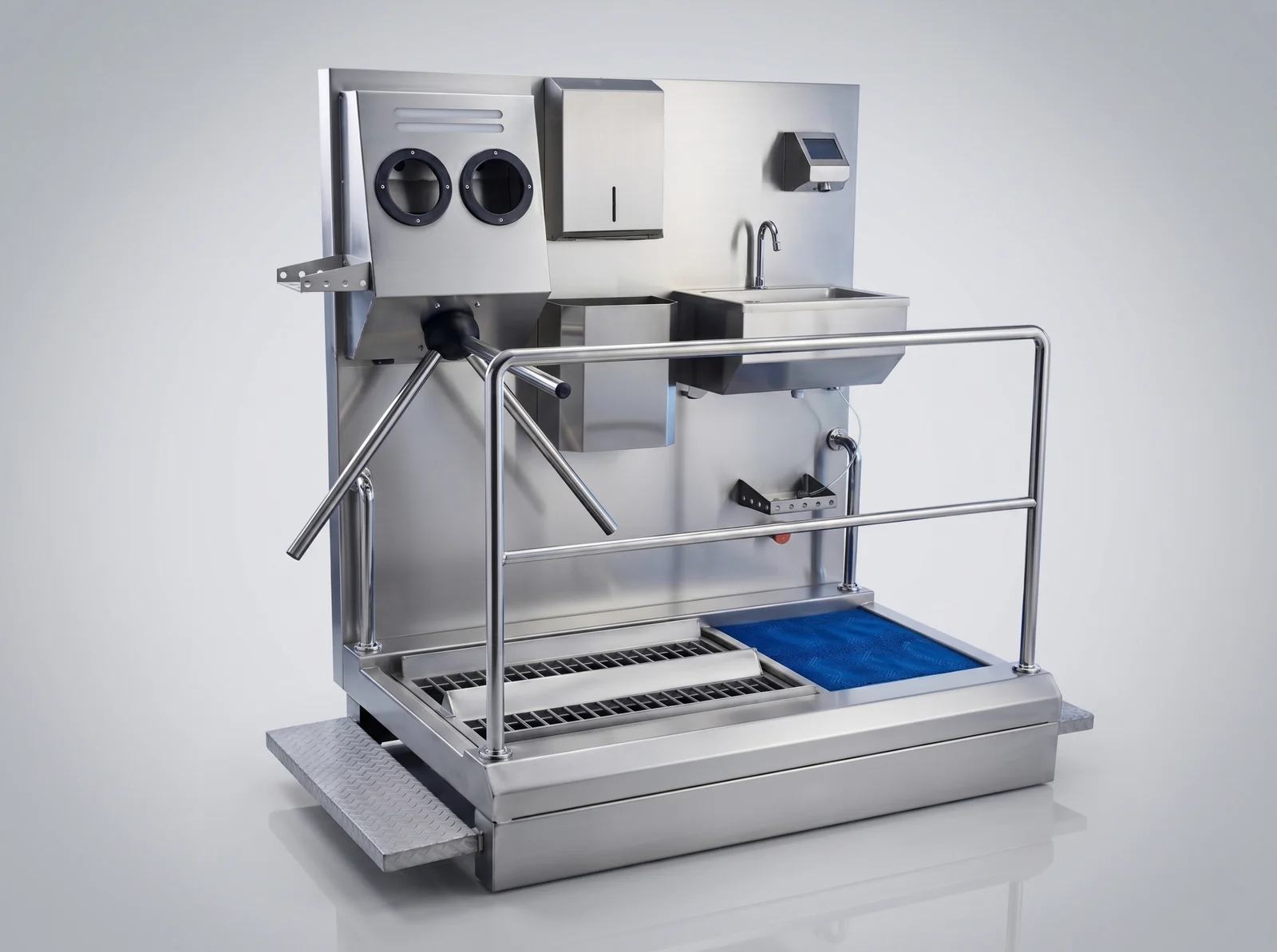
- HGS-EB — boot brush, footbath, washbasin, fully equipped: at the slaughter and cutting entrance it unites hand washing, dual-hand disinfection, motorized sole brushes and a disinfectant footbath with the turnstile on one line.
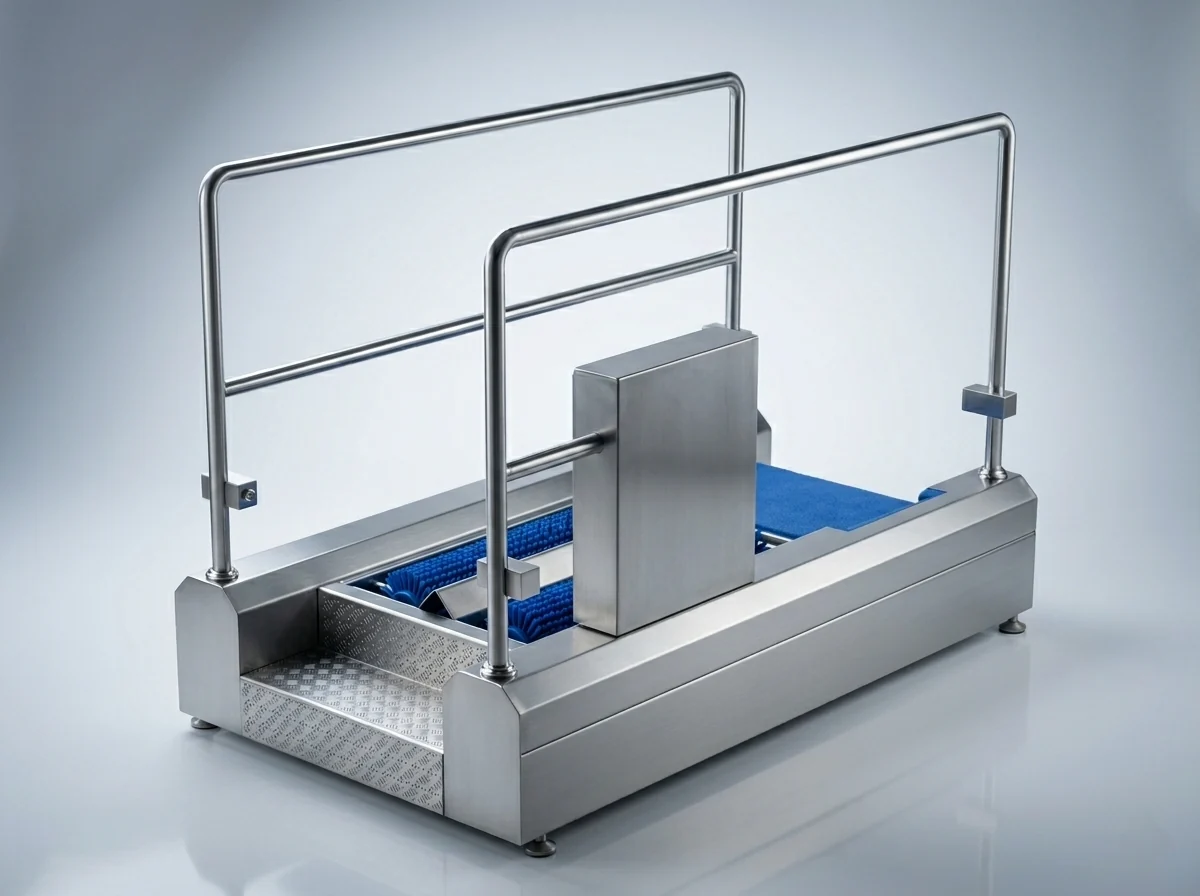
- DSE-EB — boot brush, washbasin: scales with personnel flow through 400, 600 or 800 mm brush options; recommended for the second entry point.
- YSC-5 — fully automatic boot washer: cleans the side and sole surfaces of the boot with a water-detergent spray; placed before the hygiene station.
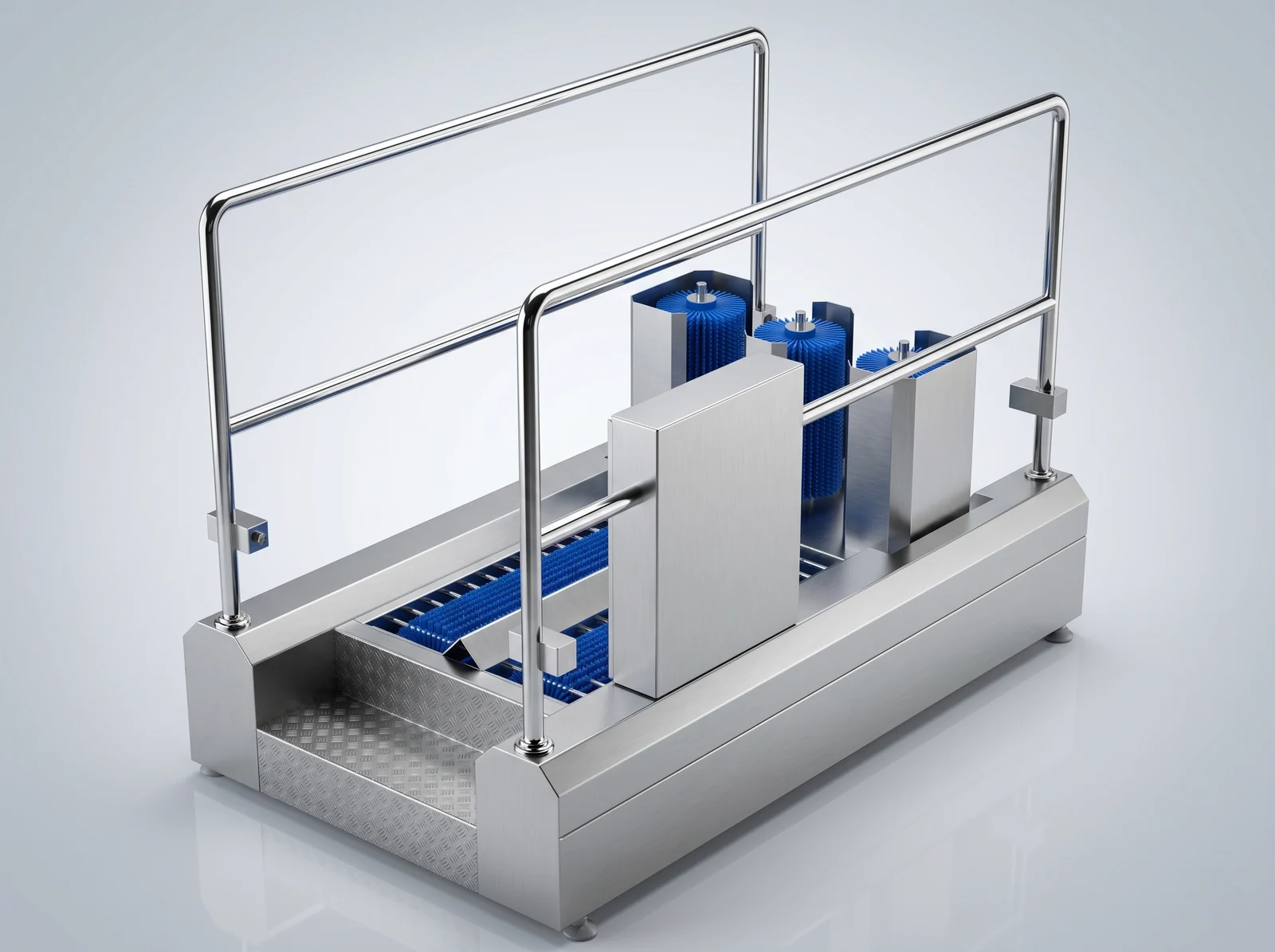
- YSB-2 — automatic sole washer: a compact option for intermediate passages where only sole residue is at issue; it works with brushes and a water-detergent spray.
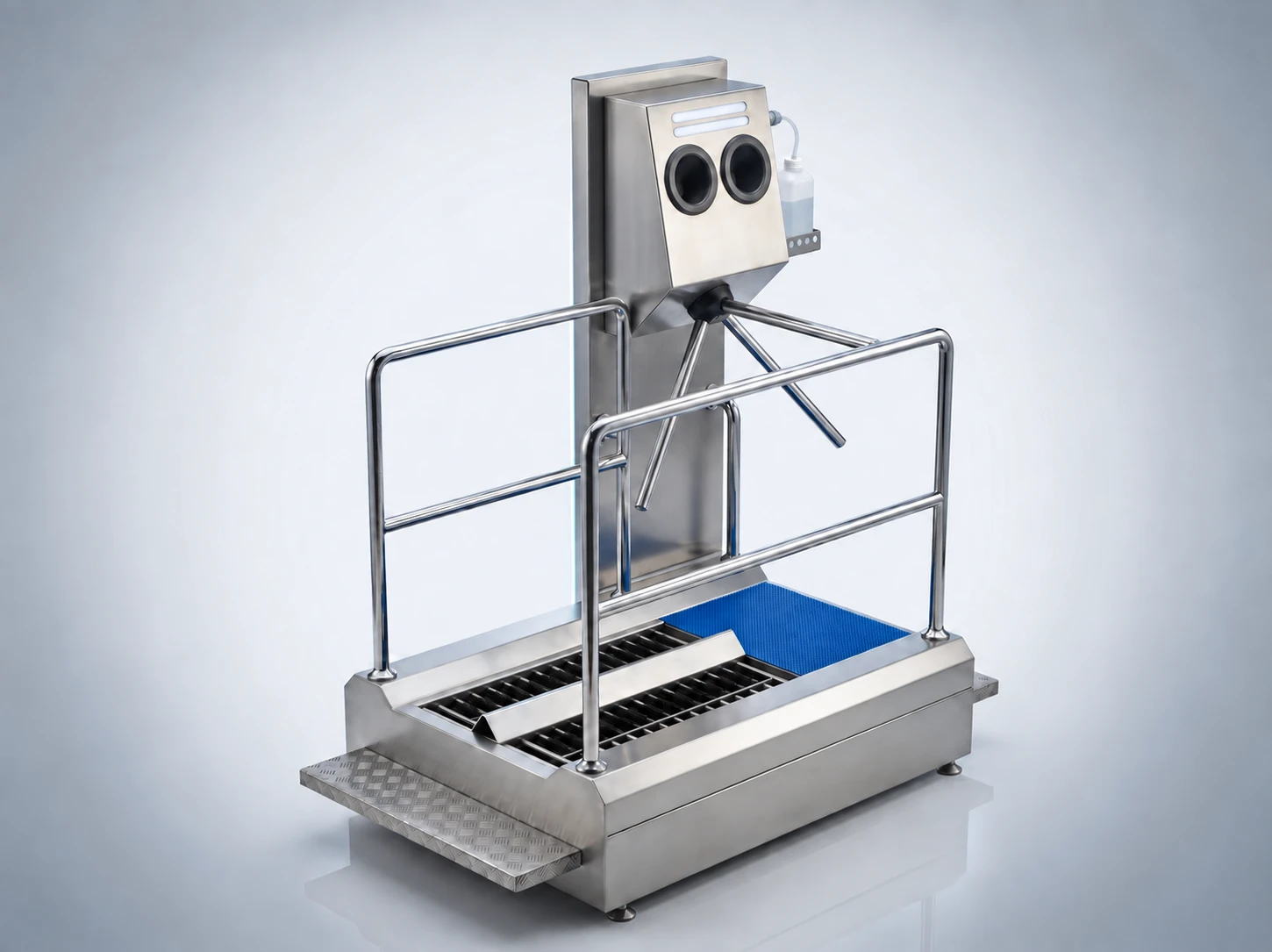
- DSE-B — variable brush-length turnstile: for intermediate doors where hand disinfection and sole brushing are enough.
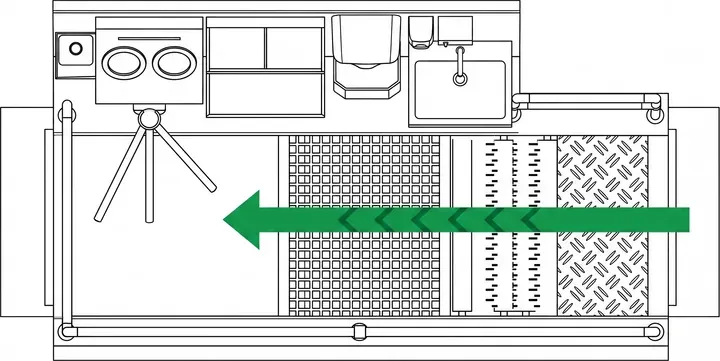
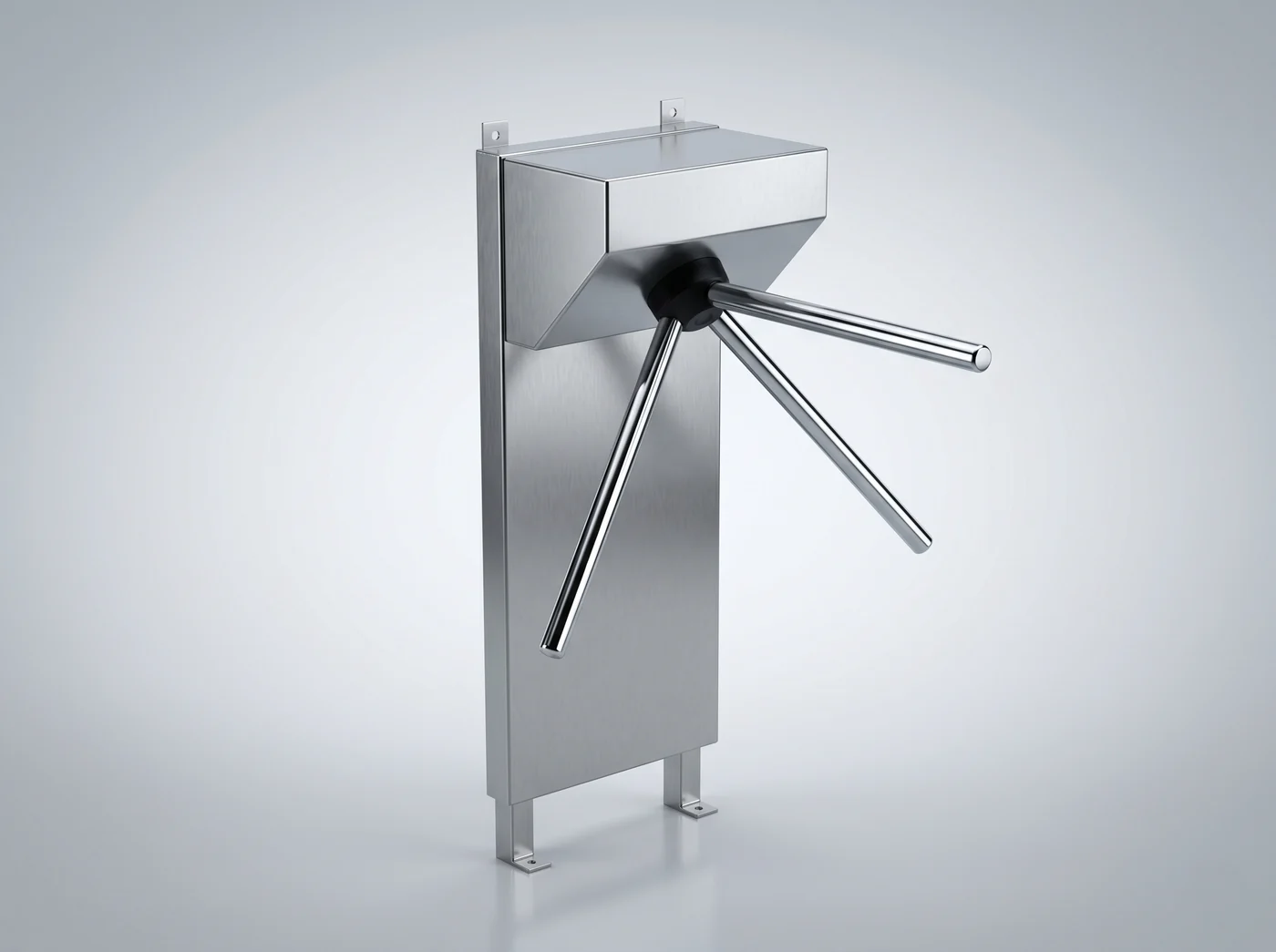
- TRN — one-way turnstile: separates the exit from the clean zone and blocks passage in the wrong direction.
Recommended units for this sector
Hygiene units frequently chosen for Meat & Poultry facilities.
Common questions in this sector
Brush-equipped hygiene station or a separate boot washer?
If sole cleaning is part of the controlled entry, a brush-equipped hygiene station handles it in one line. For boot side surfaces and heavier soiling, add a separate fully automatic boot washer.
What throughput is needed in a meat plant?
Staff must enter quickly at shift start; the turnstile’s mechanical speed is not the line’s bottleneck — lane capacity is set by the hand-washing and disinfection cycle and confirmed by measurement at the facility. The exact figure is confirmed in the quote by configuration.
Why is sole cleaning so critical in poultry processing?
For pathogens such as Salmonella and Campylobacter the shoe sole is a significant carrier. Until organic residue on the sole is mechanically removed, a sanitizer cannot reach beneath it; this is why a motorized brush or boot washer is preferred.