The hygiene scenario in fruit & vegetable
Because fresh produce is not heat-treated, pre-production staff hygiene directly determines final consumption safety.
-
Pathogens from soil and the outdoors can be carried into the clean zone on staff hands and footwear.
-
Mandatory hand washing at washing, sorting and packing lines reduces cross-contamination.
-
A sole-disinfection pool stops soiling from storage and outdoor yards at the entry point.
-
In a high-humidity, continuously washed environment, the AISI 304 stainless body is durable.
The compliance framework in fruit and vegetable processing
- HACCP and Codex fresh-produce hygiene: because fresh fruit and vegetables are not heat-treated, personnel hygiene directly determines final consumption safety; adequate, suitably located hand-washing facilities are part of the prerequisite programme.
- Retail standards (BRCGS, IFS Food): hand hygiene, protective equipment and floor hygiene are audit items in packing facilities; a turnstile crossing proves the step was applied.
- Turkish Food Codex Regulation and Food Hygiene Regulation: personnel hygiene and hand-washing facility obligations for food businesses are defined in national legislation and checked in official inspections.
- Soil-borne pathogen control: soiling from storage and outdoor yards must be cut at the entry point; a footbath or mat for light soiling, motorized brushes for heavy soiling.
- Water and floor management: permanently wet floors on washing lines increase the soiling carried on footwear. Sole disinfection at the entry point should be planned together with floor drainage and washable surfaces; mat and footbath disinfectant should be renewed daily and recorded.
- Seasonal staff: at harvest time the number of temporary staff rises and hygiene training is short. A turnstile crossing that makes the steps mandatory compensates for the training gap with a physical control and teaches new staff the correct sequence.
Recommended entry configuration
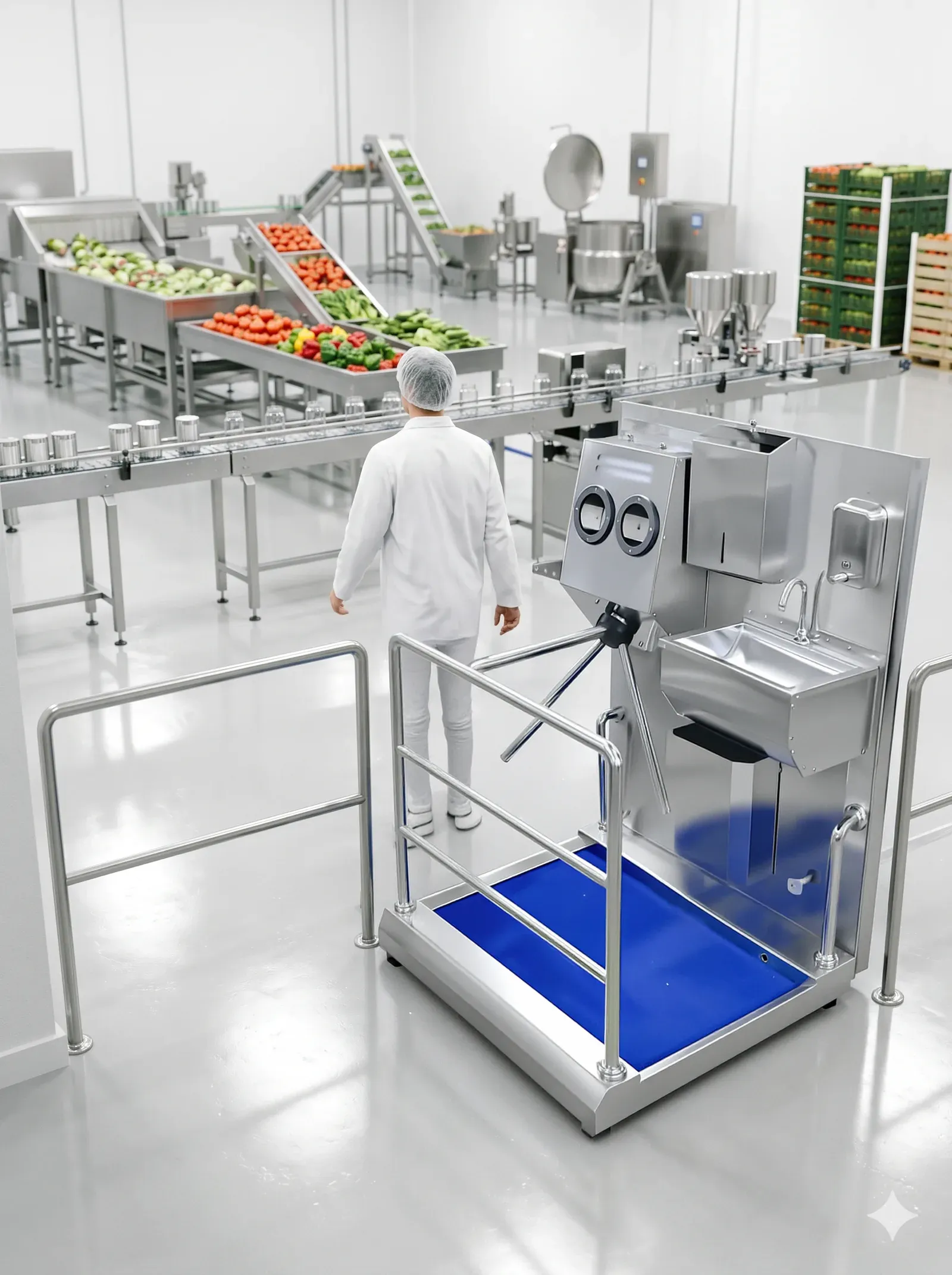
The configuration we recommend at the washing, sorting and packing line entrance combines mandatory hand washing with sole hygiene and separates the exit. The number of lanes and washbasin stations follows the peak headcount in the harvest season; the combination is settled on the layout plan at the quotation stage.
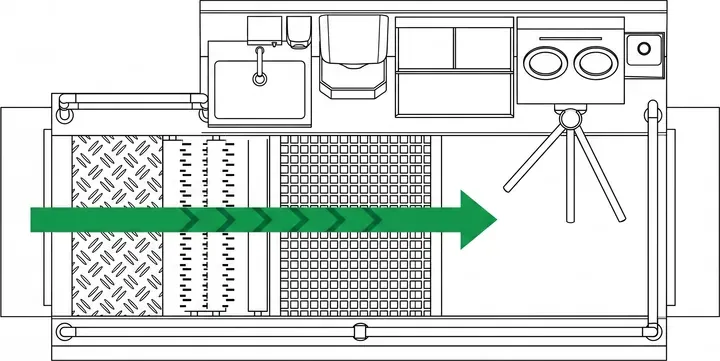
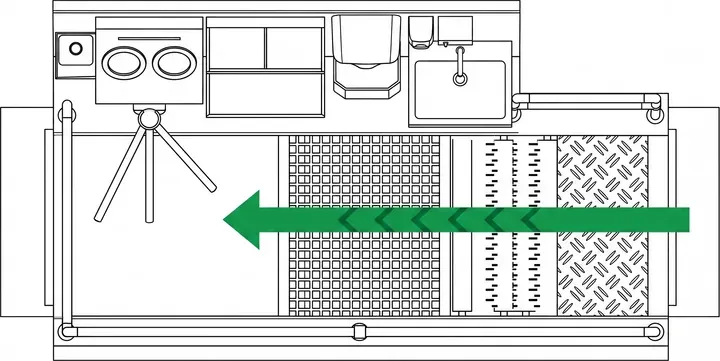
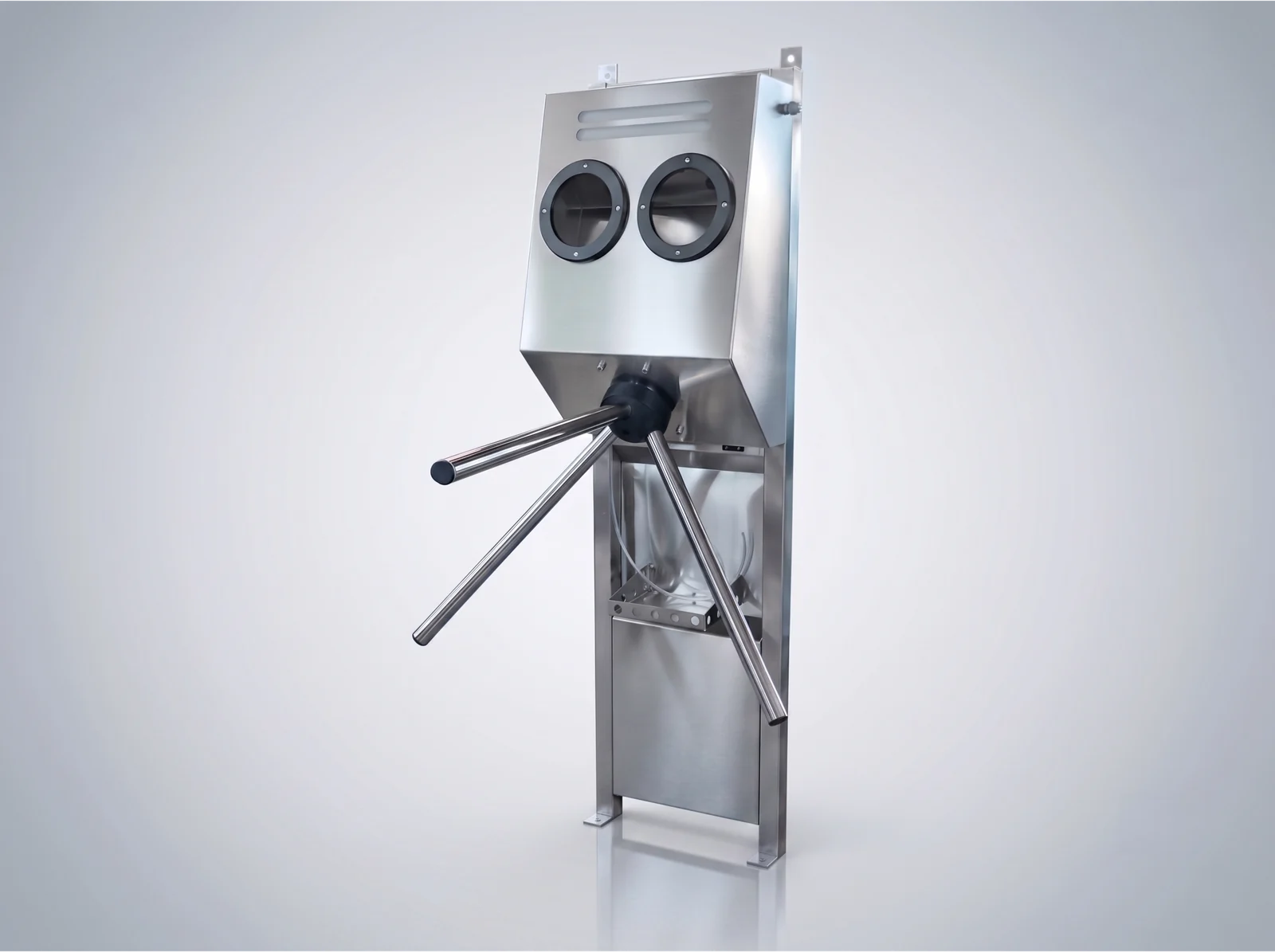
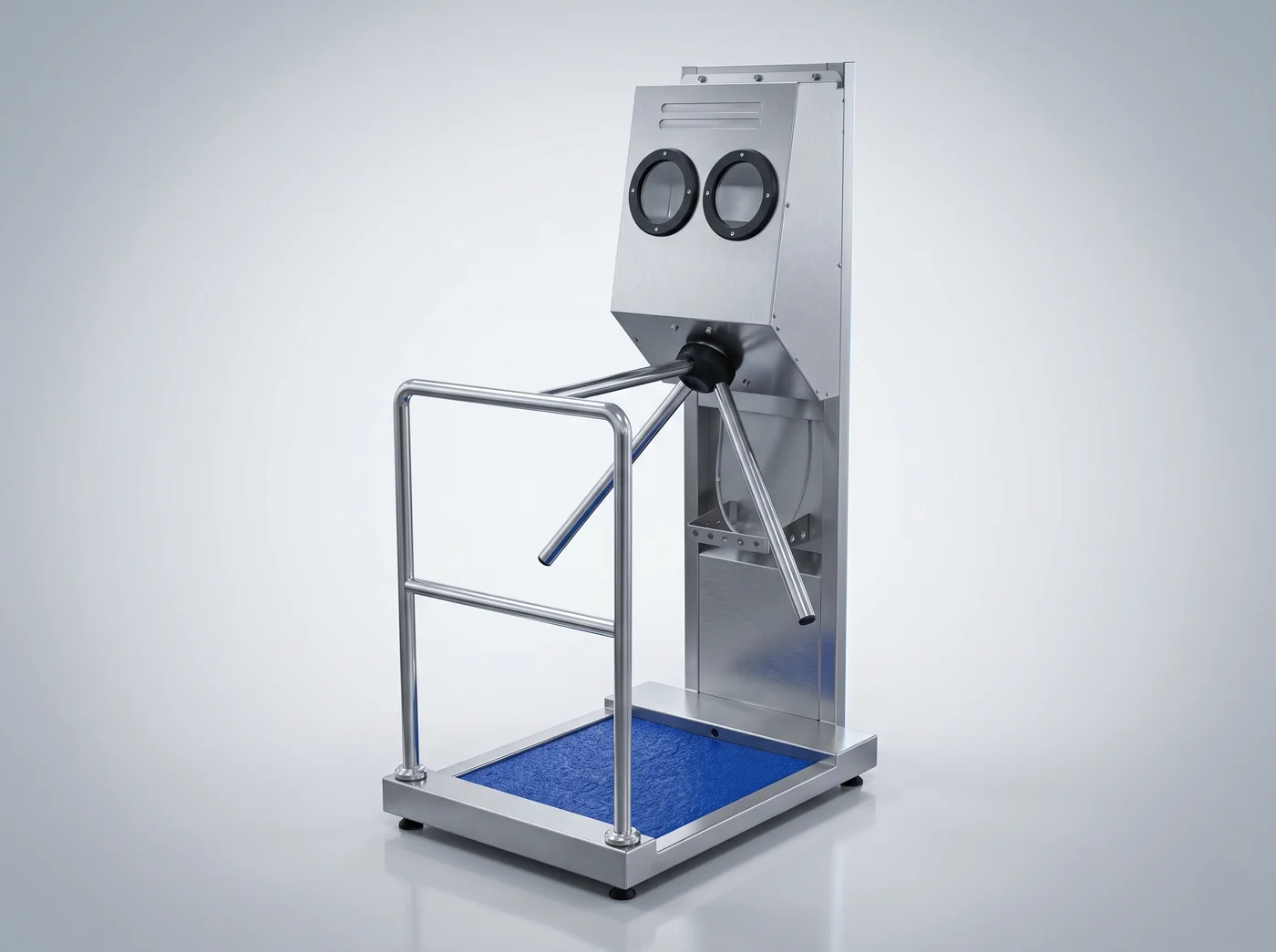
- DSE — dual-hand disinfection hygiene turnstile: blocks entry at the packing line until hand disinfection is verified; it can be combined with an optional hygiene mat.
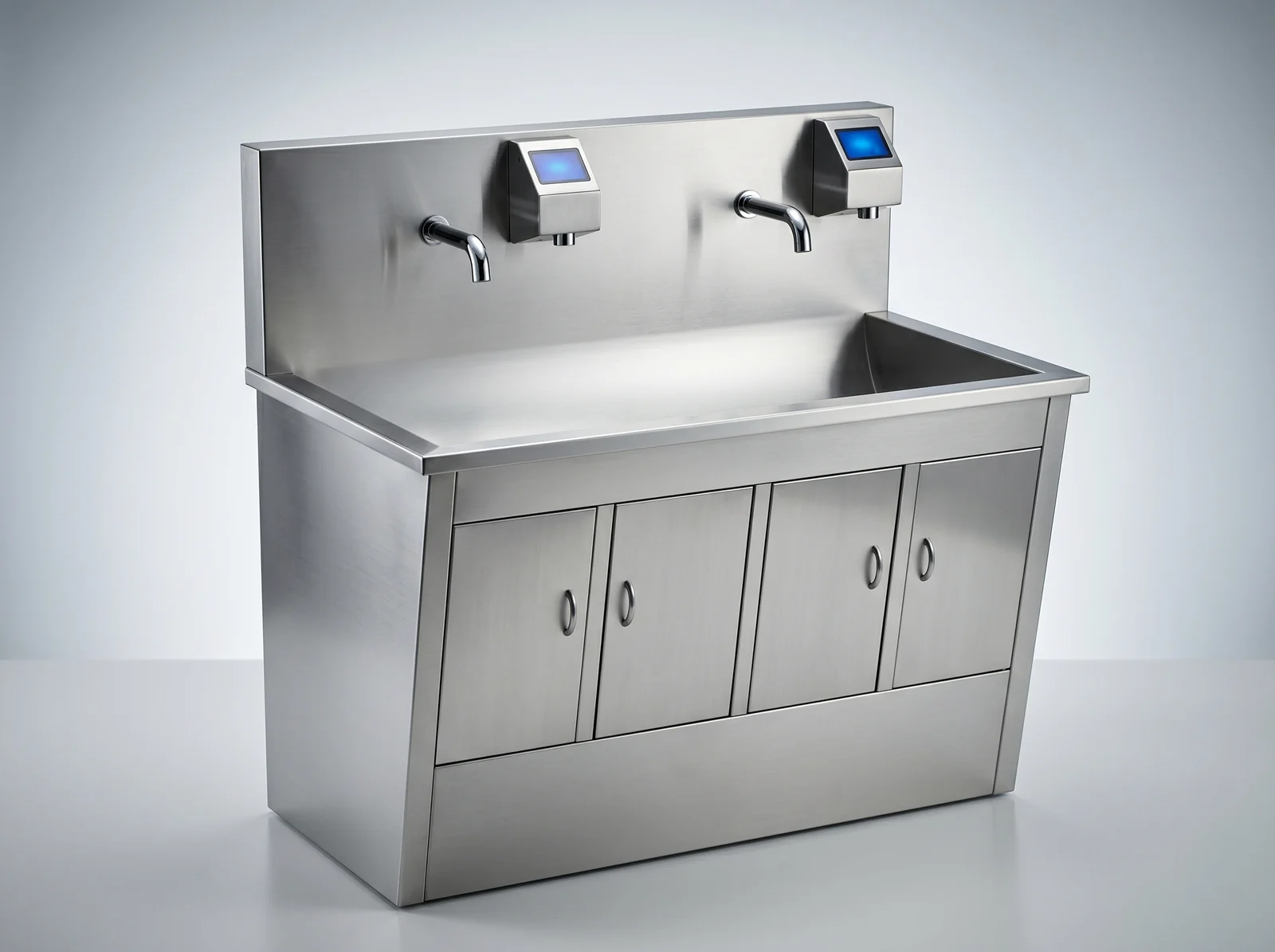
- LVS-L2 — floor-standing, 2-station sensor-operated hand washbasin: covers mandatory hand washing before the turnstile and reduces queuing at busy times; sensor water and soap keep washed hands from being recontaminated.
- HGE — footbath entry: adds sole disinfection for personnel arriving from outdoor yards; the footbath disinfectant is renewed daily and the level check is recorded.
- BGM Set — hairnet, overshoe and mask station: standardises protective equipment at the entry point.
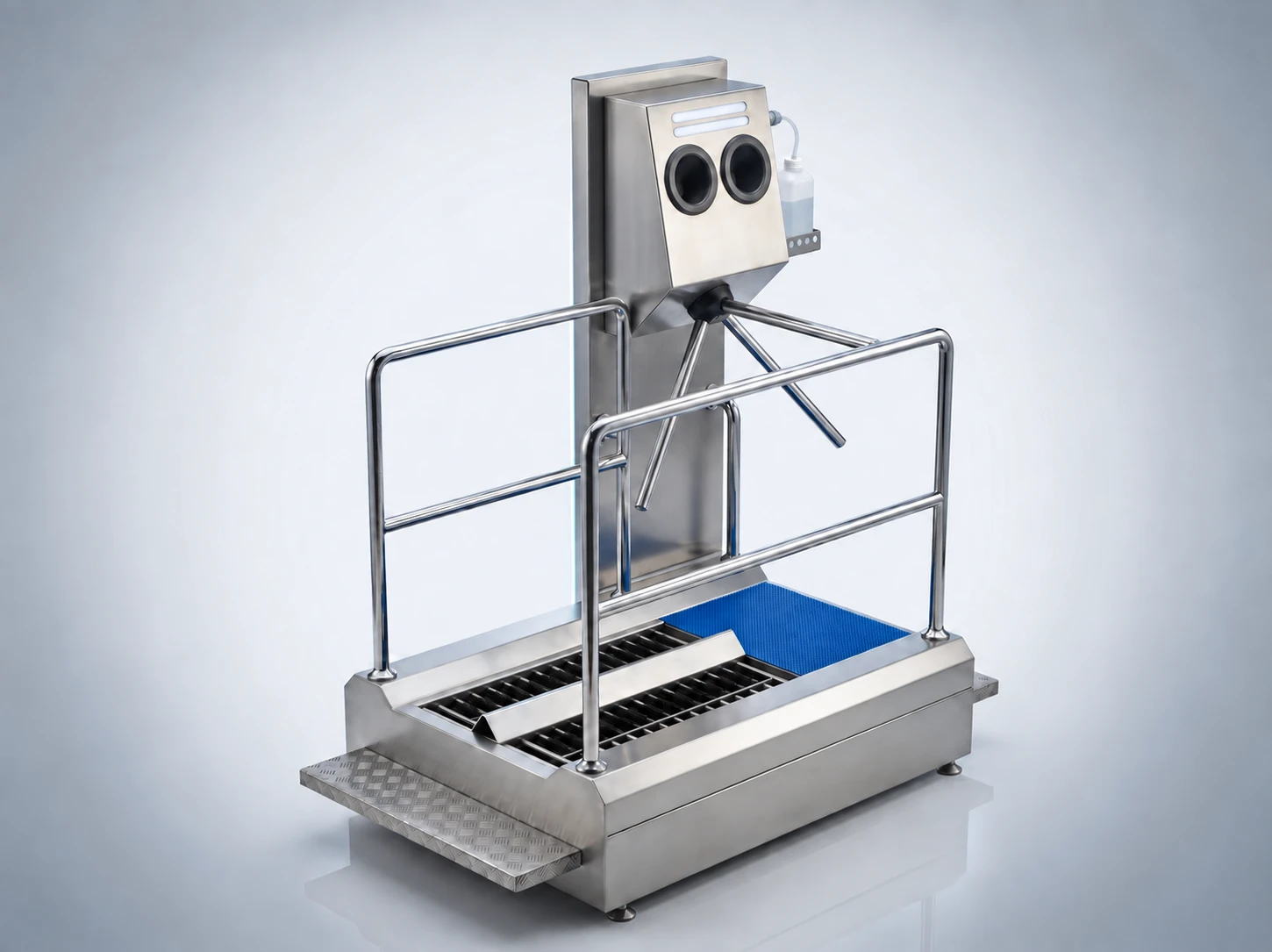
- DSE-B — variable brush-length turnstile: provides motorized sole brushing for heavy soiling at storage and yard entrances.
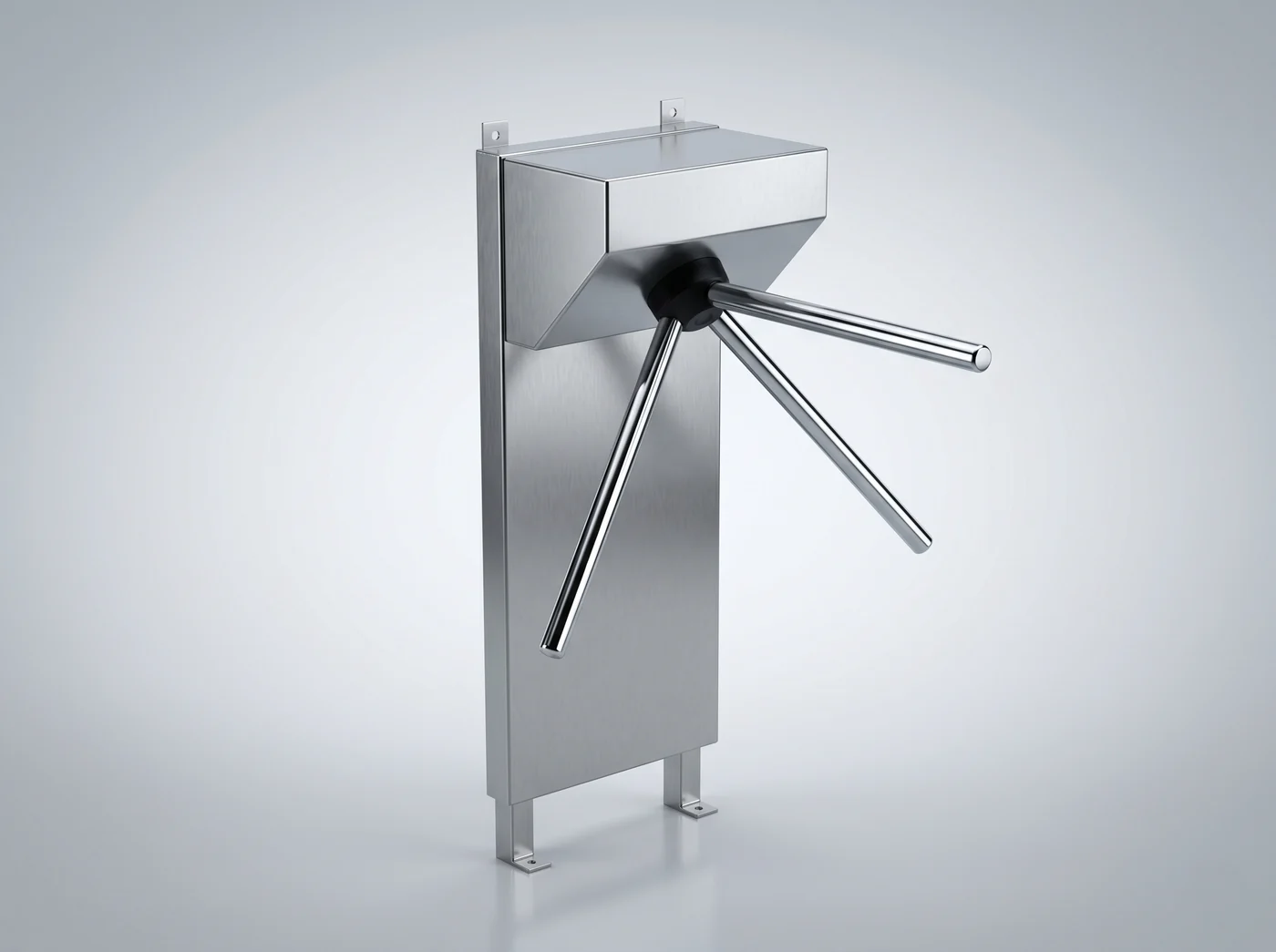
- TRN — one-way turnstile: separates the exit from the clean zone and blocks passage in the wrong direction.
Recommended units for this sector
Hygiene units frequently chosen for Fruit & Vegetable facilities.

Common questions in this sector
Why is hygiene more critical on a fresh-produce line without heat treatment?
Without cooking or pasteurisation, pathogens reaching the product can travel to the consumer. So hygiene control at staff entry becomes the single line of defence.
Which unit is recommended at the washing and packing line entry?
A sensor-operated hand washbasin plus a disinfectant footbath or hygiene mat is a typical combination. As personnel density rises, multi-station washbasins and turnstile-controlled access can be added.
How is soil-borne contamination stopped?
Soiling from storage and outdoor yards is cut at the entry point with a sole-disinfection pool or mat and mandatory hand washing. For heavy soiling a motorized-brush solution is preferred.