Hygiene barrier vs hygiene turnstile
Are hygiene barrier, hygiene turnstile and hygiene entrance unit the same? We explain the differences between the terms.
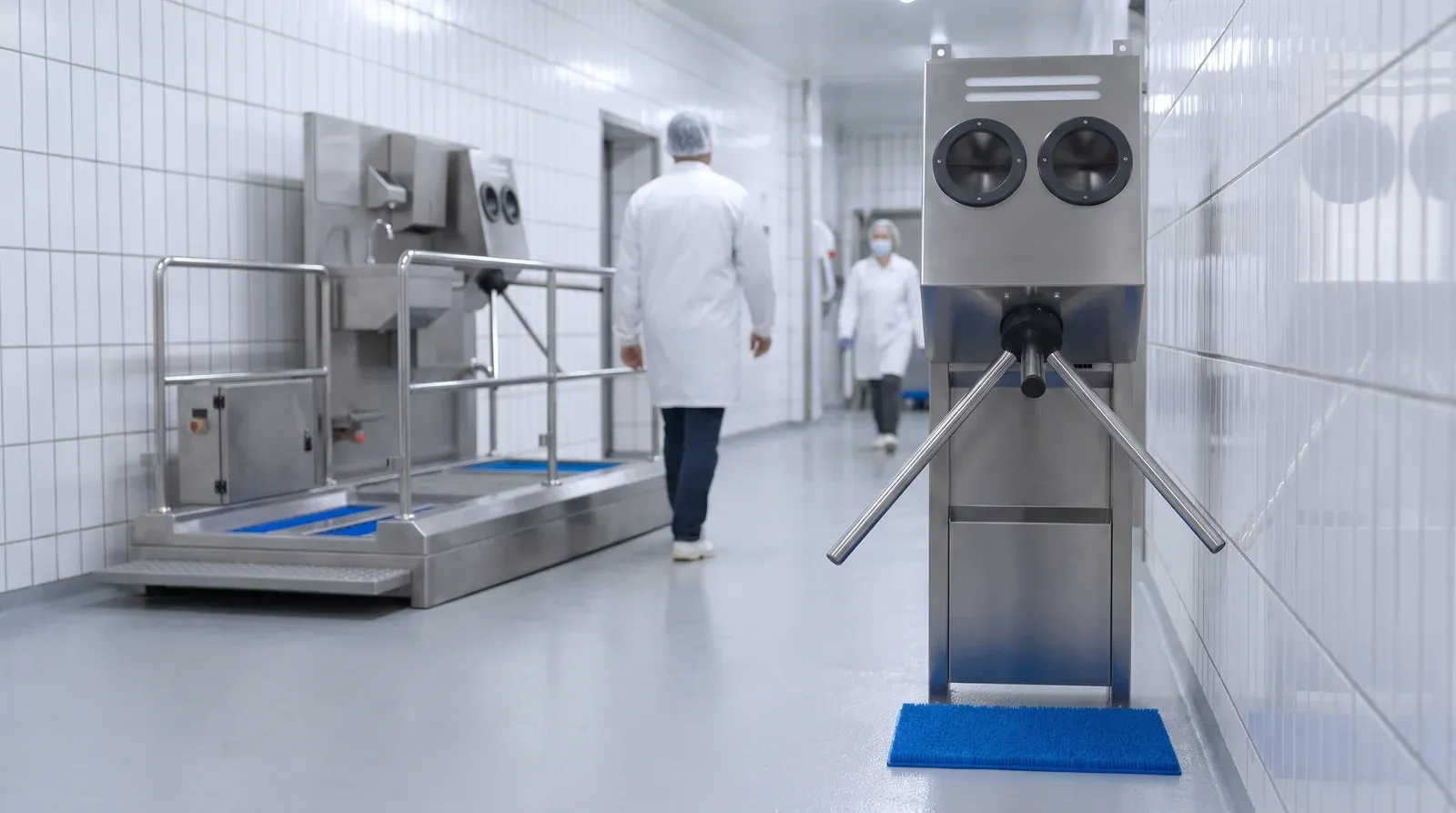
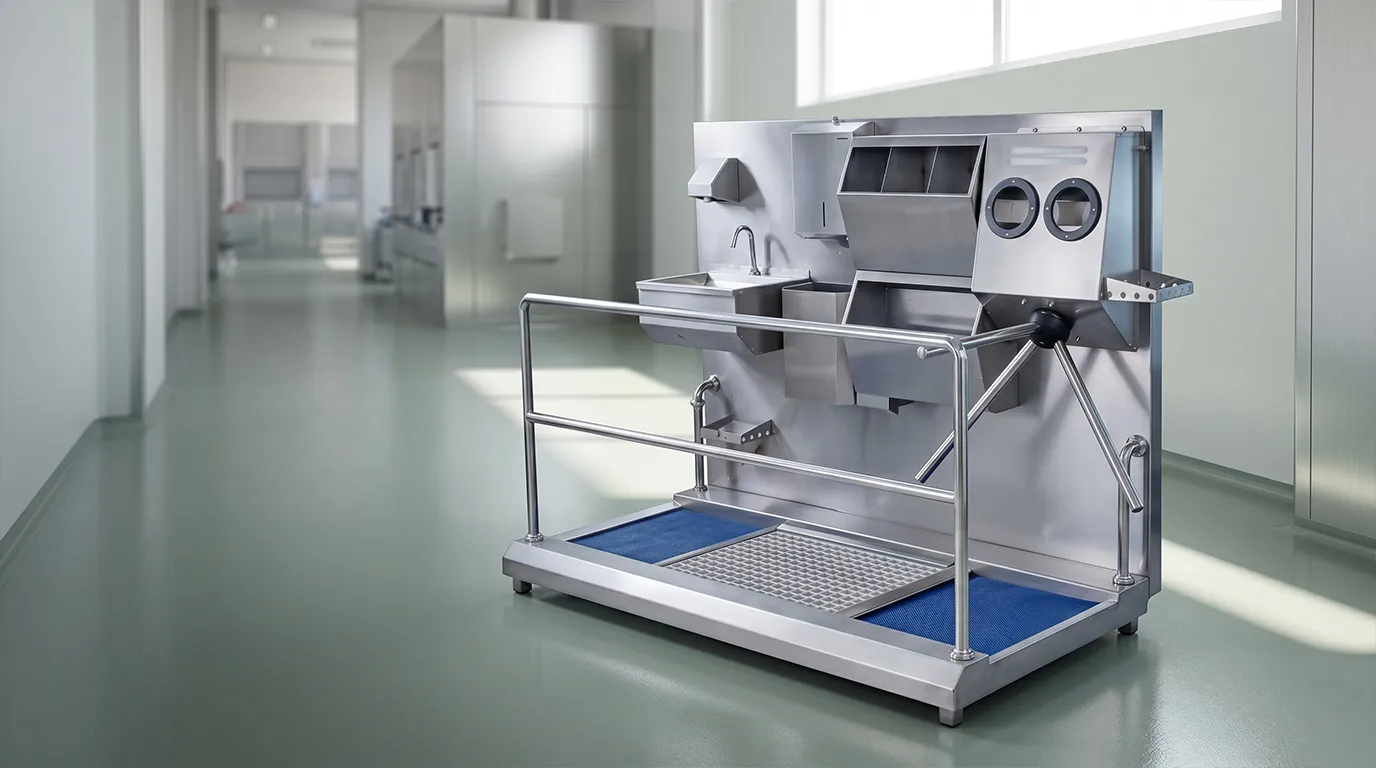
The short answer: no, they are not exactly the same thing — but the difference lies not in the product itself, rather in which aspect of it each term emphasises. "Hygiene barrier" is the umbrella term describing the whole function (a control point that makes hygiene mandatory at the entrance); "hygiene turnstile" emphasises the turnstile-controlled passage, "hygiene access unit" the hardware, and "sanitation line" the entire process from hand washing to boot disinfection. In this article we untangle, one by one, six terms that are used interchangeably on the market, and clarify what you actually mean when you search for each of them.
Are a hygiene barrier and a hygiene turnstile the same thing?
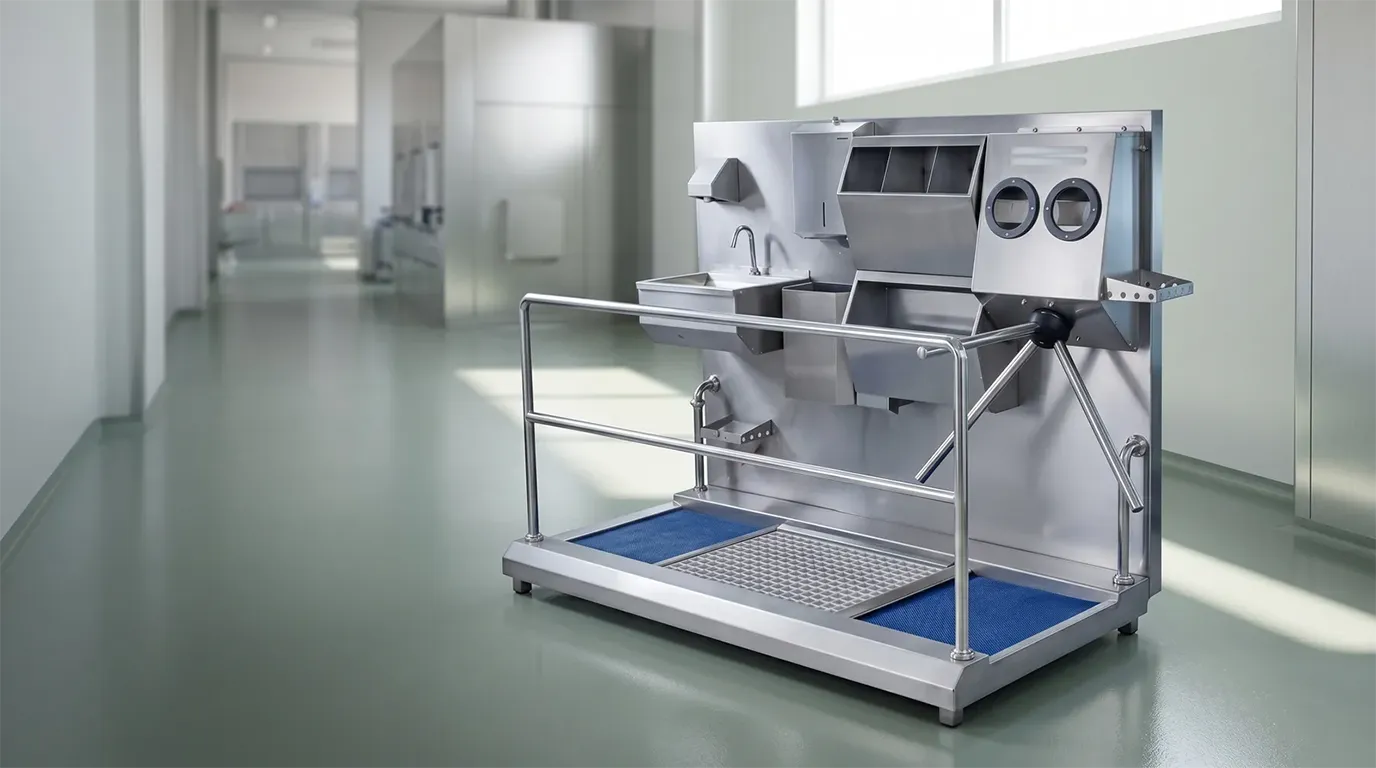
In practice they largely describe the same product, but their emphasis differs. Both terms refer to the stainless steel access system that takes personnel through the hygiene steps at the entrance to the clean production area. The difference is that the word "barrier" highlights the purpose (blocking entry), while "turnstile" highlights the mechanism that enforces it (a rotating arm that lets one person through at a time). In other words, every hygiene turnstile is a hygiene barrier; but a hygiene barrier does not always have to include a turnstile.
The reason this distinction matters is purchasing intent: suppliers list the same family of units under different names such as hygiene barrier, hygiene turnstile, hygiene access unit, disinfectant turnstile, sanitation turnstile and hygiene corridor. Two customers looking for the same need may type entirely different words. Knowing the right term helps you both find what you are looking for and state clearly what you mean when requesting a quote. For a definition of the underlying concept, see our what is a hygiene barrier article.
The terms point to the same product; what sets them apart is which aspect of that product they emphasise.
Which term emphasises what?
Each term highlights a different feature of the same system. The table below summarises the six terms most commonly encountered on the market and the main emphasis of each:
If you are talking about the general concept, say hygiene barrier; if you are emphasising turnstile-controlled passage, hygiene turnstile; if you mean the full line including hand washing, sanitation line / hygiene corridor is the most accurate choice.
Should I say hygiene barrier or hygiene turnstile?
"Hygiene barrier" is the more inclusive term, "hygiene turnstile" the more specific one. If you mean the whole of the hygiene control at the entrance — including the washbasin, disinfection, boot cleaning and the passage lock — "hygiene barrier" is the right word. If you want to highlight only the rotating-arm mechanism that lets one person through at a time, "hygiene turnstile" is clearer. Hygiene barriers also come in versions without a turnstile (for example, a hand disinfection station only); in that case the word "turnstile" would be misleading.
The turnstile is the critical component that separates a hygiene barrier from an ordinary washbasin: it stays locked and denies passage until the hygiene steps are verified by sensors. We explain step by step how this "interlock" logic works in our how does a hygiene barrier work article. The turnstile itself is not a single type either; the choice between tripod and flap directly affects capacity and passage comfort.
What is the difference between a disinfectant turnstile and a sanitation line?
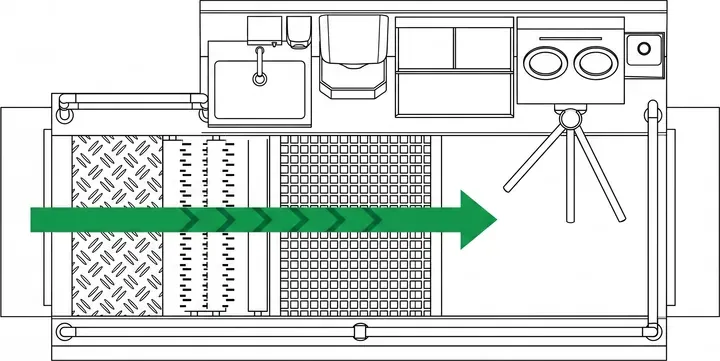
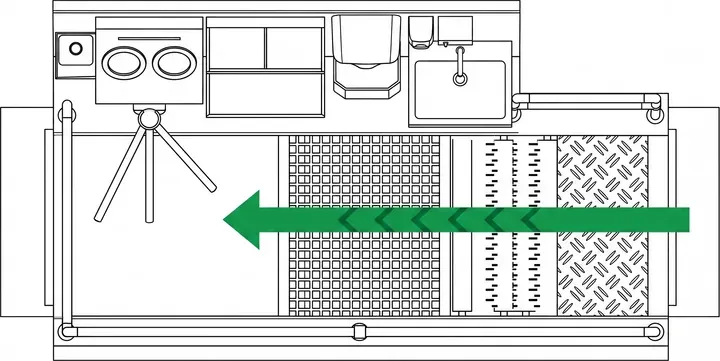
A "disinfectant turnstile" usually describes a more compact system, a "sanitation line" a more comprehensive one. A disinfectant turnstile, as the name suggests, is a relatively short unit that combines hand (and, very often, sole) disinfection with turnstile passage; it may not include a washbasin for hand washing. A sanitation line (or hygiene corridor), on the other hand, is a longer, higher-capacity biosecurity gateway that brings together hand washing with liquid soap, drying, hand disinfection and boot cleaning using wet-process equipment.
Which one is required depends on the facility’s risk profile. At entrances with a relatively low organic load where hand washing is not required, a disinfectant turnstile may be sufficient. In facilities with a high organic load — meat, dairy, poultry or seafood — a full sanitation line including hand washing is preferred. The difference between the two categories comes down to the questions of "how many steps" and "how much wet process":
- Disinfectant turnstile — hand/sole disinfection + turnstile; compact, may not include hand washing.
- Sanitation line / hygiene corridor — hand washing + drying + disinfection + boot cleaning; wet-process, high-capacity.
- Common ground — both make hygiene mandatory by locking the passage with a turnstile.
The choice of boot cleaning method (boot-brush or disinfectant footbath) is also part of this decision. For the full range of available models and configuration options, see our types of hygiene barriers guide.
When is a hygiene corridor needed?
A hygiene corridor is needed for high personnel flows where a single unit is not enough. The term describes a long passage arrangement covering several hygiene units lined up in sequence — for example, parallel hand-washing stations, boot-cleaning grates and multi-lane turnstiles. In large food factories where hundreds of people must get inside within a short time at the start of a shift, a single-lane barrier creates a queue; a corridor layout opens up this bottleneck with parallel lanes.
The question to ask before moving to a corridor is capacity: how many people will pass through during the busiest minute at the start of the shift? We work through this calculation in our what capacity of hygiene barrier do you need article. A single-lane tripod turnstile typically lets through about 25-30 people per minute; for flows above that figure, a multi-lane corridor layout starts to make sense.
A single unit = hygiene barrier/turnstile; several units in sequence = hygiene corridor/sanitation line. What sets the boundary is the personnel density at the start of the shift.
Does the material change depending on the term?
No — whether it is called a hygiene barrier or a sanitation line, the body material is chosen by the same logic. Almost all hygiene access equipment is made of AISI 304 stainless steel, thanks to its non-porous surface that withstands caustic cleaning. In aggressive environments with continuous chloride contact (heavy salt, brine, chlorine-based disinfectant), molybdenum-bearing AISI 316 is considered. We examine the technical rationale for this choice in detail in our 304 or 316 hygiene steel article. So even if the term changes in marketing language, the essence of hygienic design — a washable stainless surface and an auditable passage — remains constant.
Which term should I use when requesting a quote?
The soundest approach is to describe the need, not the term. From the supplier’s point of view, what matters is not whether you say "hygiene barrier" or "sanitation line", but how many people will pass through, which steps are required (hand washing, disinfection, boot cleaning) and the physical layout of the entrance. This information determines the right configuration. Clarifying the following three points when requesting a quote ensures the right unit is proposed, independent of the terminology confusion:
- 1Sector and risk — food, pharma or hospital; what the levels of organic load and chloride contact are.
- 2Capacity — how many people will pass through during the busiest minute at the start of the shift (single or multi-lane).
- 3Required steps — disinfection only, or hand washing and boot cleaning as well.
Once these three points are clear, the right term follows on its own. For a step-by-step selection guide, see our how to choose a hygiene barrier article, and for a configuration tailored to your facility and a precise price, request a quote from us.
Frequently asked questions
Are a hygiene barrier and a hygiene turnstile the same thing?
In practice they largely describe the same product. "Hygiene barrier" is the umbrella term for the entire control point that makes hygiene mandatory at the entrance; "hygiene turnstile" highlights the turnstile-controlled passage mechanism that enforces that control. Every hygiene turnstile is a hygiene barrier, but a hygiene barrier can also come without a turnstile.
Is a hygiene access unit a different product?
No, it is the hardware-focused name for the same product. The term "access unit" emphasises that the system is a physical piece of equipment with a stainless steel body; functionally it describes the same thing as a hygiene barrier.
What is the difference between a disinfectant turnstile and a sanitation line?
A disinfectant turnstile is usually more compact: it combines hand/sole disinfection with a turnstile and may not include a washbasin for hand washing. A sanitation line (or hygiene corridor) is a more comprehensive biosecurity gateway that combines hand washing with liquid soap, drying, disinfection and boot cleaning using wet-process equipment.
What is the difference between a hygiene corridor and a hygiene barrier?
The difference is mainly one of scale. "Hygiene barrier" describes a single access unit, while "hygiene corridor" describes several units lined up in sequence (parallel lanes, multiple stations). The corridor layout is preferred in large facilities with high personnel flow at the start of a shift, to prevent queuing.
Which term should I use when requesting a quote?
It is sounder to describe the need rather than the term. Stating your sector, the number of personnel at the start of the shift and the required hygiene steps (hand washing, disinfection, boot cleaning) ensures the right configuration is proposed, whatever the term.
Are all these systems made of the same stainless steel?
Usually yes. Whatever the term, the body is mostly made of AISI 304 stainless steel because of its non-porous, cleanable surface. In aggressive environments with continuous chloride contact, molybdenum-bearing AISI 316 is considered.