How does a hygiene barrier work?
The step-by-step working principle of a hygiene barrier: how it enforces the sequence and what unlocks the turnstile.
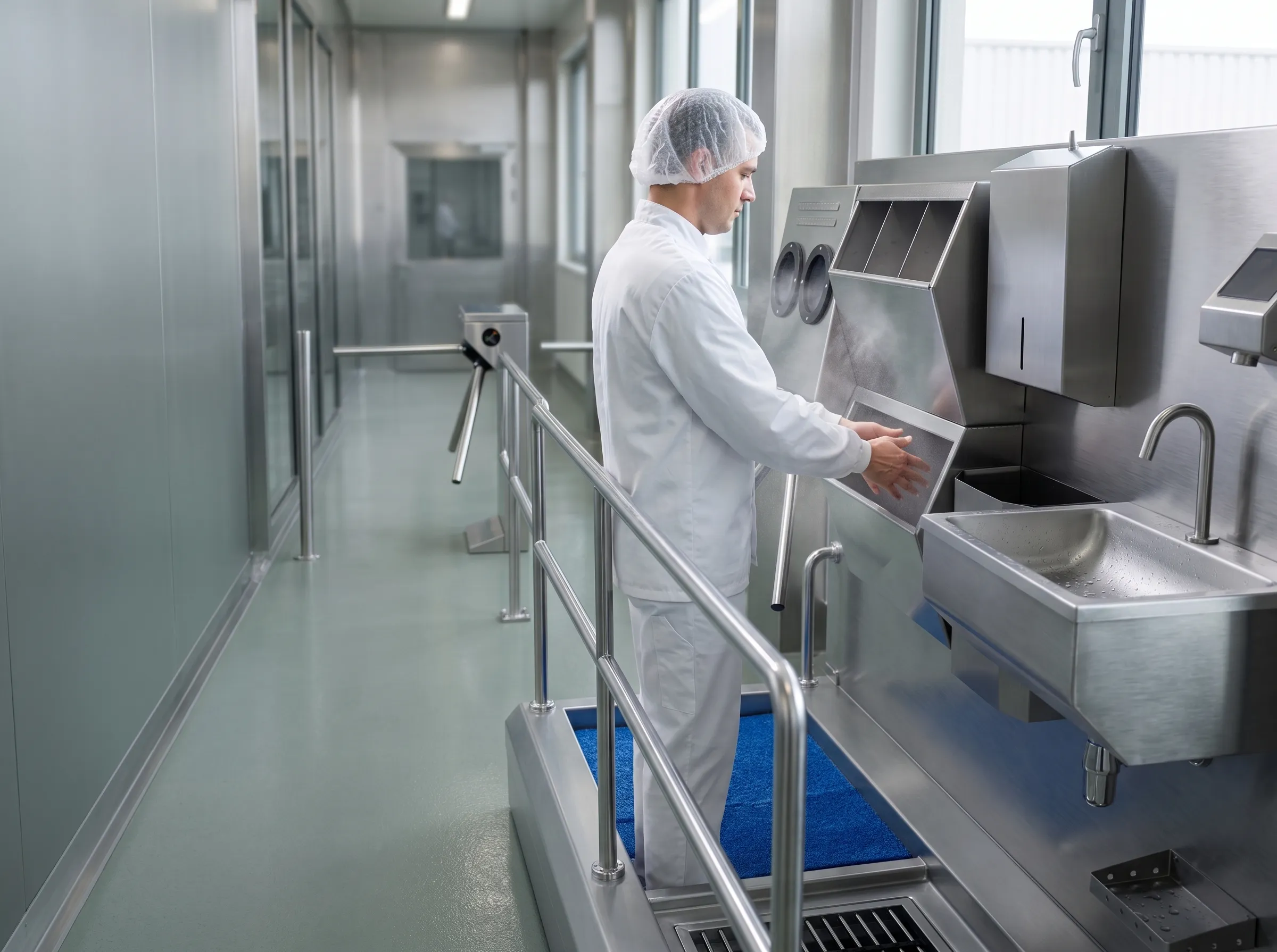
A hygiene barrier works by forcing personnel to complete a defined hygiene sequence step by step before they are admitted to the clean area: hand washing, drying, hand disinfection and, where required, boot cleaning. The heart of the system is the sensor-based interlock logic — each step is verified by sensors, the turnstile stays locked until the control board (PLC) confirms that the steps were completed in the correct order, and passage opens in one direction only. In this article we walk through a hygiene barrier’s complete working flow, from the moment of approach to the turnstile release, along with the interlock logic and the sensor–PLC roles, step by step.
On what principle does a hygiene barrier work?
A hygiene barrier works on the "forced sequence" principle: personnel cannot pass through the turnstile until they have completed the hygiene steps in a predefined order. While an ordinary turnstile verifies an identity and opens, a hygiene barrier additionally verifies with sensors that the hygiene behaviour was actually performed. Passage is thus tied not to a claim of "I did the hygiene" but to steps that were actually completed and measured.
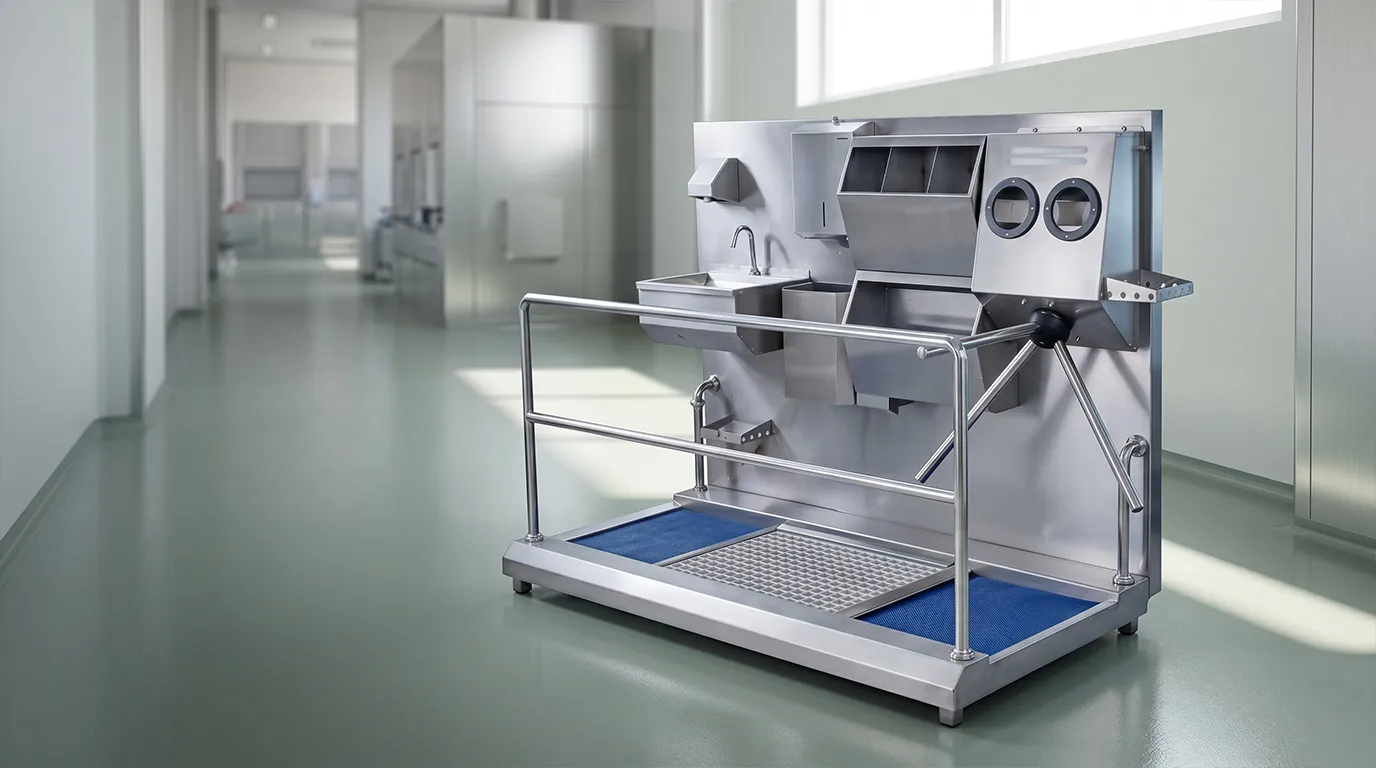
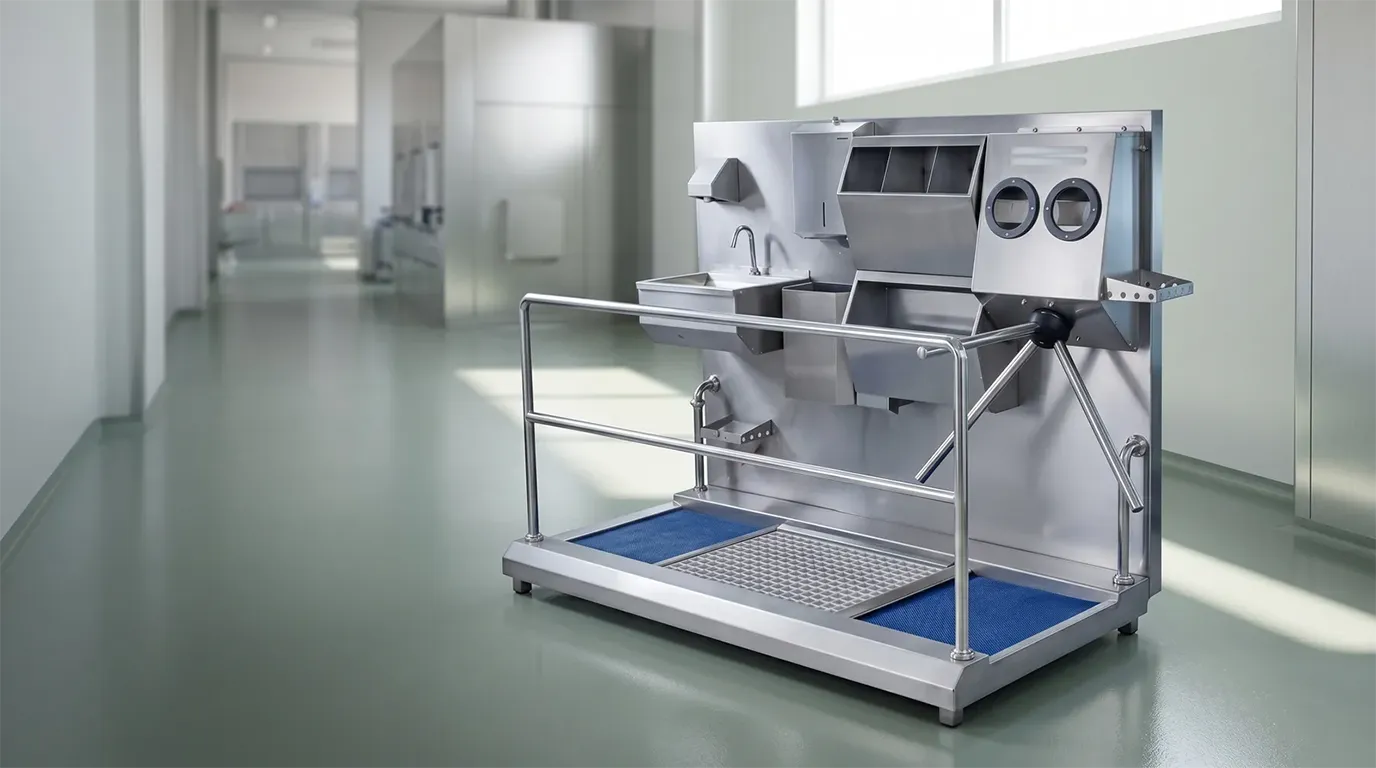
Mechanically, three layers work together: the hygiene units (washbasin, disinfectant, boot cleaning), the sensors that monitor each unit, and the control board / PLC that evaluates the signals from those sensors and manages the turnstile. We covered what these layers are, component by component, in our what is a hygiene barrier article; here our focus is how they work.
What separates a hygiene barrier from an ordinary turnstile is the lock: the turnstile does not open until hygiene is proven complete.
How does a hygiene barrier work step by step?
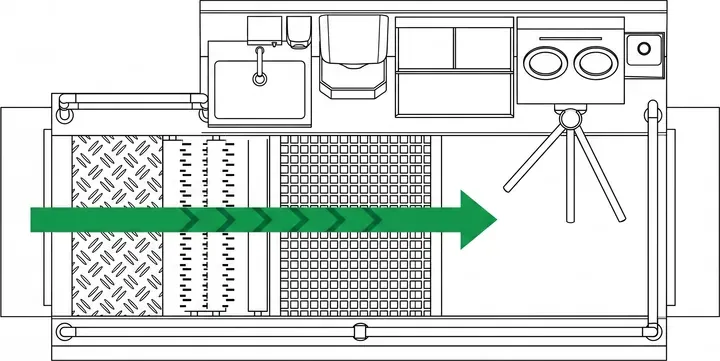
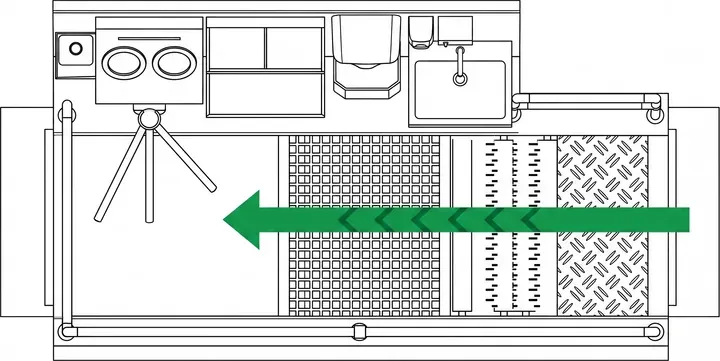
In a typical hygiene access unit with a washbasin, personnel complete the following sequence from start to finish. Each step depends on the previous one; if a step is skipped, the system counts it as incomplete and the turnstile stays locked. The flow proceeds as follows:
- 1Approach and identification. The employee enters the unit; identity is read via an optional card/reader. This step allows passages to be logged per person and an auditable hygiene passage to be established.
- 2Hand washing. The photocell (touchless) tap turns the water on when it detects hands; liquid soap is likewise dispensed from a touchless dispenser. For effective washing, hands are scrubbed for typically at least 20 seconds. The sensor verifies that the tap was used.
- 3Drying. Hands are dried with a paper towel or hand dryer. This step must not be skipped: wet hands dilute the alcohol-based disinfectant in the next step and reduce its effectiveness.
- 4Hand disinfection. Hand disinfectant is applied from a touchless, automatic-dosing unit. The sensor detects that the hands were placed into the disinfectant chamber / that the dose was dispensed, and reports this step to the control board as "completed".
- 5Boot cleaning (in facilities that require it). The shoe soles are cleaned by horizontal brushes and the sides of high boots by vertical brushes; disinfectant is applied where required. This cycle takes typically a few seconds. We compare the differences between boot cleaning methods in our boot washing methods article.
- 6Sensor verification. The control board checks that it has received the "complete" signal from all required steps in the correct order. If a signal is missing, the turnstile remains locked.
- 7Turnstile release and one-way passage. Once all steps are verified, the control board releases the turnstile lock; on most units the visual/audible indicator turns from red to green (locked/free) and the employee passes into the clean area in one direction. After the passage, the turnstile locks again.
Alcohol-based hand disinfectants are most effective within a specific alcohol concentration range. The water carried on wet hands can dilute the alcohol below this effective range. That is why the correct order is hand washing → drying → disinfection; a hygiene barrier enforces this order by design.
How does the interlock logic work?
The interlock logic is the rule set that ties the turnstile to the hygiene steps: the turnstile opens only when all defined steps have been verified and completed in the correct order. If even a single step is missing, the turnstile stays mechanically locked; personnel cannot push their way through. This turns the expectation "follow the rule" into the assurance "make skipping the rule physically impossible".
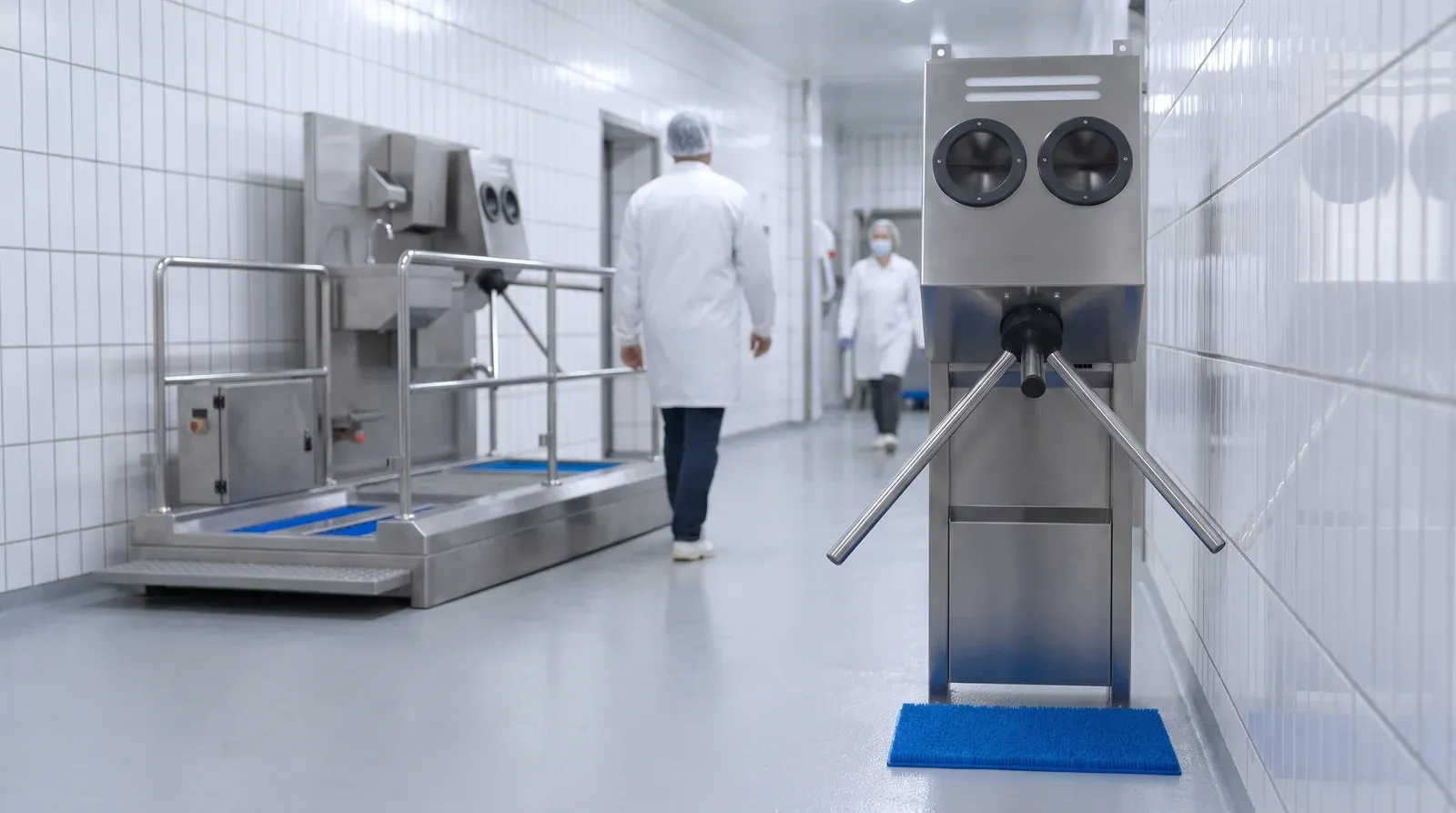
The second dimension of the interlock is direction control. Passage through a hygiene barrier is usually one-way; the turnstile rotates only towards the clean area and does not turn freely in the reverse direction. This ensures both that the hygiene sequence is applied from start to finish and that uncontrolled back-flow from the clean area to the dirty side is prevented. In facilities where entry and exit must be controlled separately, layouts with two turnstiles are installed.
The type of turnstile providing the access control (tripod or flap) affects both the locking behaviour and the capacity. We cover which one suits your facility in our tripod turnstile or flap turnstile comparison.
What role do the sensors and the PLC play?
The sensors detect whether the steps have been performed; the control board (PLC) evaluates these signals and gives the turnstile the decision to "open" or "stay locked". In other words, the sensors are the system’s "senses" and the PLC is its "brain". Each hygiene unit (tap, soap, disinfectant, boot cleaning) has its own sensor, and all of them are connected to a single control board.
In a typical flow the sensor–PLC chain works like this: the touchless tap and dispensers detect hands with optical/proximity sensors; each time a unit is used, a "complete" signal goes to the control board; the board compares these signals against the defined sequence; if all required steps are complete, an open command is issued to the turnstile’s lock solenoid; after the passage the system resets and the lock re-engages for the next person. This ties every passage to the same standard.
Because these units are constantly exposed to water, soap and disinfectant, the sensors and electronics need a high level of water/dust protection. We explain what protection ratings such as IP69K mean on hygiene equipment in our what is IP69K article.
An optional counter can record the number and time of passages. This record is valuable in food safety management because, during audits, it backs the claim "personnel applied the hygiene steps at the entrance" with concrete data.
What happens if a step is skipped?
If a step is skipped, the turnstile simply does not open. The system interprets the missing sensor signal as "step not completed" and does not issue the unlock command; no matter how hard someone pushes, no passage takes place. This behaviour is deliberate — hygiene being "forgotten", or "rushed and skipped" on a busy shift, is prevented by the system. The correct sequence is protected by the following logic:
- Missing step = closed turnstile. Every unverified step automatically blocks the passage.
- The wrong order does not count. The steps are expected in the defined order; random triggering does not open the passage.
- No back-flow. The one-way lock prevents uncontrolled return from the clean area to the dirty side.
- Reset. After every passage the system locks again; the next person starts from zero.
How does it differ from manual hygiene?
The fundamental difference is consistency: manual hygiene depends on a person’s discipline at that moment, whereas a hygiene barrier ties every passage to the same standard. At an open washbasin, steps can be skipped under pressure, done in the wrong order or not done at all — and no one can prove it either way. Because a hygiene barrier verifies the steps with sensors and ties the turnstile to them, it turns hygiene from an optional behaviour into a precondition for passage.
That is why a hygiene barrier is the most auditable way to stop contamination right at the entrance, before it reaches the production area. We discuss the place of this approach in food safety in our stopping contamination at the entrance article.
Conclusion
At its core, a hygiene barrier works on a simple but powerful idea: verify the hygiene steps with sensors, keep the turnstile locked until they are completed in the correct order, and open the passage in one direction only. Every stage, from hand washing to the turnstile release, depends on the one before it; the control board (PLC) manages this chain. The result is entrance hygiene that is not left to the employee’s discretion — measurable and auditable. We can determine together the working arrangement that suits your facility’s flow and risk profile.
Frequently asked questions
What unlocks the turnstile in a hygiene barrier?
The turnstile is released by the sensor verification of the hygiene steps. When hand washing, drying, hand disinfection and, where required, boot cleaning are completed, the corresponding sensors send a "complete" signal to the control board (PLC); once the board confirms that all required steps finished in the correct order, it releases the turnstile lock. The turnstile does not open until the steps are completed.
Is a hygiene barrier one-way?
Typically yes. Passage is usually configured in one direction (towards the clean area); the turnstile does not turn freely in the reverse direction. This ensures both that the hygiene sequence is applied from start to finish and that uncontrolled back-flow from the clean area to the dirty side is prevented. In facilities where entry and exit must be controlled separately, layouts with two turnstiles are preferred.
What does a hygiene barrier do if a step is skipped?
If a step is skipped, the turnstile does not open. The system interprets the missing sensor signal as "step not completed" and does not issue the unlock command; personnel cannot push their way through. This interlock logic physically prevents hygiene from being skipped on a busy shift.
Why are hands dried first and disinfected afterwards?
Because wet hands can dilute the alcohol-based disinfectant below the concentration range where it is most effective. That is why the correct order is hand washing → drying → disinfection, and a hygiene barrier enforces this order by design.
What do the sensors and the PLC do in a hygiene barrier?
The sensors detect whether each unit (tap, soap, disinfectant, boot cleaning) has been used; the control board (PLC) evaluates these signals and gives the turnstile the decision to "open" or "stay locked". The sensors are the system’s perception, and the PLC is the brain that decides. Because these units are exposed to water, the sensors must have a high protection rating.
Does a hygiene barrier log passages?
Yes, with an optional counter. The number and time of passages can be recorded; this data is valuable in food safety management because it concretely demonstrates during audits that personnel applied the hygiene steps at the entrance.