Hygiene barrier types and models
Turnstile, washbasin, brush and boot-wash hygiene barrier models — which type fits your facility? A comparison of all variants.
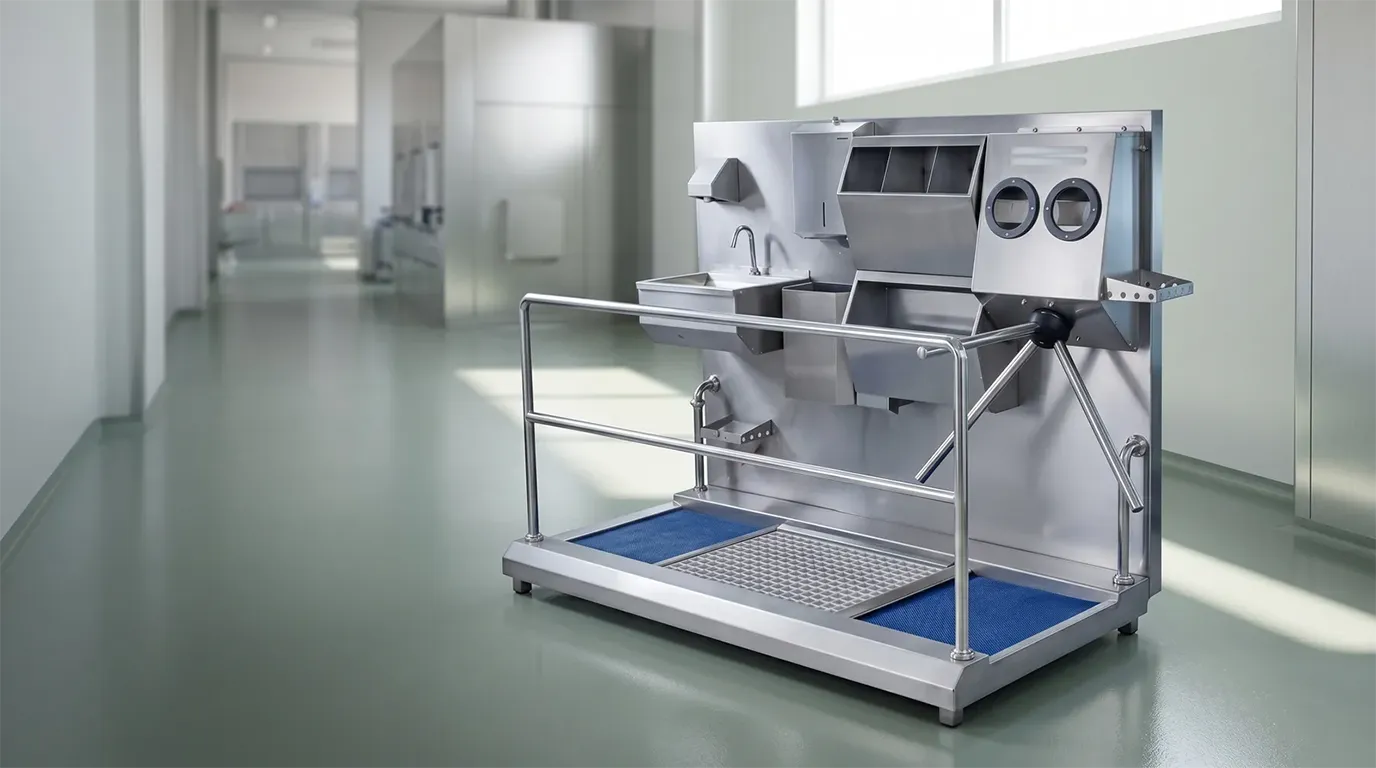
Hygiene barriers are not a single standard product; they are a family of models configured along axes such as with/without a washbasin, brush/footbath boot cleaning, single/double lane and one-way/dual turnstile. The right type is determined by your sector’s contamination risk, the personnel flow at the start of a shift and the physical layout of the entrance. In this article we separate the hygiene barrier types by their component and configuration axes and show, comparatively, which type suits which facility.
What types of hygiene barrier are there?
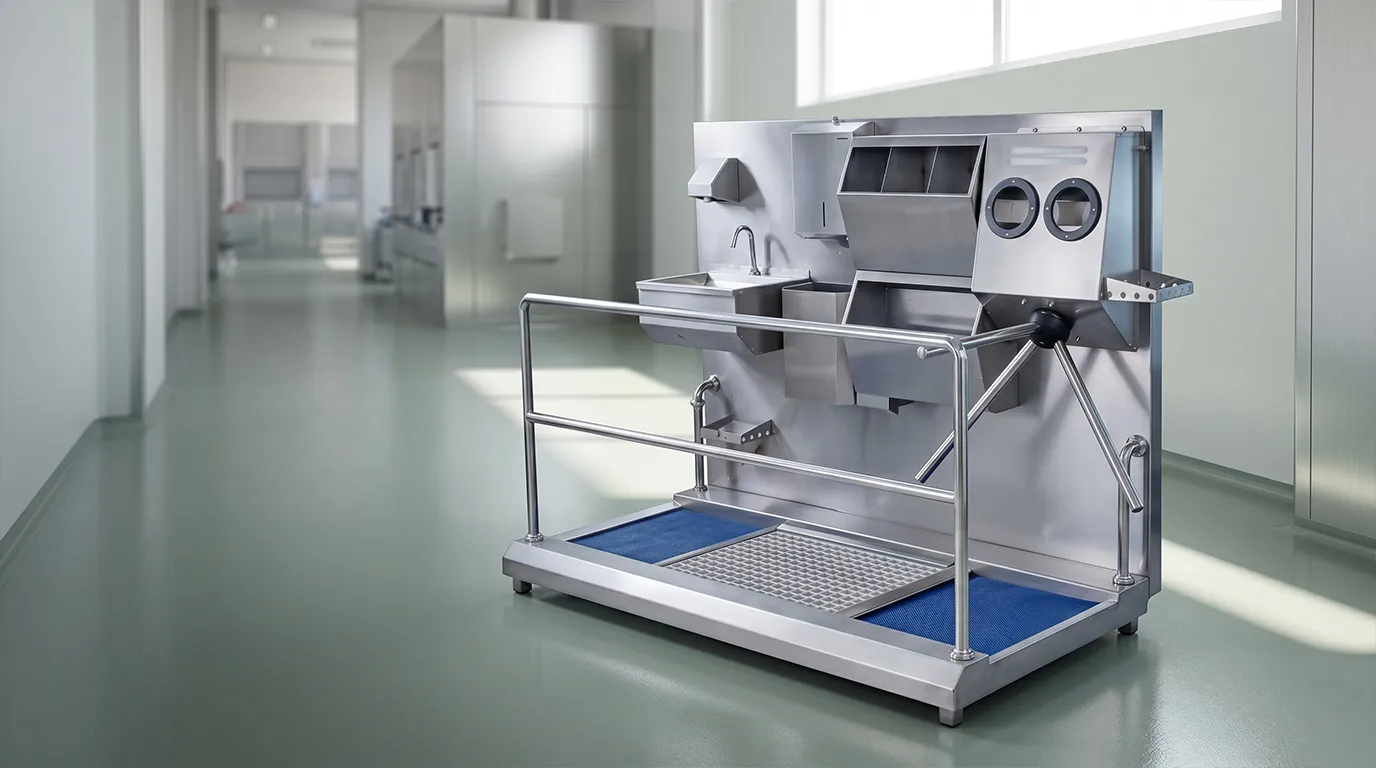
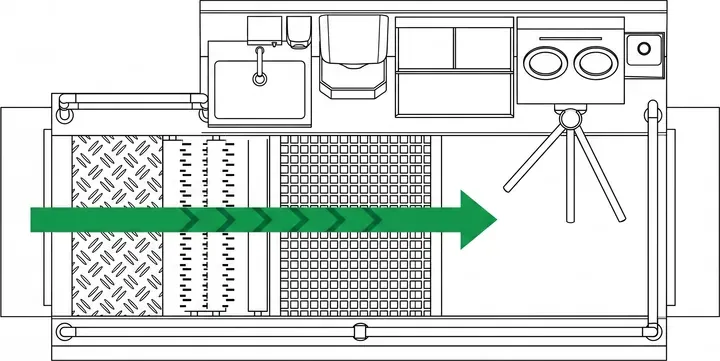
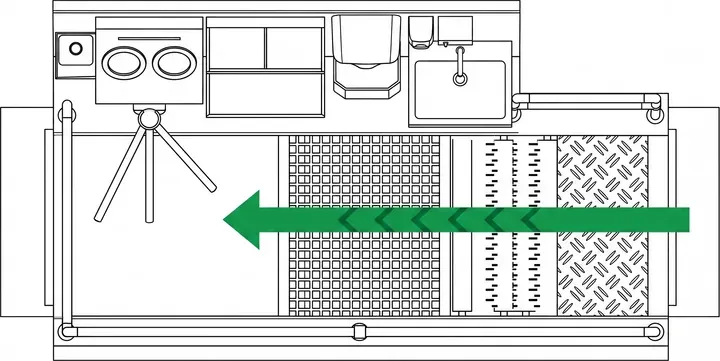
Hygiene barrier types are classified not by a single feature but by several overlapping axes: whether or not there is a hand-washing line (with/without a washbasin), the boot cleaning method (brush/footbath), the number of parallel passages (single/double lane) and the direction of passage (one-way/dual turnstile). In practice a "model" emerges when the components selected from these axes are combined on a single stainless steel line. That is why two facilities can use the same product name yet have completely different configurations.
There is a single common core that does not change across all models: the turnstile. The turnstile is the component that locks passage until the hygiene steps are completed, and it is what separates a hygiene barrier from an ordinary washbasin or disinfectant stand. We cover how it works in our how a hygiene barrier works article; here our focus is the components added around the turnstile and the model variants they create.
Choosing a hygiene barrier is not picking an off-the-shelf box; it is bringing the components together in the right combination for the facility’s risk.
Which models are there by turnstile type?
The turnstile type determines both the passage capacity and the level of physical security. In personnel hygiene passages the two most common options are the waist-height tripod turnstile and the waist-height flap turnstile; where higher security is required, a full-height turnstile is used.
- Tripod turnstile — a three-arm, waist-height passage. The most common type in hygiene barriers; economical, compact and lets one person through at a time. A single lane typically offers a capacity of about
25–35 peopleper minute. - Flap turnstile — with opening wings, a smoother and wider passage; more comfortable for personnel carrying wheeled equipment or a cart.
- Full-height turnstile — a floor-to-ceiling cage structure; it prevents climbing over or crawling under and provides the highest passage security. Preferred for high-security or unsupervised entrances.
For most food and pharmaceutical facilities the tripod turnstile strikes the right balance; a full-height turnstile is mostly needed at points where security is a high priority. You can examine the detailed choice between tripod and flap turnstiles in our tripod or flap turnstile comparison.
With or without a washbasin?
This distinction looks at whether or not the model includes a hand-washing line. Models with a washbasin offer a full hand hygiene cycle (wash–dry–disinfect), while models without a washbasin combine only hand disinfection with turnstile-controlled passage. Which is right depends on the facility’s risk and the condition in which personnel enter the clean area.
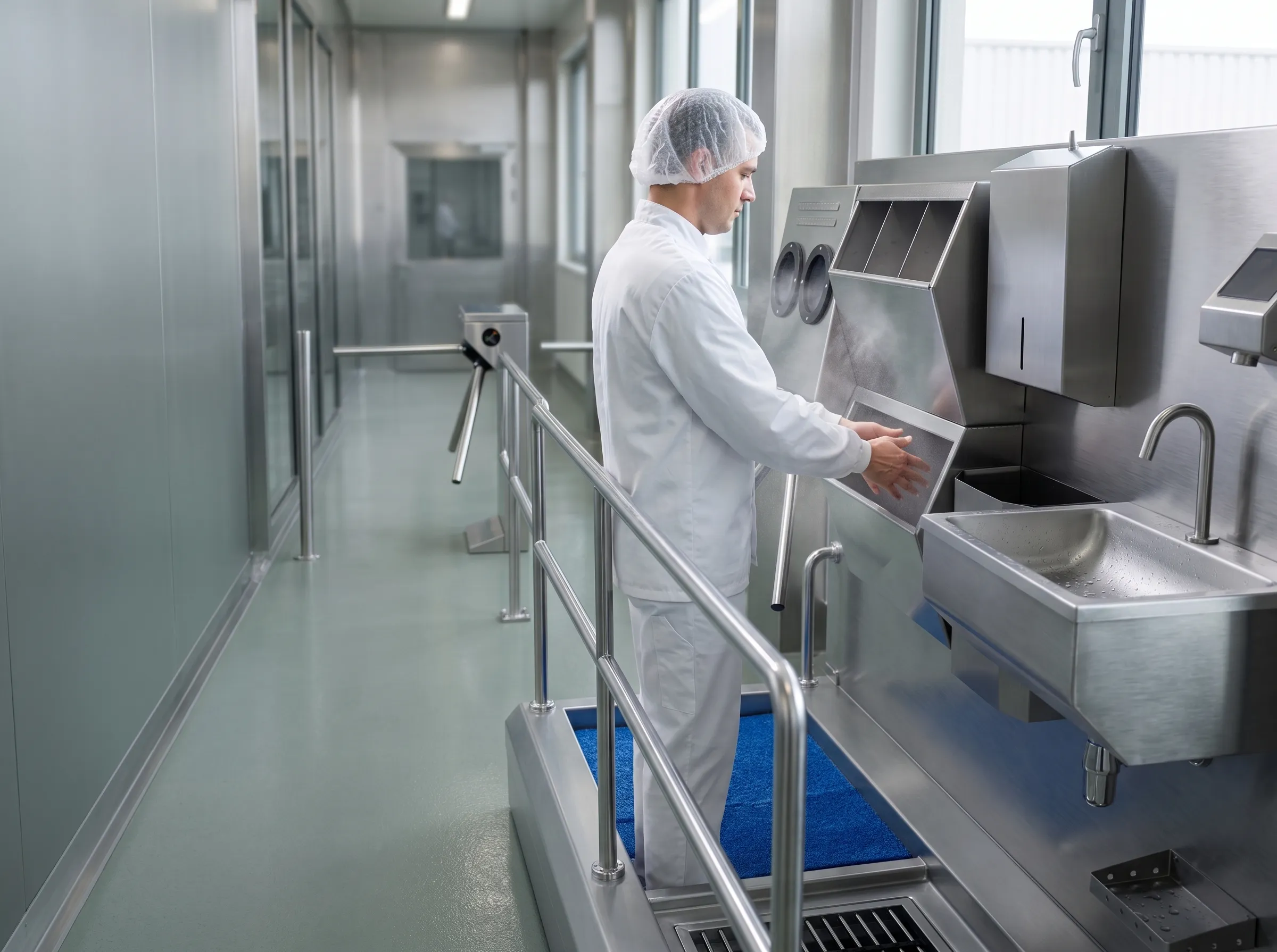
- Model with a washbasin — includes a full hand-washing line with a photocell tap, liquid soap and paper towel units; hand disinfection and the turnstile follow. It is the right choice for facilities with visible soil, organic residue and a high microbial load.
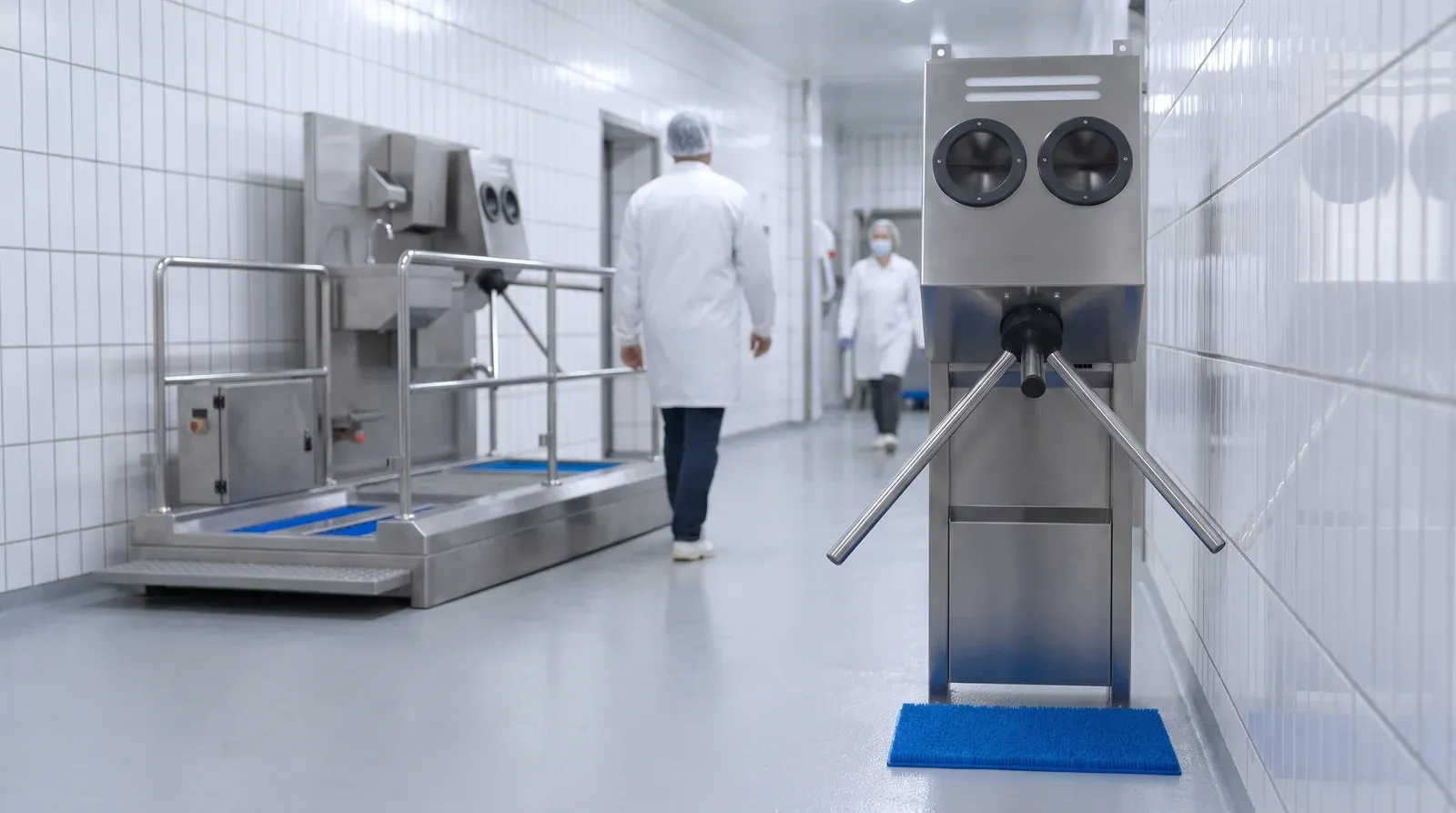
- Model without a washbasin (disinfection only) — when hand washing is done elsewhere (in the changing area) or the risk is low, it is installed as just a disinfectant unit + turnstile. More compact and economical.
If the hands risk carrying visible soil or organic residue into the clean area, choose a model with a washbasin; if hand washing is already done in a separate wet area and the risk is low, a disinfection turnstile without a washbasin may be sufficient. This is because the effectiveness of disinfectant applied to a wet or dirty hand drops markedly.
Boot cleaning: a brush model or a footbath model?
The boot cleaning method is one of the most critical axes defining the model, because a brush and a footbath do different jobs. Brush models clean by mechanically dislodging soil; a disinfectant footbath wets and disinfects the sole but does not dislodge soil. The highest hygiene is most often achieved by using both together: brush-clean first, then disinfect.
- Boot-brush model (sole/side brush) — rotating brushes mechanically scrub the shoe sole and, where needed, its sides; they physically dislodge soil and organic residue. The process typically takes a few seconds.
- Footbath model — a shallow disinfectant footbath that the sole passes through; it targets microorganisms invisible to the eye but, having no mechanical action, does not dislodge surface soil.
- Combined model (brush + disinfection) — brushing first, then disinfection; the most complete solution for facilities with a high organic load.
The brush-or-footbath question is not just a preference but an engineering decision tied to the facility’s soiling profile. We compare the advantages and disadvantages of the two methods, and when each is required, in detail in our boot washing: brush or footbath article.
What is the difference between single/double lane and entry-exit?
This axis determines the model’s passage layout: how many people it can let through at once (the number of lanes) and which directions it controls (entry/exit). A single lane is for small-to-medium teams where sequential passage is sufficient; a double (or multiple) lane is used for the heavy, simultaneous personnel flow at the start of a shift.
- Single lane — a single parallel passage line. Sufficient and economical for facilities where no queue forms at the start of a shift.
- Double / multiple lane — two or more side-by-side passages; takes in heavy, simultaneously arriving personnel without forming a queue.
- One-way (entry) — the turnstile opens only in the direction of entry into the clean area; this is the default for most personnel hygiene applications.
- Dual turnstile (entry + exit) — a layout with separate turnstiles for entry and exit; it also controls the exit flow and keeps the back-flow from the clean area to the dirty area under control.
The number of lanes directly determines capacity; to calculate the capacity you need based on the number of personnel and shift intensity, take a look at our how many people should a hygiene barrier serve article.
Which type suits which facility?
The right model varies with the sector’s contamination risk and personnel flow. The table below summarises the configuration generally recommended for common facility types; the final choice is always clarified according to the facility’s actual flow and cleaning regime.
The table is a starting point; even within the same sector, two facilities can have different flows. To determine the model best suited to your facility step by step, follow our how to choose a hygiene barrier guide; for sector-based detail specific to meat plants, our hygiene barriers in meat processing plants article helps.
What to watch for when choosing a model?
Once you have decided on the model variant, there are a few basic checks that stay the same regardless of the configuration. The checklist below summarises the common points you should evaluate whatever the type:
- Material — the body is usually
AISI 304stainless steel; 316 is considered in special environments with a high chloride load. - Capacity — the number of lanes must be chosen correctly for the number of personnel and shift intensity; otherwise the entrance queues up.
- Component accessibility — brushes that can be removed and cleaned without tools, and easy reservoir refilling, make maintenance simpler.
- Sensors and logging — touchless steps and an optional counter provide records that can be shown during an audit.
- Location and flow — the unit should sit at the single controlled passage between the changing area and production.
Our 10 critical points when buying a hygiene barrier article, where we gather all of these checks into a single list, can be used as a quick check tool before purchase.
Conclusion
Hygiene barrier types are not a fixed catalogue but a family of models configured along the axes of turnstile type, washbasin, boot cleaning method, number of lanes and direction of passage. The right type emerges by evaluating your facility’s contamination risk, personnel flow and physical layout together. An AISI 304 stainless steel body and the turnstile lock logic are the common core of all models; every remaining component is added or removed as needed. We can determine together which configuration is best suited to your facility and prepare a quote tailored to you. To identify the right system for your facility, you can explore our hygiene barrier models or request a quote from our technical team.
Frequently asked questions
How many types of hygiene barrier are there?
There is no single fixed list; models are configured along several axes: turnstile type (tripod, flap, full-height), hand washing (with/without a washbasin), boot cleaning (brush/footbath/combined), number of lanes (single/double) and direction of passage (one-way/dual turnstile). A "model" is formed by combining the components selected from these axes.
Should I choose a hygiene barrier with or without a washbasin?
If the hands risk carrying visible soil or organic residue into the clean area, a model with a washbasin (a full hand-washing line) is the right choice. If hand washing is already done in a separate wet area and the risk is low, a model without a washbasin — disinfection + turnstile only — may be sufficient.
For boot cleaning, is a brush model or a footbath model better?
The two do different jobs: a brush mechanically dislodges soil, while a disinfectant footbath wets and disinfects the sole but does not dislodge soil. In facilities with a high organic load, the best result comes from a combined model that brushes first and then disinfects.
Do I need a single-lane or double-lane hygiene barrier?
If personnel can pass one by one at the start of a shift without forming a queue, a single lane is sufficient. If there is heavy simultaneous personnel flow, a double or multiple lane is needed to prevent queuing. A single-lane tripod turnstile typically lets through about 25–35 people per minute.
When is a dual-turnstile (entry-exit) model needed?
A layout with separate turnstiles for entry and exit is preferred when you want to control not just entry but also exit, keep the back-flow from the clean area to the dirty area under control, or physically separate the entry and exit flows. For most personnel hygiene applications, one-way (entry) is sufficient.
Which hygiene barrier model suits which facility?
Generally: a washbasin + boot-brush cleaning for meat/poultry and seafood; a washbasin + disinfection for dairy and ready meals; and mostly a disinfection turnstile without a washbasin for pharmaceutical/cleanroom. The exact choice is clarified according to the facility’s actual flow and cleaning regime.