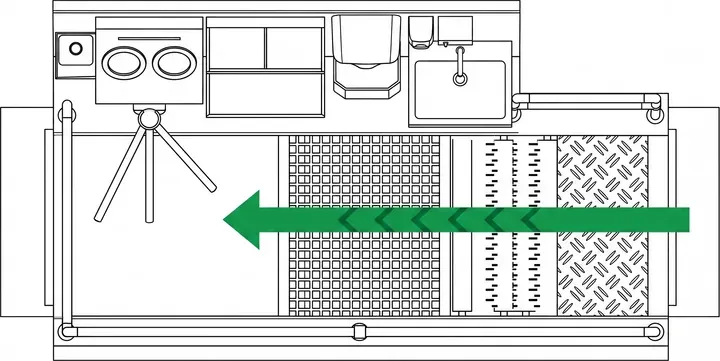
Boot washing: brush or basin?
Brush system or disinfectant basin for boot hygiene? A comparison of methods and the right choice.
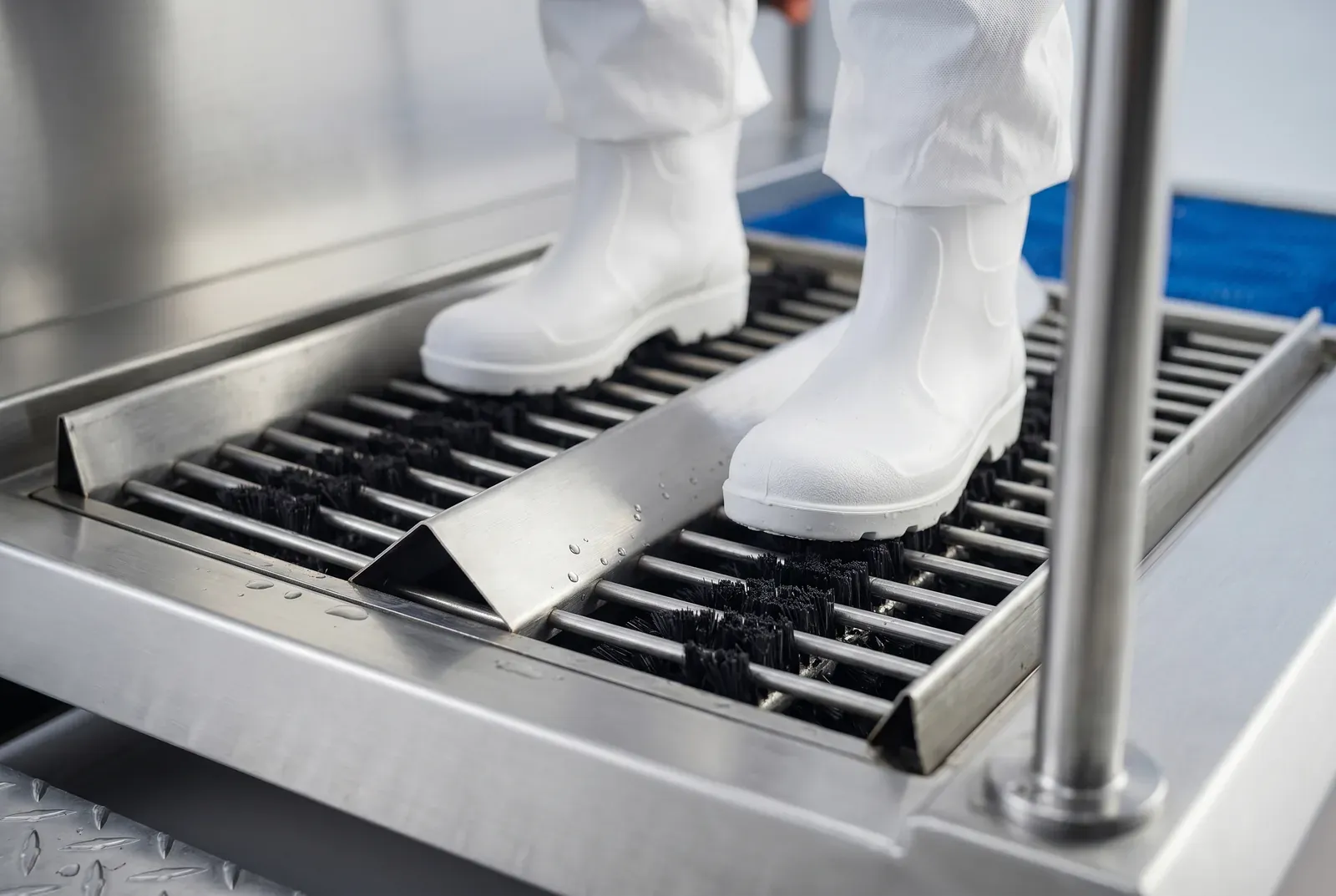
In boot washing, a boot-brush system and a disinfectant footbath do different jobs: the brush mechanically removes soil from the sole, while the footbath disinfects the surface. The real issue is not "which is better" but the sequence — because a disinfectant does not work while the sole is dirty; organic residue consumes the chemical and leaves the disinfection ineffective. That is why, in high-load facilities, the right answer is most often the combination method, where the two are used together. In this article we compare the brush, footbath and combination methods in terms of effectiveness, water/chemical consumption, maintenance and sector suitability.
What is the difference between boot-brush washing and a disinfectant footbath?
The fundamental difference is this: the boot-brush system cleans, the footbath disinfects — and the two are not interchangeable. Boot-brush washing uses rotating brushes and water (detergent where needed) to mechanically remove mud, organic residue and visible soil from the sole and side surfaces of the boot. A disinfectant footbath, on the other hand, dips the sole into a shallow disinfectant solution to reduce the microorganisms on the surface; but it does no physical cleaning.
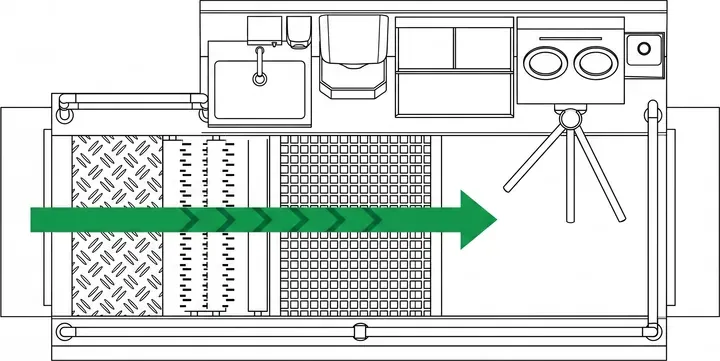
This distinction is critical, because cleaning and disinfection are two separate steps. The golden rule of hygiene is clean first, then disinfect: a disinfectant applied before the soil is removed cannot reach the surface beneath the soil. In boot washing the brush represents the first step (cleaning) and the footbath the second step (disinfection). For this reason the two are not rivals but, most often, complementary parts of one line.
The brush cleans, the footbath disinfects. While the sole is dirty the footbath alone is not enough; the correct sequence is brush first, then footbath.
Which is more effective: the brush or the footbath?
Compared on its own, boot-brush washing is markedly more effective than a disinfectant footbath, because most of the contamination is physically removed together with the organic residue on the sole. The greatest weakness of the disinfectant footbath appears exactly here: when a muddy or residue-laden boot enters the footbath, the organic matter it carries rapidly consumes the disinfectant and fouls the solution.
The technical reason for this is well known: organic load (mud, manure, blood, fat, food residue) reduces the effectiveness of the disinfectant. Common disinfectants such as chlorine-based solutions and quaternary ammonium compounds (QAC) lose their strength markedly in the presence of organic matter. Moreover, disinfection needs sufficient contact time to work; in a passage where the boot touches the footbath for only a second or two, expecting a meaningful kill effect on a dirty sole is not realistic.
A disinfectant applied to a dirty sole produces not hygiene but a false sense of confidence.
The conclusion is clear: the highest hygiene is achieved when the boot is first cleaned mechanically with the brush and the clean surface is then disinfected. So instead of comparing the brush against the footbath, in most serious facilities the question becomes "in which order should we combine the two". This approach is the footwear leg of the logic of stopping contamination at the entrance before it reaches the production area; the hand and passage-control side of the same principle we address in the hygiene barrier as a whole.
Which is more advantageous in terms of water and chemical consumption?
The short answer: the brush system demands more water and the footbath system more chemical management; but what really determines consumption is the level of control. Because boot-brush washing uses running water (and dosed detergent where needed), it does consume water; that said, sensor-operated units that run only at the moment of passage limit waste by letting water flow only when needed. Since the water used is directed to the drain, the cleaning effect is continuous; the surface meets fresh water on every passage.
Although a disinfectant footbath appears at first glance to use less water, it in fact carries a hidden cost: the solution is stagnant and gets a little dirtier with every soiled boot. To keep its effectiveness it must be emptied regularly and re-prepared at the correct concentration; otherwise organic load builds up over the day, the disinfectant is depleted and, beyond a certain point, the footbath can turn into a microbial carrier. So the real consumption with a footbath is not water but the chemical and labour that are wasted when it is not managed correctly.
- Brush system — continuous fresh water; optional dosed detergent. When operated by a sensor, water flows only during passage, so waste is low.
- Disinfectant footbath — low instantaneous water, but requires regular emptying/refreshing and concentration monitoring; if neglected, the chemical is wasted.
- Combination — because the brush removes the soil, the disinfectant in the footbath stays cleaner and lasts longer; the overall chemical efficiency rises.
Which one has the lower maintenance and operating burden?
The maintenance burden falls in different places in the two systems: in the brush system the mechanical parts come to the fore, in the footbath system the solution management. In a brush unit the brushes are wear parts and must be replaced over time; the motor, water line and nozzles require periodic checks. In return, daily operation is simple — the surfaces are rinsed and the brushes are cleaned.
A disinfectant footbath has no mechanical parts, but it requires daily discipline: emptying the solution, cleaning the footbath and re-preparing the disinfectant at the correct ratio. When these steps are skipped the footbath quickly becomes ineffective; so the footbath’s seemingly "low-maintenance" nature in fact rests on a routine that is people-dependent and requires supervision. In both methods the body being stainless steel is critical for cleanability — we detail the technical rationale in our why AISI 304 stainless steel article.
A disinfectant footbath stops disinfecting when its solution is not refreshed regularly and can turn into a carrier that accumulates organic load. If a footbath is to be used, the refreshing routine is as important as the equipment itself.
Brush, footbath and combination: a comparison table
The table below summarises the three methods against the key criteria. The values show the typical general tendency; the actual result varies with the facility’s soil profile, passage speed and solution management.
Which method suits which sector?
The rule is simple: the higher the soiling on the sole, the more essential mechanical brushing becomes. In lightly soiled, dry-floor environments a disinfectant-led passage may be enough; but in facilities heavy with mud, manure, blood and organic residue, no meaningful hygiene can be achieved without a brush.
- Meat processing and poultry facilities — high organic load (blood, tissue, manure). Boot-brush cleaning is essential; combining it with disinfection afterwards is the best choice. You can find the sector-specific details in our hygiene in poultry processing facilities and hygiene barrier in meat facilities articles.
- Seafood processing — wet floors, fat and organic residue; mechanical brushing + disinfection is recommended.
- Dairy and beverage production — medium-level soiling; boot-brush sole cleaning is enough at most entrances, with the combination in higher-risk areas.
- Pharmaceutical, cosmetic and cleanroom entrance — visible soiling is low; here the priority is particle and microbial control, and disinfection/tacky-mat-led solutions come to the fore.
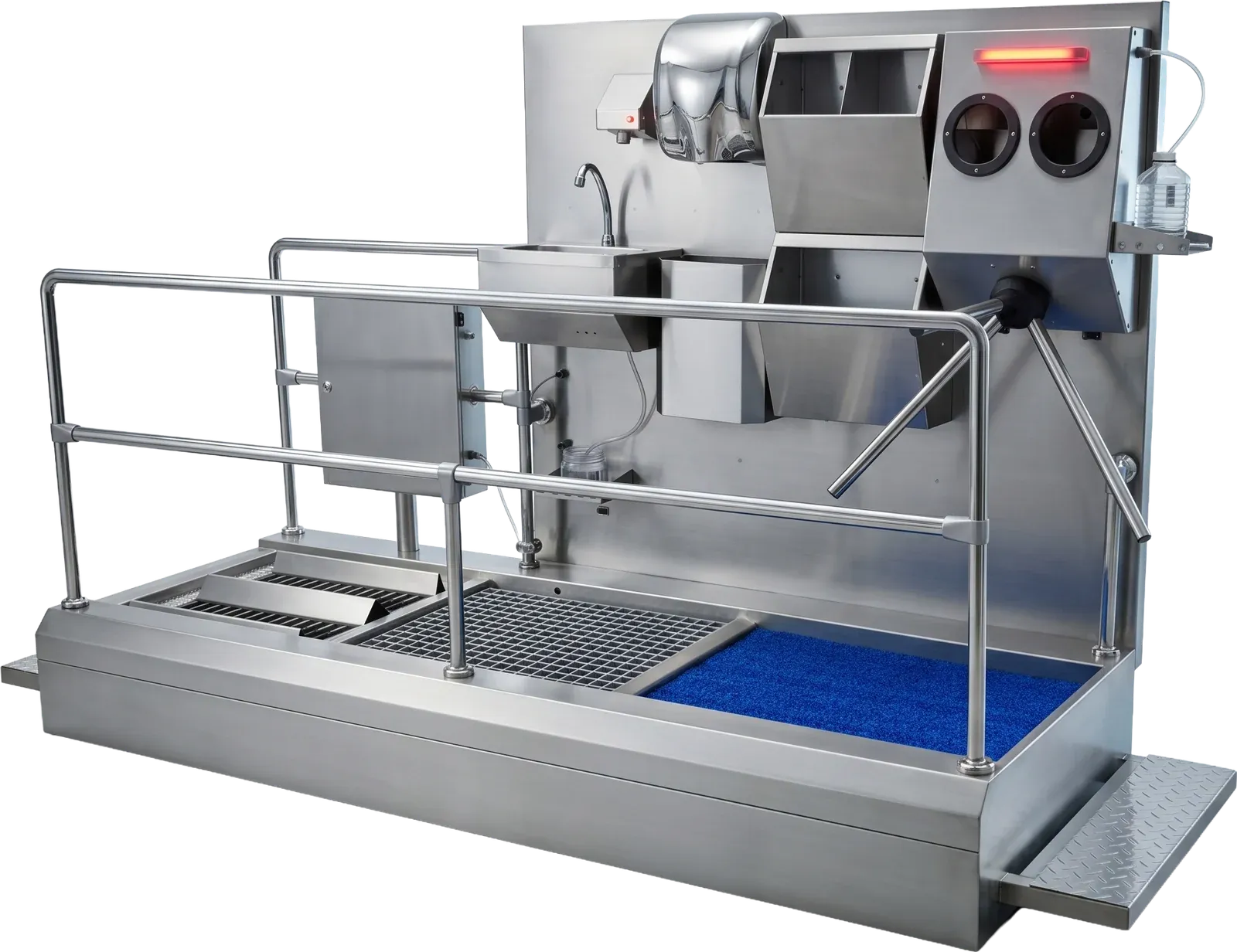
The choice of method is part of a whole where boot cleaning is designed not on its own but together with hand washing, disinfection and turnstile-controlled passage. We cover how the whole line works in our what is a hygiene barrier article, and the right configuration in our how to choose a hygiene barrier guide.
How do you choose for your facility?
The right method is determined by your soil profile, your personnel flow and your auditability expectation. The following checklist guides the decision:
- 1Measure the soil load — if the sole typically carries mud/manure/blood, a brush is essential; a footbath alone is inadequate.
- 2Calculate the passage speed — during the heavy flow at the start of a shift, each boot must get enough cleaning time; if a queue forms, review the unit capacity.
- 3Assess the solution management — if you are going to use a footbath, do you have a routine to refresh the solution regularly? If not, a brush-led solution is safer.
- 4Consider the audit need — a sensor-operated passage locked by a turnstile proves that the steps were not skipped; it provides a concrete record during an audit.
- 5Do not compromise on the material — the body must be stainless steel (usually AISI 304); a non-porous, washable surface is a precondition of hygiene.
In short, instead of thinking of the brush and footbath systems as alternatives to each other, the soundest approach is to build the right combination according to your facility’s soil load. In facilities with a high organic load, boot-brush cleaning + disinfection most often gives the best result. We can clarify which configuration suits you by assessing your entrance layout and personnel flow together.
Frequently asked questions
Is a disinfectant footbath enough on its own?
Usually no. A footbath disinfects but does not clean; the mud and organic residue on the boot sole consume the disinfectant and render it ineffective. For an adequate result the sole must first be cleaned mechanically with a brush, then disinfection applied.
Which is more effective, the brush system or the footbath?
Compared on its own, the brush system is more effective, because it physically removes most of the contamination together with the soil on the sole. The highest hygiene, however, is achieved with the combination of the two (brush first, then disinfection).
How often should the solution in a disinfectant footbath be changed?
The solution must be emptied and refreshed regularly as it becomes fouled and its concentration drops; the frequency depends on the passage intensity and the organic load carried. If refreshing is neglected, the footbath stops disinfecting and can turn into a microbial carrier. For this reason, mechanical cleaning before the footbath reduces the load and extends the solution’s life.
Which method suits poultry and meat facilities?
In these facilities the sole load is high (blood, tissue, manure), so boot-brush mechanical cleaning is essential. The best solution is the combination method, where boot-brush cleaning is used together with disinfection; a footbath alone falls short in these environments.
Does boot-brush washing use a lot of water?
The brush system does use water, but sensor-operated units limit waste by letting water flow only at the moment of passage. Although a footbath uses less water instantaneously, because it requires regular emptying/refreshing and chemical preparation, its total operating burden is not always lower.
What material should a boot washing unit be made of?
The body should be made of stainless steel (usually AISI 304). A non-porous, corrosion-resistant surface does not harbour bacteria, withstands heavy water and disinfectant contact and is easy to clean; this is critical in a constantly wet application such as boot washing.