ISO 22000 staff entry hygiene
Personnel hygiene, handwashing facilities and cross-contamination requirements in ISO 22000 and ISO/TS 22002-1.
ISO 22000 makes personnel entry hygiene mandatory not as a direct clause but through the prerequisite programmes (PRPs) at the foundation of the food safety management system. The standard itself does not say “install this washbasin”; instead it leaves the concrete technical requirements for personnel hygiene, hand washing provision and the prevention of cross-contamination to ISO/TS 22002-1, the document that defines the prerequisites for food manufacturing. In this article we summarise, from a manufacturer’s perspective and without inventing clause numbers, the relationship between ISO 22000 and PRPs, what ISO/TS 22002-1 expects for the personnel entrance and how these expectations are met in the field.
What does ISO 22000 say about personnel hygiene?
ISO 22000 does not prescribe personnel hygiene directly; it treats it as part of the prerequisite programmes (PRPs). ISO 22000 is a management system standard that defines the food safety management system (FSMS) requirements for any organisation in the food chain. For the technical answer to “how” questions — personnel hygiene, hand washing or boot disinfection — you look not to the standard itself but to the prerequisite documents linked to it.
The standard’s logic is layered: PRPs (prerequisite programmes) establish the basic groundwork for hygienic production, while the hazard analysis carried out with HACCP principles manages the critical control points built on top of that groundwork. Personnel entrance hygiene is a classic PRP topic — that is, a basic hygiene condition that must be maintained continuously, not a case-specific control. This distinction matters: if the PRPs falter, the entire food safety system built on them weakens.
ISO 22000 mandates not “which equipment” but “which condition”. The equipment is the means of meeting that condition.
Prerequisite programmes (PRP) are the basic conditions and activities needed to maintain a hygienic environment throughout the food chain. Building layout, cleaning and sanitation, pest control and personnel hygiene are foremost among them. They are not hazard-specific controls but general practices that prevent contamination from arising in the first place.
What does ISO/TS 22002-1 require for personnel hygiene?
The technical requirements for personnel hygiene are the domain not of ISO 22000 but of ISO/TS 22002-1, the document that details the prerequisites for food manufacturing. Applied together with ISO 22000, this document makes concrete “how” the PRPs are to be established; it covers topics such as building and layout, employee facilities, personal hygiene and the prevention of cross-contamination. The personnel entrance is precisely where these topics intersect.
The document’s expectations regarding personnel hygiene are the requirements most often reflected on the ground in the industry. Rather than memorising clause numbers, it is more useful to know the concrete conditions sought during an audit. The following are typically expected:
- Non-hand-operated taps — the taps on hand washing washbasins must not be opened and closed by hand (photocell, knee- or pedal-operated), so the washed hand is not re-soiled.
- Dedicated hand washing washbasins — washbasins reserved for hand washing must be separate from the sinks used for washing food or equipment.
- Adequate number and correct location — hand washing, drying and disinfection provision must be available in sufficient numbers and at accessible points.
- Water, soap and drying — hot and cold (or temperature-controlled) water, soap and/or disinfectant, together with a hygienic means of drying hands, must be provided.
- Facilities that do not open directly — personnel facilities such as toilets and changing rooms must not open directly onto production, packaging or storage areas.
- A flow that minimises contamination — the changing/dressing layout must be planned so as to minimise the risk of contamination as personnel move into production in their work clothes.
This list explains why the “touchless hand washing + hand disinfection + controlled passage” arrangement is so well aligned with the standards. The same logic applies on the HACCP side; we address the place of this control in an audit in our HACCP and the personnel hygiene station article.
Is ISO/TS 22002-1 current — did it change in 2025?
Yes, the document was updated in 2025: the long-standing ISO/TS 22002-1:2009 was replaced by a technically revised new edition, and by dropping the “TS” (Technical Specification) designation from its title it became a full International Standard. With the new edition, the prerequisite requirements common to the entire food-feed-packaging chain were consolidated under a separate part, ISO 22002-100, while the requirements specific to food manufacturing remained in the main document.
Although the document number and structure have been updated, the essence of personnel hygiene has not changed: non-hand-operated taps, adequate hand washing/disinfection provision and a personnel flow that prevents cross-contamination remain the basic expectations. Confirm which edition applies to you and the transition timetable with your certification body.
Why is the personnel entrance at the centre of cross-contamination?
Because the first thing to enter the clean production area from outside, before any product, is a person. Hands, shoe soles and work clothes are the most common route by which soil, organic residue and microorganisms are carried into the clean area. That is exactly why ISO/TS 22002-1 addresses personnel hygiene and “employee facilities” under separate headings: when left uncontrolled, the entrance is the weakest link in the system.
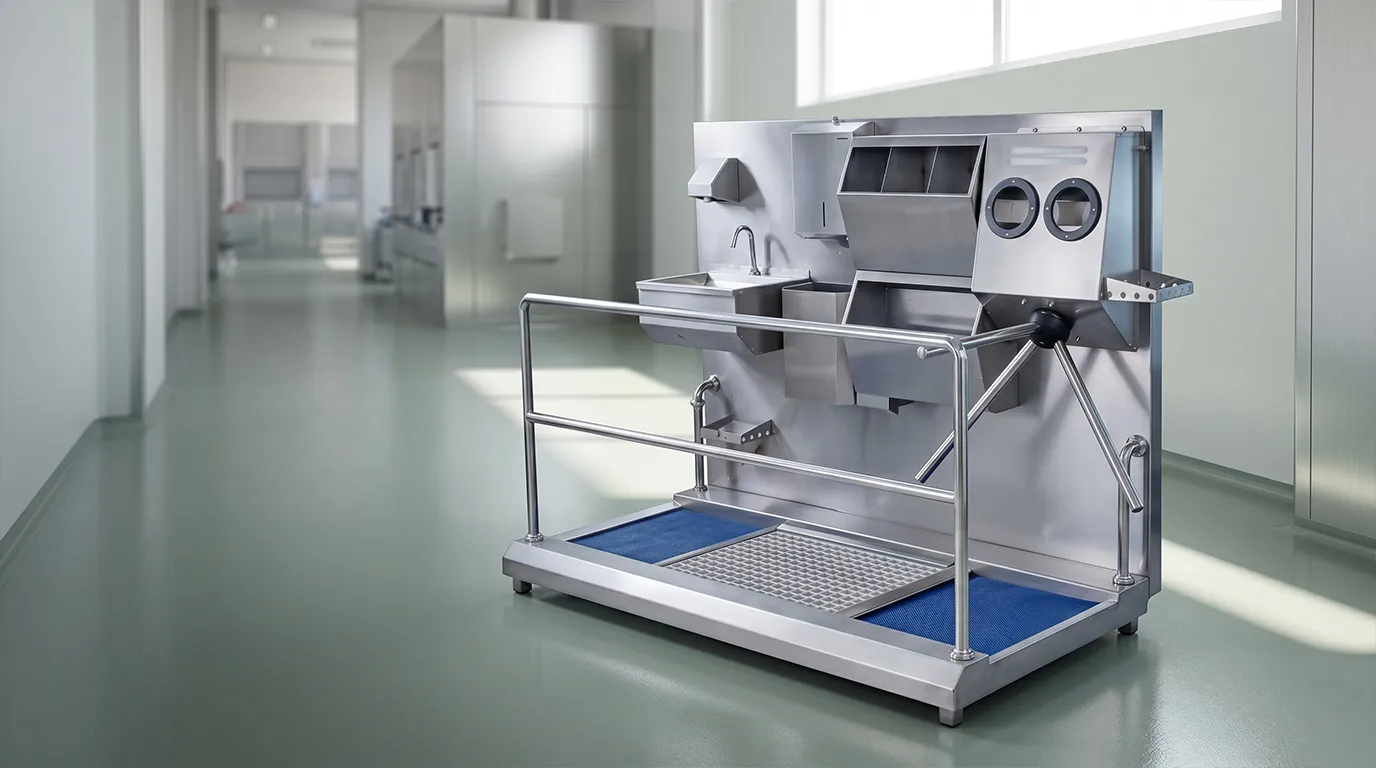
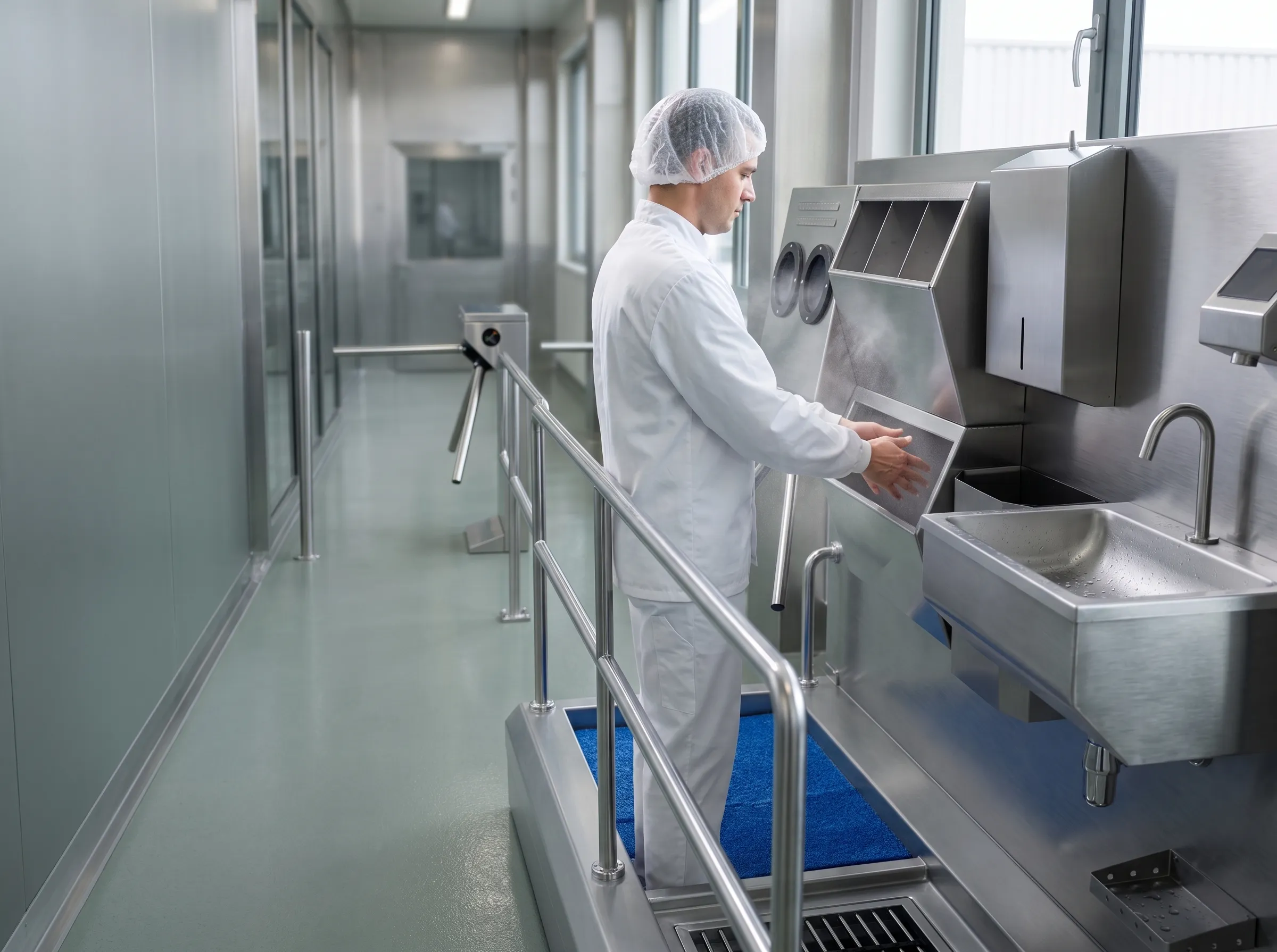
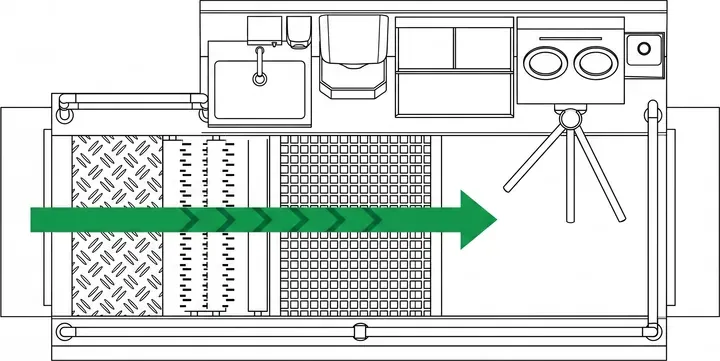
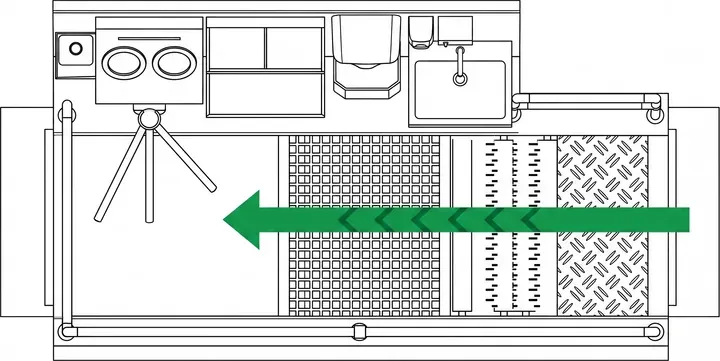
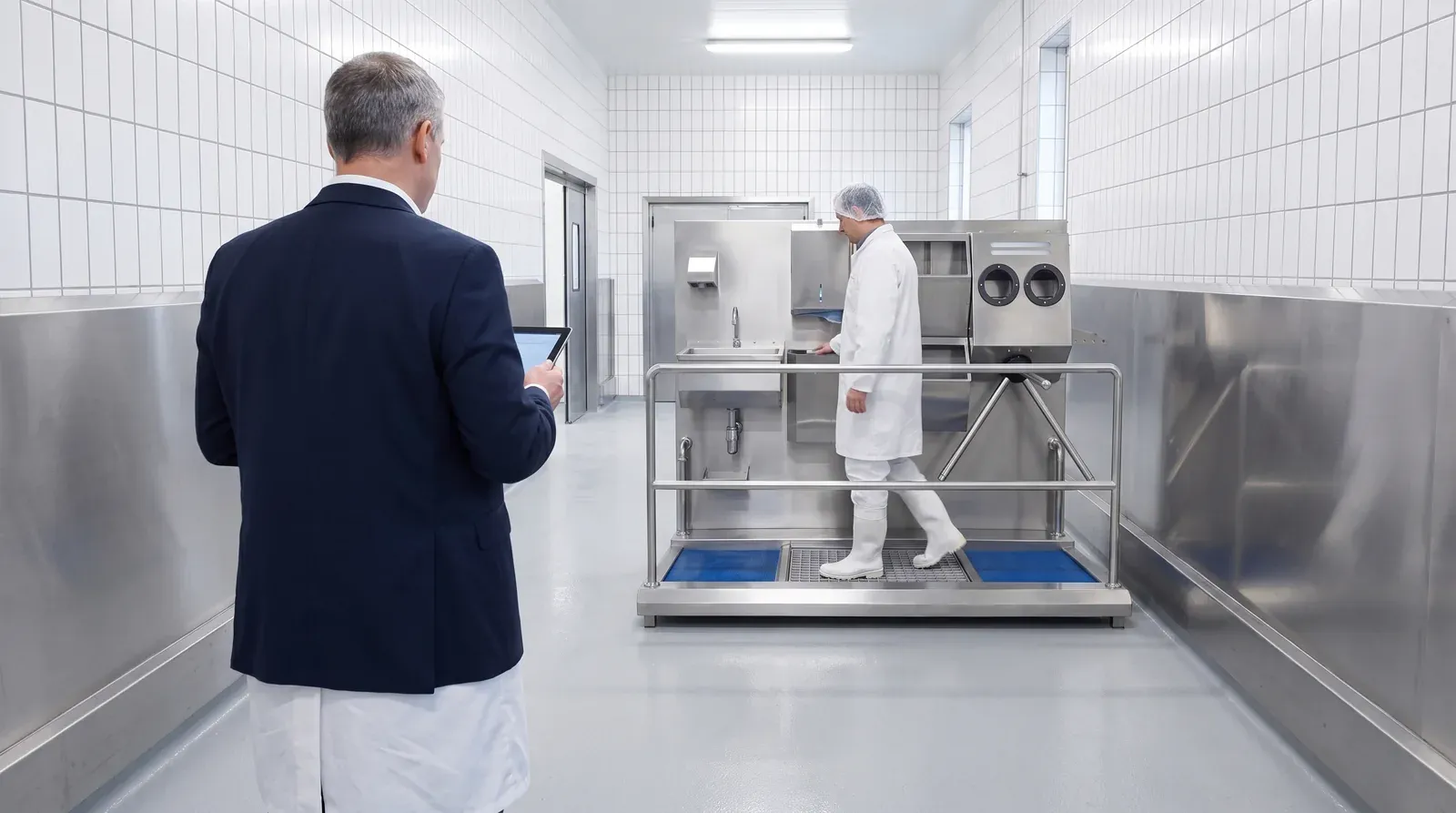
Hygiene left up to people is inconsistent; at the start of a busy shift, at an unsupervised door, steps get skipped. The “consistency” the standards seek can only be achieved by making hygiene a precondition for passage. A hygiene barrier enforces this precondition physically by combining the hand washing and disinfection steps with a turnstile-controlled passage — the turnstile does not open until the steps are completed. You can find the details of its logic in our how a hygiene barrier works article.
How is personnel hygiene demonstrated in an ISO 22000 audit?
In an audit, the critical question is not “do you have a rule” but “can you prove that this rule is applied”. ISO 22000 expects the PRPs not merely to be written down but to be shown to be applied, monitored and, where necessary, corrected. For personnel entrance hygiene, this means presenting concrete evidence of application alongside the procedure.
What the auditor typically wants to see:
- A written personnel hygiene procedure and entry rules (who, where, in what order).
- Non-hand-operated taps, soap, disinfectant and drying provision actually present and in working order.
- On-site verification that the personnel flow passes through a single controlled point on entry to production.
- Training records, verification/monitoring records and the corrective actions taken in the event of a deviation.
This is where a turnstile-controlled passage makes the difference: when passages can be logged through counter and sensor integration, the claim “hygiene is being applied” turns into concrete data and becomes a control point that can be demonstrated in an audit. Alongside ISO 22000, GFSI standards such as BRCGS and IFS Food also expect similar entry control, as you can compare in our BRCGS personnel hygiene and IFS Food hand hygiene articles.
What material should personnel hygiene equipment be made of?
ISO/TS 22002-1 expects equipment to be of hygienic design, cleanable and corrosion-resistant; in practice this points to stainless steel. Hand washing and access units are typically made of AISI 304 stainless steel: its non-porous surface does not harbour bacteria, it withstands caustic cleaning chemicals and, thanks to its self-healing passive layer, it resists corrosion. In special environments with a very high chloride load (heavy brine, chlorine-based disinfectant), AISI 316, which contains molybdenum, can be considered.
Material choice directly affects the cleanability expectation of the standards. We examine the technical difference between 304 and 316 and which is right in which environment in detail in our 304 vs 316, choosing hygiene steel article.
Summary: what is required at the personnel entrance for ISO 22000?
ISO 22000 does not mandate a specific device name; it makes personnel hygiene mandatory as a prerequisite (PRP) and leaves the technical detail to ISO/TS 22002-1. That document, in turn, expects non-hand-operated taps, separate and adequate hand washing/disinfection provision, personnel facilities that do not open directly onto production, and a flow that minimises cross-contamination. The solution that meets these expectations in the most consistent and auditable way is a hygiene access unit that combines the hand washing, disinfection and passage steps at a single controlled point.
ISO 22000 demands the “condition”; ISO/TS 22002-1 provides the technical counterpart of that condition; and the hygiene barrier takes the condition out of the employee’s discretion and turns it into a mandatory, measurable step for passage.
We can determine together the configuration suited to your facility’s sector, number of personnel and entrance layout; for the right capacity, you can also take a look at our what capacity of hygiene barrier you need article.
Frequently asked questions
Does ISO 22000 make a hygiene barrier mandatory?
No, ISO 22000 does not require purchasing a specific device named a “hygiene barrier”. Instead it makes personnel hygiene, hand washing and disinfection provision, and the prevention of cross-contamination mandatory as a prerequisite programme (PRP). A hygiene barrier is a tool that meets these requirements in an auditable and consistent way.
What is the difference between ISO 22000 and ISO/TS 22002-1?
ISO 22000 is a management system standard; it defines the general requirements of the food safety management system and the obligation to establish PRPs. ISO/TS 22002-1, on the other hand, provides the technical detail of the prerequisites (PRPs) for food manufacturing; the answers to “how” questions — personnel hygiene, hand washing facilities and building layout — are here.
Why should a hand washing tap not be opened and closed by hand?
Because a hand-operated tap can re-soil a freshly washed hand at the moment of closing it. The ISO/TS 22002-1 logic expects non-hand-operated (photocell, knee- or pedal-operated) taps on hand washing washbasins, so the cleaned hand is not re-contaminated. This is the design rationale for touchless hygiene equipment.
Did ISO/TS 22002-1 change in 2025, and which edition applies?
The document was updated in 2025; the long-standing ISO/TS 22002-1:2009 was replaced by a technically revised new edition, and by dropping the “TS” designation it became a full International Standard. The requirements common to the entire chain were moved to ISO 22002-100. It is advisable to confirm which edition applies to you and the transition timetable with your certification body.
How is personnel entrance hygiene demonstrated in an audit?
Evidence of application is required alongside the written procedure: non-hand-operated taps, soap and disinfectant in working order, personnel passing through a single controlled point, and training and monitoring records. In a turnstile-controlled passage, counter/sensor records show with concrete data that the hygiene steps are being applied.
Which stainless steel should personnel hygiene equipment be made of?
For most food personnel entrances, AISI 304 stainless steel is sufficient and is the standard choice; it is non-porous, cleanable and corrosion-resistant. In aggressive environments with continuous high chloride contact, AISI 316 — which contains molybdenum and is usually more costly — can be considered.