IFS Food hand hygiene
Hand hygiene, staff entry control and the role of hygiene barriers in the IFS Food standard.

IFS Food is a GFSI-recognised food safety standard that treats personnel hygiene as one of the most critical items in an audit. The standard does not require purchasing a device named “hygiene barrier”; however, it makes hand washing, hand disinfection and personnel entrance control mandatory — and personnel hygiene is moreover a “KO” (knock-out) item that directly puts the certificate at risk if it fails. In this article we explain, from a manufacturer’s perspective, what IFS Food expects for hand hygiene and entrance control, which evidence the auditor looks for on site, and how a hygiene barrier forms a concrete control point in this picture.
What is IFS Food and why does it matter?
IFS Food (International Featured Standards – Food) is a food safety and quality standard developed for food manufacturers and recognised by the GFSI (Global Food Safety Initiative). For facilities that supply retail chains or ship products to the European market in particular, it acts as a de facto entry ticket. The current version is IFS Food v8, published in April 2023 and mandatory in audits as of January 2024.
IFS Food sits under the same GFSI umbrella as BRCGS and ISO 22000; all three require personnel hygiene as a prerequisite. The most notable difference between them is the scoring and audit logic: IFS scores each requirement as A / B / C / D and marks a group of requirements as “KO” (knock-out). Because a low score on a KO requirement heavily reduces the total score, these directly determine whether a facility can obtain the certificate. We also cover the comparison of the standards in our personnel hygiene requirements in BRCGS and ISO 22000 and personnel entrance hygiene articles.
What does IFS Food require for hand hygiene?
IFS Food treats hand hygiene as both behaviour and infrastructure: it wants personnel to wash and disinfect their hands at the right moment, but it also requires the plumbing equipment that makes this possible to be at a defined minimum level. As a minimum, the standard expects hand washing points to include the following:
- Running potable water at a suitable temperature — hygienic-quality water at a temperature suitable for hand washing.
- Liquid soap — provided by a touchless automatic-dosing unit or a manually operated dispenser.
- Hand-drying equipment — an electric dryer or a paper towel unit.
In high-care areas where perishable products are processed, the expectation rises: taps must be operable without hand contact (by sensor or knee control) and, where possible, touchless hand disinfection must be provided. The logic here is clear: to prevent a washed hand being re-contaminated by touching a tap or a door handle with a dirty hand. It should also not be forgotten that a wet hand reduces the effectiveness of the disinfectant — which is why the sequence is set up as washing → drying → disinfection. We detail when hand washing versus disinfection is sufficient in our hand washing or hand disinfection article.
The IFS auditor goes beyond the question “are hands being washed”: they look at whether the washed hand reaches the clean area without being soiled again. A sensor-operated tap, automatic-dosing disinfectant and touchless door passage provide a concrete advantage because they eliminate this “re-contamination” risk by design.
Why is personnel hygiene a “KO” item?
In IFS Food v8, personnel hygiene is one of the standard’s 10 KO (knock-out) items — defined under Chapter 3 (Resource Management) as requirement 3.2.2, designated KO N° 3. The essence of the requirement is short but broad: the personnel hygiene requirements must be understood and applied by all relevant personnel, contractors and visitors.
When a KO requirement receives a “D” score, 50% of the total possible points is automatically deducted and the facility cannot obtain the IFS certificate. Personnel hygiene is a requirement of this weight.
The practical meaning of this is: while partial deviation can be managed on many other requirements in an IFS audit, a serious failure in personnel hygiene can bring down the certificate on its own. While the standard generally requires a threshold of at least 75% of points, a KO requirement ending in “D” leads to falling below that threshold. Leaving entrance hygiene at a “good enough” level therefore means a direct commercial risk in the IFS context.
An important point: the KO requirement 3.2.2 is not a device brand or model, but hygiene being understood and applied by everyone. In other words, the standard does not impose a specific piece of equipment on you; it requires the outcome — consistent, demonstrable personnel hygiene. A hygiene barrier is precisely the most auditable way to produce this outcome.
What does IFS expect for entrance control and personnel flow?
IFS Food expects personnel hygiene to be applied not only on paper but within the physical flow. This requires the passage from the changing area to the production area to be designed as controlled, one-way and enforcing the hygiene steps. The main elements the standard expects regarding entrance and flow control are:
- A single controlled passage — entry to the clean area must be through a specific point where the hygiene steps cannot be skipped.
- Correctly located hand washing — hand washing points must be in an accessible location, where personnel will use them before entering production.
- Protective clothing sequence — putting on work clothes and carrying them into the clean area must follow an order consistent with the hygiene passage.
- Including visitors and contractors — the rules must cover not only permanent staff but everyone who enters.
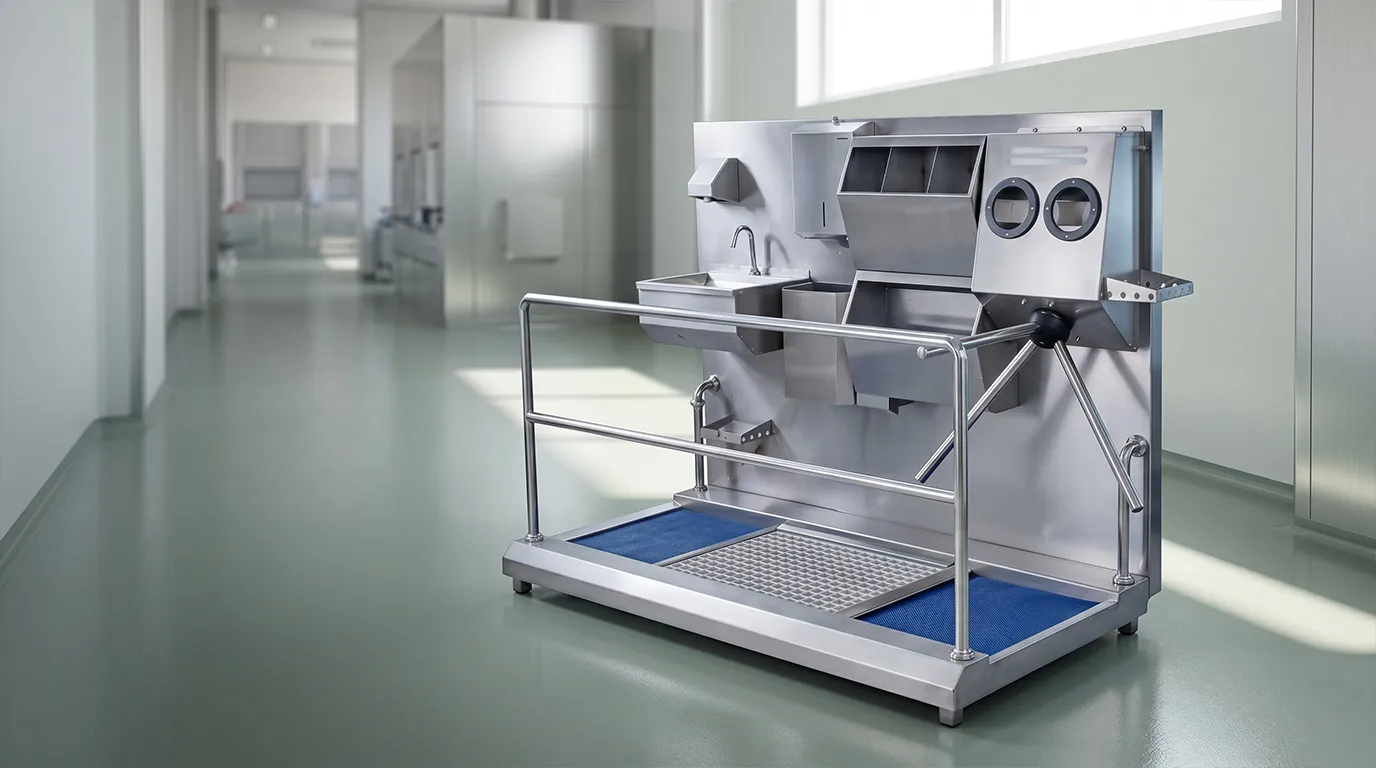
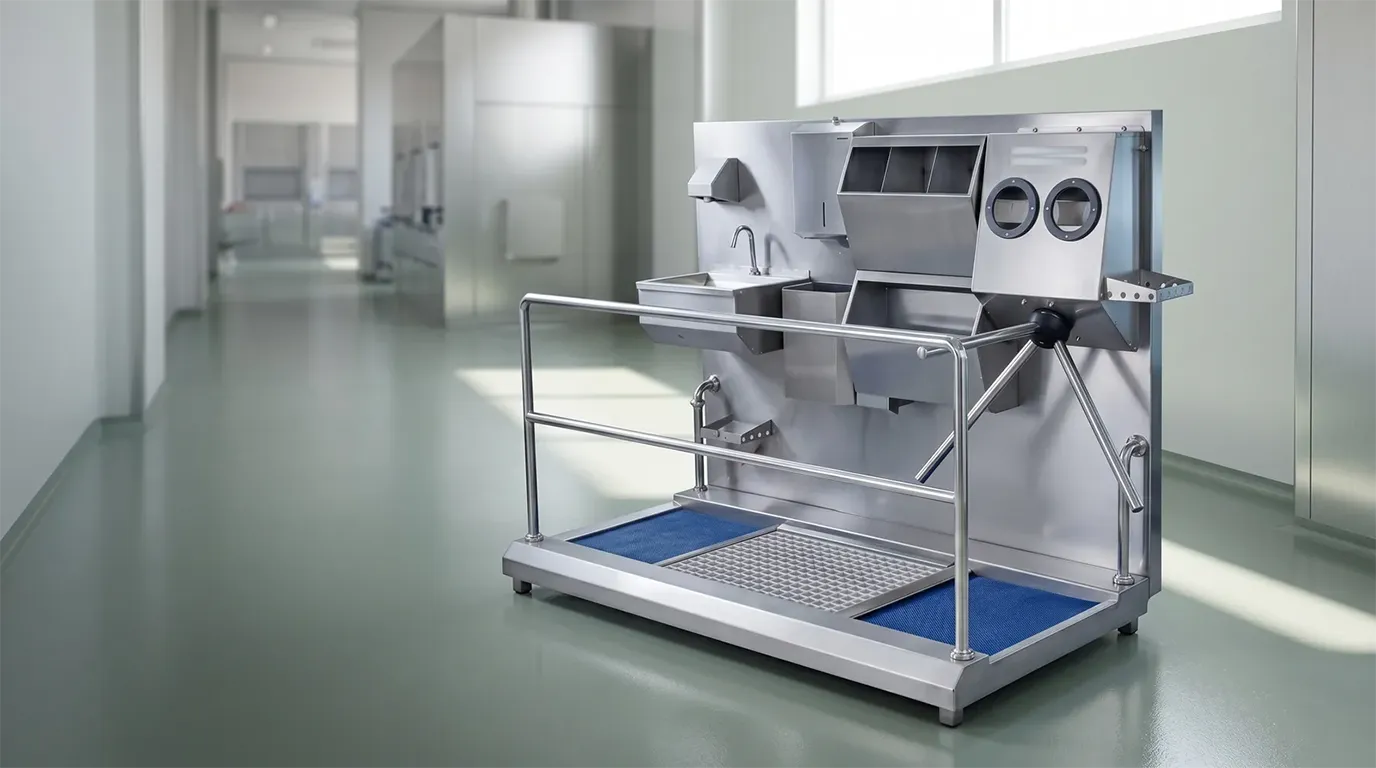
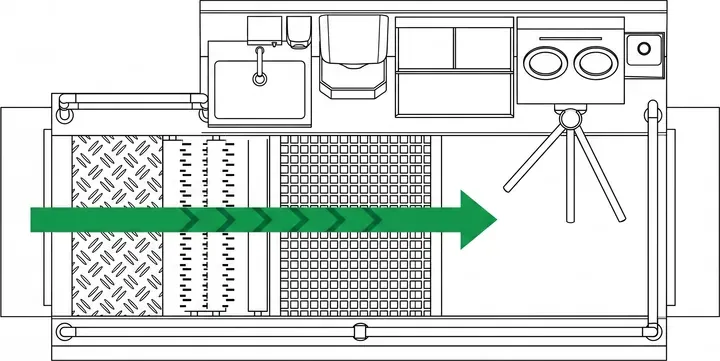
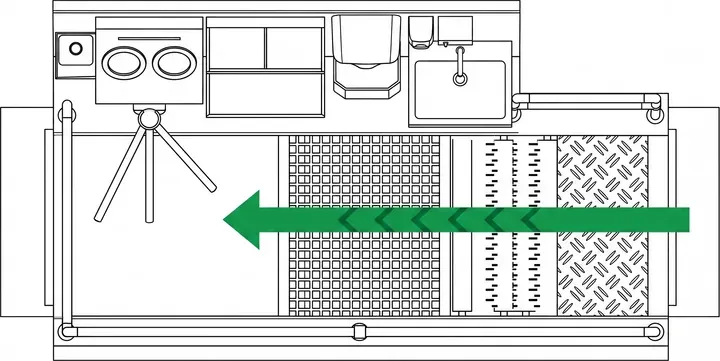
A hygiene barrier (a turnstile-controlled hygiene access unit) brings all of these expectations onto a single line: the turnstile does not open until the hand washing, disinfection and, where necessary, boot cleaning steps are completed, and passage is one-way. In this way “everyone, on every shift, applies the same steps”. Placing the barrier in the right location in the facility is at least as important as the equipment itself; a badly positioned unit blocks the flow or gets bypassed.
How does a hygiene barrier help in an IFS audit?
A hygiene barrier takes personnel hygiene out of being an “instruction” and makes it a physical precondition for passage; it provides, by design, the consistency and auditability the IFS auditor looks for. We explained what a hygiene barrier is and what it is for in our foundational guide; here let us focus on its contribution in the IFS context. The main advantages a barrier provides in an audit are:
- Mandatory sequence — the turnstile stays locked until the hygiene steps are completed; hygiene stops being a “choice”.
- Touchless equipment — a sensor-operated tap and automatic-dosing disinfectant meet the hands-free operation that IFS expects for high-care.
- Auditable record — with counter and sensor integration, passages can be tracked; this produces concrete evidence in an audit (auditable hygiene passage).
- Covering everyone — permanent staff, contractors and visitors pass through the same door, with the same steps.
- Hygienic material — a non-porous stainless steel body that withstands caustic cleaning supports the surface-hygiene expectation.
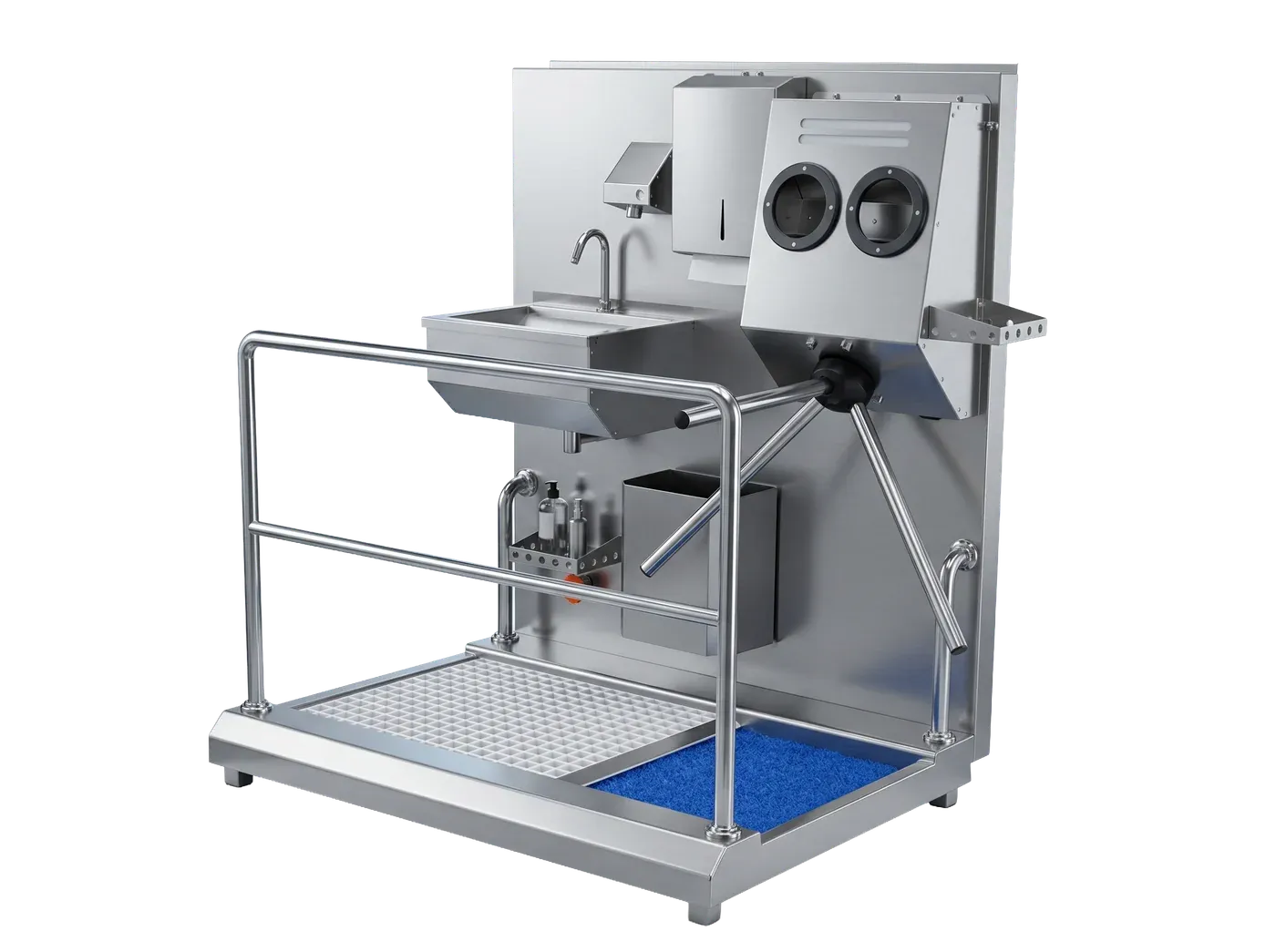
The body material is also indirect evidence in an audit: hygiene equipment is usually made of AISI 304 stainless steel; its non-porous surface does not harbour bacteria and withstands cleaning chemicals. In special environments with a high chloride load, 316 can be considered — we cover the distinction in our 304 vs 316 hygiene steel selection article.
What evidence does the auditor look for on site?
The IFS auditor is not satisfied with the question “do you have a rule”; they want to see that the rule is written, applied and continuous. Personnel hygiene is reviewed on a risk basis, but it is expected to be evaluated at least once every three months. For entrance hygiene specifically, the following are typically looked for on site:
- 1A written personnel hygiene procedure and evidence that it is applied to staff, contractors and visitors (training, instructions, induction flow).
- 2The minimum equipment of hand washing points: water at a suitable temperature, liquid soap (preferably touchless dosing), hand drying.
- 3A hands-free tap in high-care areas and, where possible, touchless hand disinfection.
- 4Demonstration that the entrance flow is controlled — one-way passage where the steps cannot be bypassed.
- 5The equipment being operational and maintained; the soap/disinfectant reservoirs full and the sensors in working order.
- 6Records of the continuity of the practice (review, verification and, if available, passage counter data).
The most frequent weak point in an audit is not the presence of the equipment but its continuity: an empty soap dispenser, a non-working sensor or a bypassed door puts even a well-installed system at risk. Making maintenance a routine (reservoir refills, sensor checks) is at least as important as installation.
Summary: IFS Food and entrance hygiene
IFS Food does not ask for a device named “hygiene barrier”; but it treats personnel hygiene as a knock-out (KO) weight requirement and makes hand washing, disinfection and controlled personnel flow mandatory. The solution that meets these requirements most consistently and most auditably is a hygiene barrier that combines touchless hand washing/disinfection equipment with a turnstile-controlled, one-way passage. Such a line — correctly positioned, maintained and covering everyone — both reduces risk and produces concrete evidence in an IFS audit. We can determine together the configuration that suits your facility’s flow and high-care needs.
Frequently asked questions
Does IFS Food make a hygiene barrier mandatory?
No, IFS Food does not require purchasing a “hygiene barrier” by that name. However, it makes hand washing, hand disinfection and controlled personnel entry mandatory, and treats personnel hygiene as a KO (knock-out) requirement. A hygiene barrier is the most practical solution because it combines these requirements onto a single auditable line.
Why is personnel hygiene so critical in IFS Food?
Because personnel hygiene (requirement 3.2.2) is one of the 10 KO requirements of IFS Food v8. When a KO requirement receives a “D” score, 50% of the total score is automatically deducted and the facility cannot obtain the certificate. Since the general pass threshold is about 75%, a serious failure on this requirement can bring down the audit on its own.
What does IFS require as a minimum at a hand washing point?
As a minimum, running potable water at a temperature suitable for hand washing, liquid soap (a touchless automatic-dosing unit or a manually operated dispenser) and hand-drying equipment (an electric dryer or paper towel) are expected. In high-care areas, a hands-free tap (sensor- or knee-operated) and, where possible, touchless hand disinfection are required.
Do the IFS rules also cover visitors and contractors?
Yes. The personnel hygiene requirement asks that the requirements be understood and applied by all relevant personnel, contractors and visitors. That is why entrance hygiene should be designed to pass everyone who enters through the same point and with the same steps.
What is the difference between IFS Food, BRCGS and ISO 22000?
All three are recognised by the GFSI and require personnel hygiene as a prerequisite; the main difference lies in the audit and scoring logic. IFS scores requirements as A/B/C/D and counts personnel hygiene as a KO (knock-out) requirement. For a detailed comparison, see our BRCGS and ISO 22000 personnel hygiene articles.
What evidence does a hygiene barrier provide in an IFS audit?
A turnstile-controlled hygiene barrier demonstrates the consistency of the practice by blocking passage until the hygiene steps are completed. With sensor and counter integration, passages become trackable; this gives the auditor concrete evidence that “everyone applies the same steps on every shift”.