Lifespan of stainless equipment
How long does AISI 304 hygiene equipment last? Lifespan factors, maintenance and a manufacturer’s view on warranty.
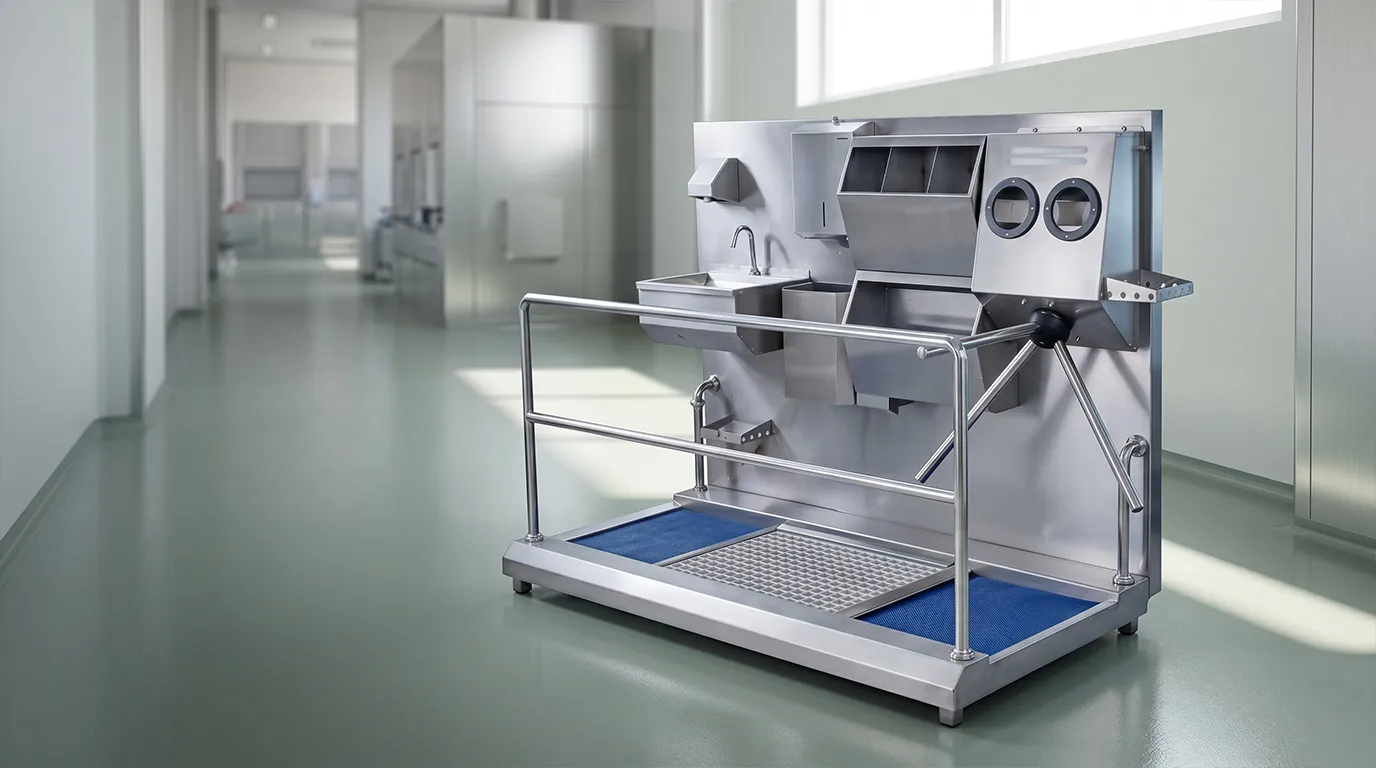
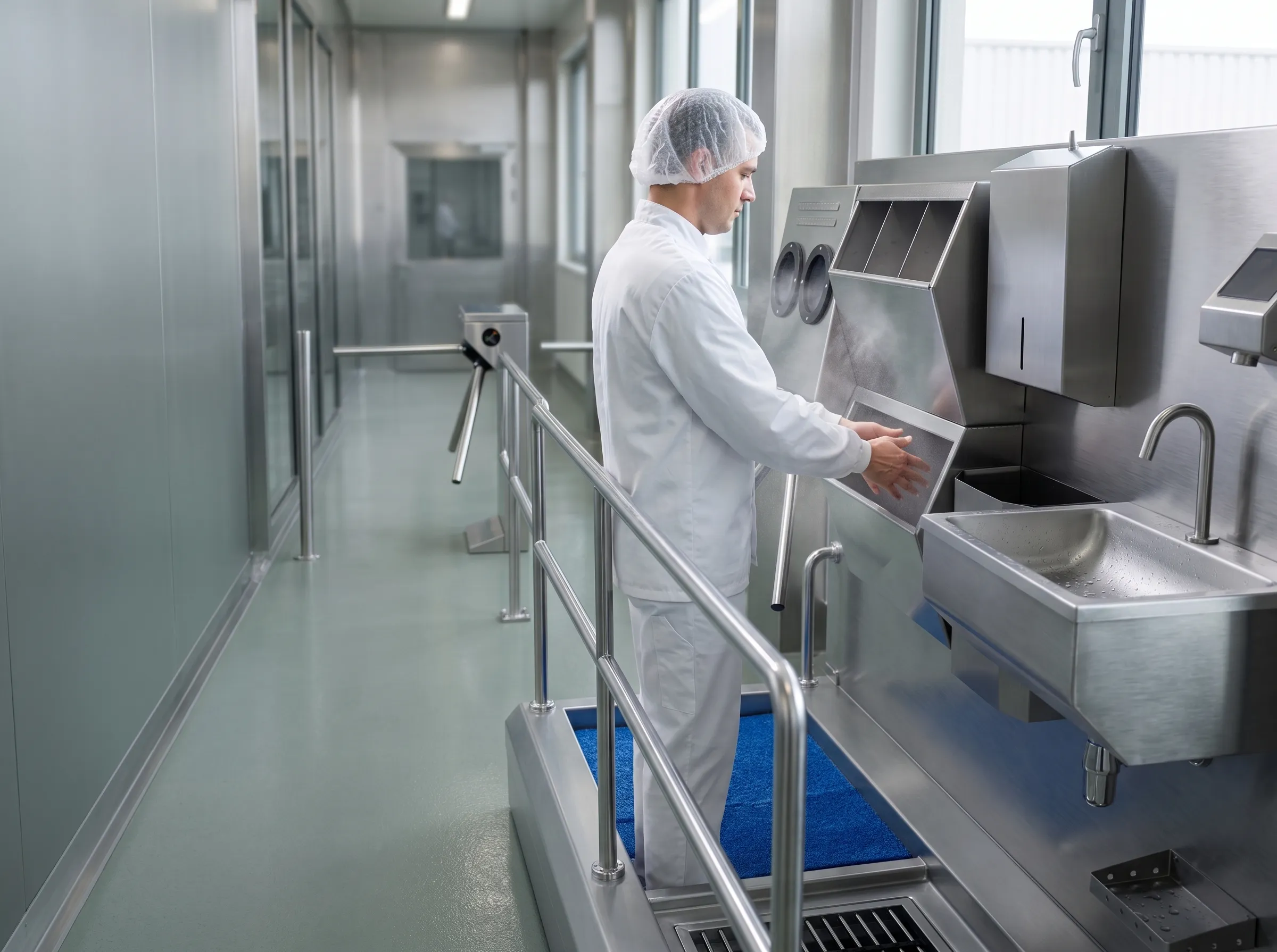
An AISI 304 hygiene barrier made from the right material and maintained properly is designed to serve for decades; in practice, the lifespan of stainless steel is measured not in years but in how well the thin oxide layer protecting its surface is preserved. Four things determine the real lifespan of the equipment: material quality, welding and workmanship, the cleaning chemicals used and regular maintenance. In this article we explain, from a manufacturer’s perspective, why stainless hygiene equipment is so long-lived, what shortens its life and how to maximise it with the right maintenance.
How long does stainless hygiene equipment last?
A correctly manufactured and regularly maintained stainless hygiene barrier is structurally designed to be used for decades. Stainless steel itself is not a material that “wears out”; as long as the components subject to wear and renewal (sensors, taps, soap/disinfectant pumps, the turnstile mechanism) are replaced periodically, the body keeps doing its job for a very long time. That is why it is more accurate to assess the lifespan by how well the conditions protecting the body are preserved, rather than reducing it to a single year figure on a page.
The critical distinction here is this: the equipment’s body (stainless steel chassis, washbasin, panels) is extremely long-lived; the consumable and mechanical parts (gaskets, photocells, dosing pumps, the turnstile arm), on the other hand, require maintenance or replacement over the years depending on the intensity of use. In well-built equipment the body outlives the parts many times over — as long as the passive layer protecting the surface is not compromised.
The life of stainless steel usually ends not in the material itself, but in how it is treated.
Why is AISI 304 so durable?
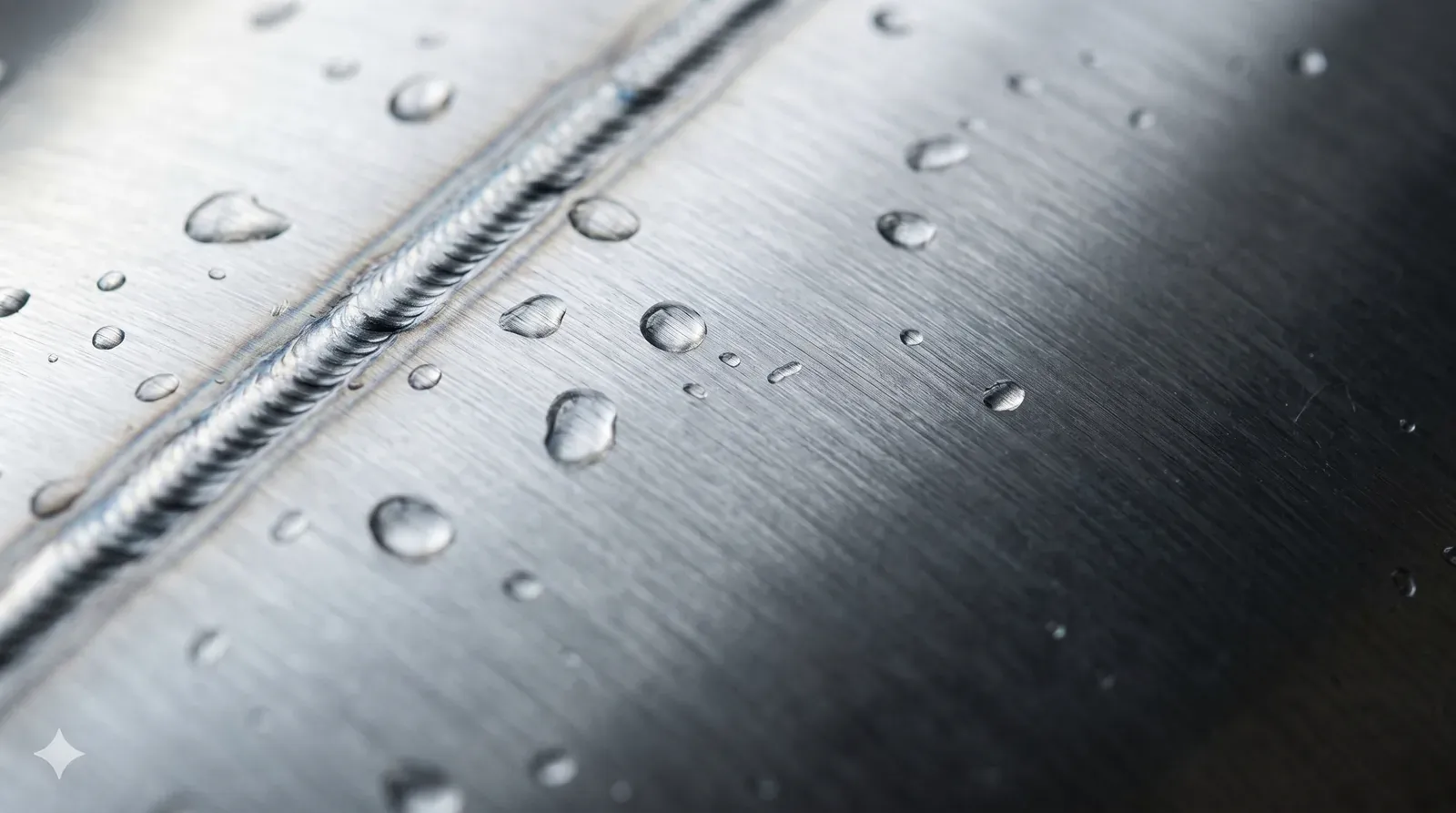
The secret behind AISI 304’s durability is the passive chromium-oxide layer that forms spontaneously on its surface and repairs itself even when damaged. 304 contains roughly 18% chromium and 8% nickel. The chromium, in contact with oxygen in the air, forms an oxide film on the surface that is only a few nanometres thick (typically 1–5 nm), invisible to the eye yet extremely stable. This film protects the metal underneath against corrosion and oxygen.
The most valuable property of this layer is that it is self-healing. When the surface is opened up by a scratch or an impact, the film re-forms on its own provided there is enough oxygen and a clean surface; full maturation typically takes anywhere from hours to a few days. This is exactly what separates stainless steel from ordinary steel that rusts once its paint peels off: the protection lies in the surface itself, not in an applied coating. We examine the technical rationale for why 304 is almost always the choice for hygiene equipment in detail in our 304 or 316 choice article.
The chromium-oxide layer renews itself as long as it has access to oxygen and the surface stays clean. Dirt, organic residue or metal shavings that keep the layer covered undermine the protection. That is why “keeping it clean” is not a matter of aesthetics — it is directly a matter of lifespan.
What determines the lifespan of stainless equipment?
Two pieces of equipment that look identical can have very different lifespans; four fundamental factors make the difference. They work together — even the highest-quality steel wears out quickly with poor welding or the wrong chemical:
- 1Material quality — is genuine, certified AISI 304 sheet being used, or a low-chromium/mixed alloy? Sheet thickness and origin directly affect the lifespan.
- 2Welding and workmanship — the quality of the weld seams, cleaning and passivating the heat-darkened zones, and leaving no pores or cracks. A poor weld is where corrosion starts first.
- 3Cleaning chemicals — chlorine (bleach) based products in particular are stainless steel’s number one enemy. The wrong chemical drives even the most expensive steel into pitting corrosion.
- 4Maintenance and use — regular cleaning, proper rinsing, timely replacement of consumable parts and maintenance of the mechanical components. Neglect is the factor that shortens the lifespan fastest.
Why do welding and workmanship affect the lifespan so much?
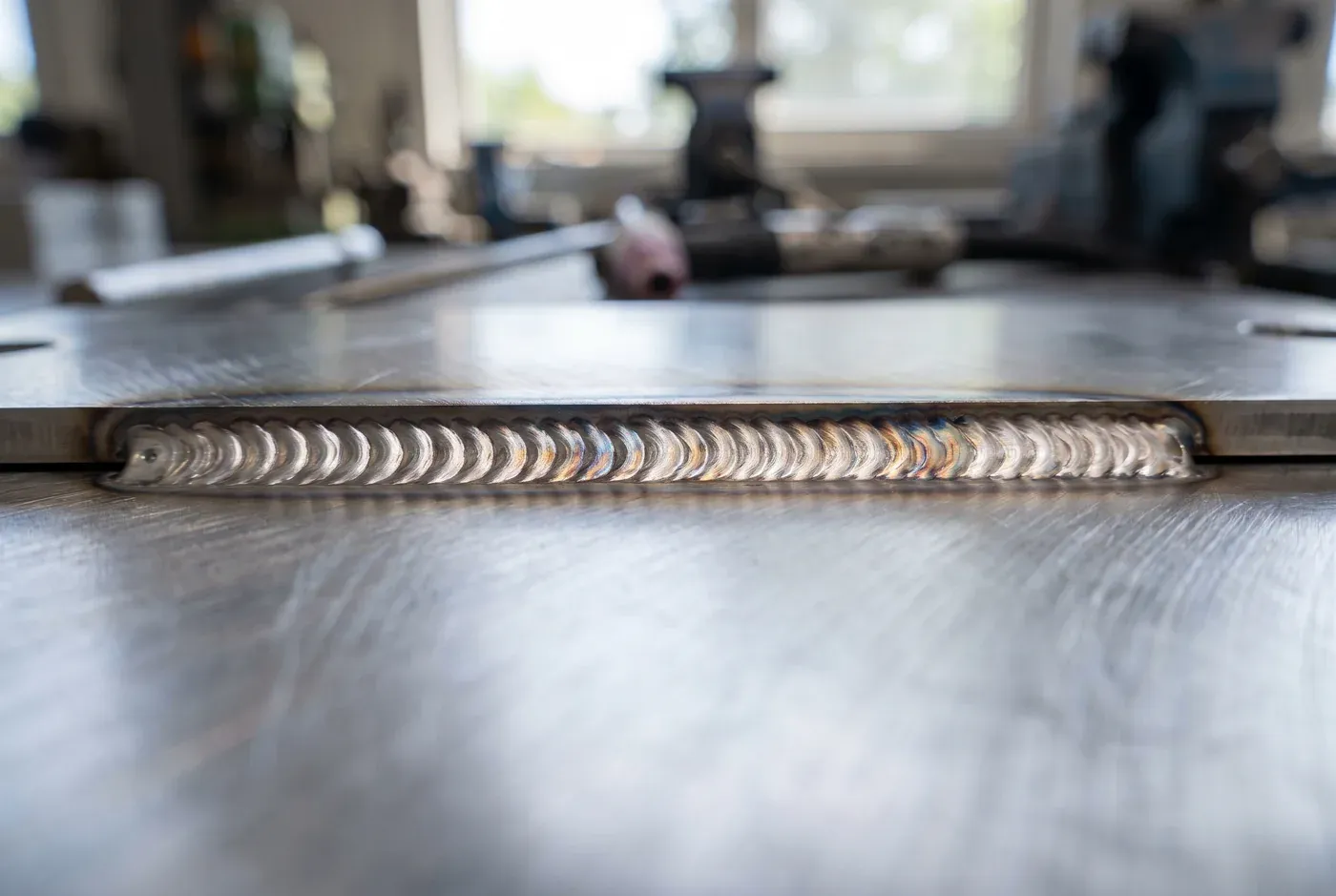
In stainless equipment, corrosion almost always starts at the weakest point — most often the weld zone. During welding the metal reaches high temperatures, and heat-induced discolouration (heat tint) forms around the seam. Just beneath this darkened zone the chromium content temporarily drops; in other words, the strip most exposed to corrosion is precisely the area next to the seam. That is why, in quality manufacturing, this zone is cleaned mechanically or chemically after welding.
This cleaning is done in two steps: passivation (and, where necessary, pickling), which removes the darkened, chromium-depleted layer and the free iron particles smeared onto the sheet. Passivation takes no material away from the metal; it cleans the surface so that the protective chromium-oxide layer can re-form fully and completely. If it is skipped, brown staining (tea staining) can appear around the seam within months, followed by permanent corrosion. In good hygiene equipment, surfaces are also left non-porous and smooth (the typical target surface roughness for food equipment is Ra ≤ 0.8 µm); a smooth surface is easier to clean, does not harbour bacteria and is more resistant to corrosion.
When requesting a quote, ask: “Do you passivate/clean after welding, is the sheet certified AISI 304, and what is the surface roughness?” These three questions largely determine whether the equipment will last 3 years or 30.
Which cleaning chemicals wear down stainless steel?
What consumes the life of stainless steel fastest is the wrong chemical, and at the top of the list come chlorine (chloride) containing products. Bleach (sodium hypochlorite) and chlorine-based disinfectants release chloride ions that destabilise the passive layer. Chloride ions enter through microscopic weak points in the oxide film and initiate pitting corrosion — first small spots, then rusty pits form on the surface. 304 is more sensitive to chloride than 316; it is precisely this molybdenum-driven chloride resistance that defines the difference between 304 and 316.
In practice, the chemical rules for stainless hygiene equipment are clear:
- Avoid chlorine-based products — if unavoidable, use them diluted, do not let them sit on the surface and rinse immediately with plenty of water.
- Stay away from abrasives — steel wire/wool and harsh scouring pads scratch the surface, damaging the passive layer and its non-porous finish.
- Prefer pH-neutral or stainless-approved cleaners; stay within the disinfectant class recommended by the manufacturer.
- Rinsing and drying are essential — chemical and mineral residue (especially drip marks) must not build up on the surface; leave it dry if possible.
- Prevent contact with carbon steel — cleaning ordinary steel with the same cloth/brush smears free iron onto the surface and leads to rusting.
How do you extend the lifespan with the right maintenance?
Extending the life of stainless equipment is not complicated: keep the surface clean and dry, use the right chemicals and renew the consumable/mechanical parts on time. The rhythm below offers a practical maintenance framework for most hygiene barriers:
If you notice a small brown stain on the surface, do not panic; most of the time it is not true corrosion but tea staining caused by free iron on the surface, and it can be removed with early intervention. A suitable stainless cleaner or passivation renews the surface. You can find the full list of daily/weekly/periodic steps in our hygiene barrier maintenance and cleaning article. The equipment’s protection rating against water and electricity also affects how well it withstands cleaning; see our IP69K protection rating article on this subject.
What does a warranty mean — from a manufacturer’s perspective?
A warranty is the concrete expression of a manufacturer’s confidence in its material and workmanship quality; however, no warranty covers misuse or lack of maintenance. In hygiene equipment, the warranty typically covers manufacturing defects, weld/structural flaws and production-related failures that arise under normal use. By contrast, corrosion caused by chlorine-based chemicals, impact/misuse damage and naturally wearing consumable parts (gaskets, pumps, photocells) are usually outside the scope. This distinction is standard and reasonable across the industry.
Our approach at Umran Makine is clear: with 13+ years of manufacturing experience, we build long-lived equipment using certified AISI 304 sheet, proper weld workmanship and post-weld surface cleaning. The warranty scope and duration are stated clearly in the quote, according to the unit’s configuration and operating conditions. What matters is that the warranty is a realistic commitment backed by the right material and workmanship — not a “numbers race”. What truly determines the lifespan is not the term on paper, but how the equipment is made and how it is maintained.
When making the purchase decision, look not only at the price but at the lifetime cost: a cheap but low-quality unit can end up more expensive within a few years through corrosion and frequent part replacement. We cover the quality factors that determine the price in our factors affecting the price of a hygiene barrier article, and every point to watch when choosing the right product in our 10 critical points when buying a hygiene barrier article.
Certified AISI 304 + proper welding/passivation + the right chemicals + regular maintenance = a lifespan spanning decades. If one of these four is missing, even the best warranty cannot stop the wear.
Conclusion
Stainless hygiene equipment, when manufactured correctly, is one of your facility’s longest-lived investments. The self-healing chromium-oxide layer of AISI 304 gives it exceptional durability; but what keeps that protection alive is how you clean and care for the body. When certified material, quality weld workmanship, the right chlorine-free chemicals and regular maintenance come together, the equipment runs reliably for decades. Let us determine a long-lived solution suited to your facility together — and pin down the configuration and warranty details in the quote.
Frequently asked questions
How many years does AISI 304 hygiene equipment last?
The body of a correctly manufactured and regularly maintained stainless hygiene barrier is designed to serve for decades. Giving a single definitive year would not be honest; the lifespan depends on the material quality, the weld workmanship, the cleaning chemicals used and the maintenance. Consumable parts such as sensors, pumps and gaskets are renewed over time.
Why doesn’t stainless steel rust — does it rust when scratched?
AISI 304 carries a thin chromium-oxide (passive) layer that forms spontaneously on its surface, and this layer repairs itself in the presence of oxygen even when scratched. A superficial scratch therefore does not usually lead to permanent rusting — as long as the surface stays clean and is not contaminated with free iron or chloride residue.
Does bleach damage stainless hygiene equipment?
Yes. Bleach and chlorine-based disinfectants release chloride ions that break down the passive layer and can lead to pitting corrosion. If their use is unavoidable, they should be applied diluted, not left to sit on the surface, and rinsed off immediately with plenty of water. Where possible, chlorine-free cleaners approved for stainless steel should be preferred.
Brown stains have appeared on the surface — is the equipment ruined?
Usually not. Light brown staining on the surface is generally not true corrosion but “tea staining” caused by free iron smeared onto the surface, and it can be removed with early intervention. A suitable stainless cleaner or surface passivation removes the stain and renews the protective layer. If there is pitted, permanent rusting, the cause should be investigated.
What should I do to extend the life of my hygiene equipment?
Three things matter most: the right chemicals (avoid chlorine, do not use abrasives), regular cleaning-rinsing-drying, and timely maintenance of the consumable/mechanical parts. Keeping the surface non-porous and clean allows the chromium-oxide layer to renew itself, which directly extends the lifespan.
Does the warranty cover corrosion?
Usually not. A warranty typically covers defects arising from production and workmanship; corrosion caused by using the wrong (chlorine-based) chemicals, impact/misuse damage and naturally wearing consumable parts are outside the scope. The warranty scope and duration are stated clearly in the quote according to the unit’s configuration.