What affects hygiene barrier price
What drives hygiene barrier price: unit type, lanes, stainless grade and automation — and how to get an accurate quote.
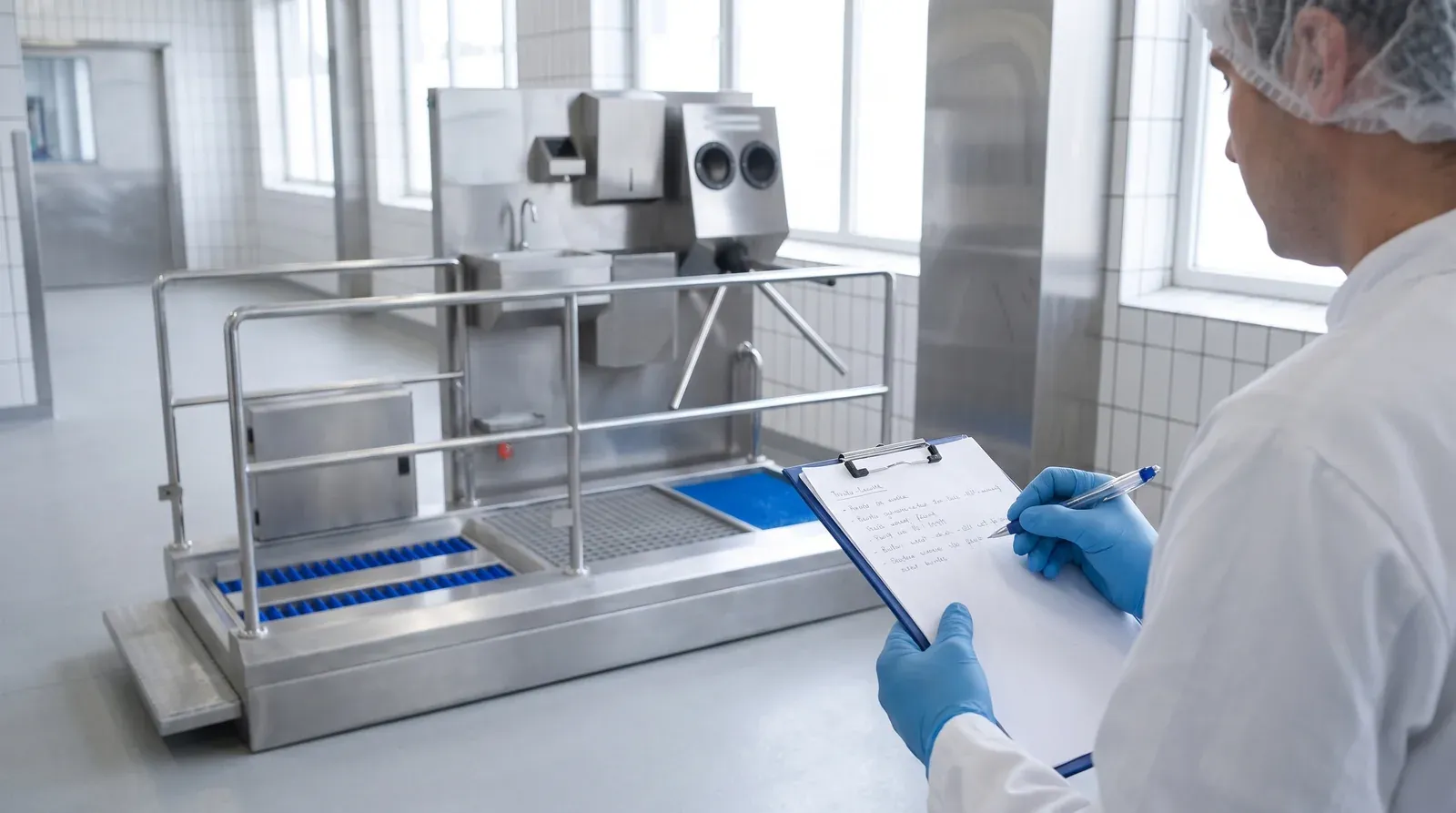
A hygiene barrier price is not a single list price; it is determined by how the unit is configured. Six main levers drive the cost: unit type (with/without a washbasin), number of turnstiles (lanes), boot cleaning method, turnstile type, stainless steel grade (304/316) and the sensor/automation level; to these are added installation and commissioning. In this article we explain, from a manufacturer’s perspective, why and in which direction each factor affects the price, and we show which information you should prepare in order to obtain an accurate and comparable quote.
What does a hygiene barrier price depend on?
A hygiene barrier price depends on which components and which material the product is built from — in other words there is no fixed list price, only a configuration-dependent cost. Two facilities in the same sector may need entirely different units because their personnel count, cleaning regime and entrance layout differ. That is why the price comes not from a product label but from the combination of the factors below.
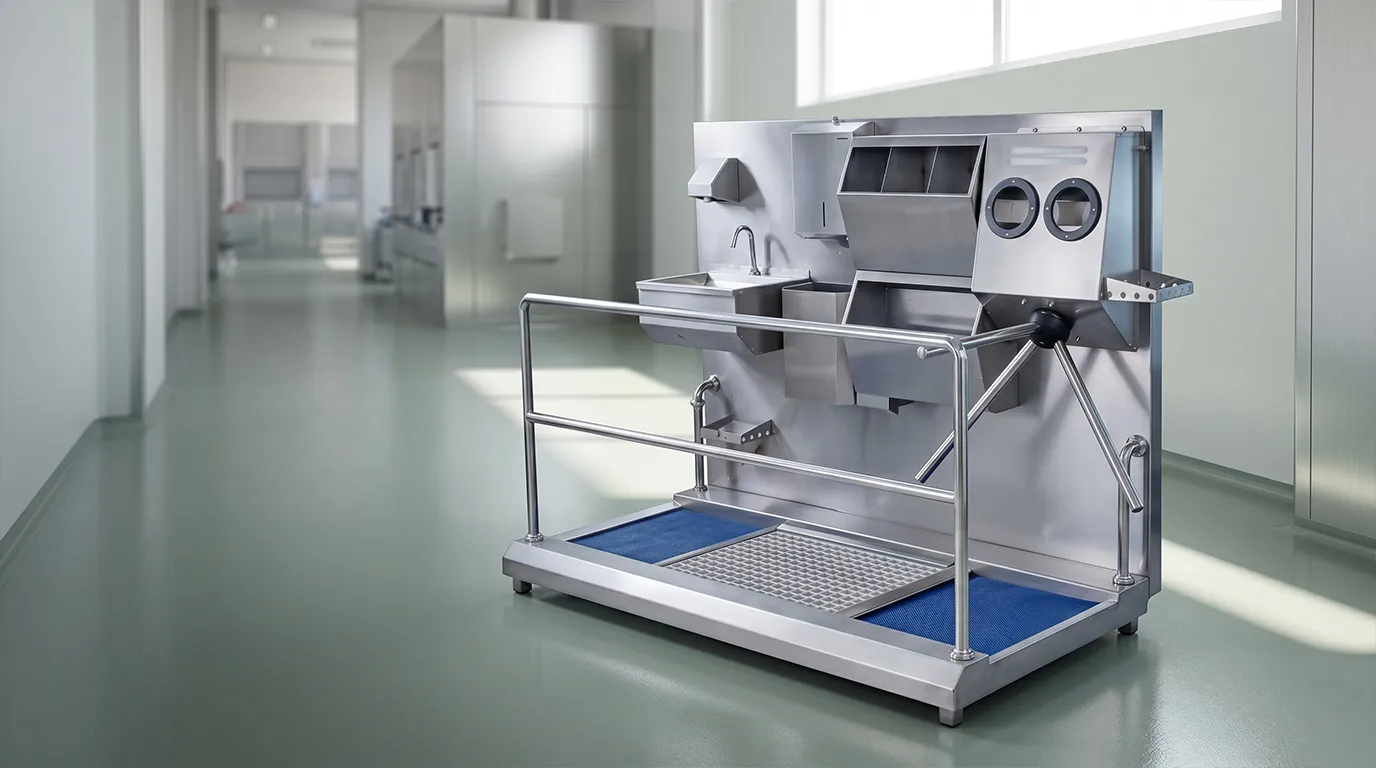
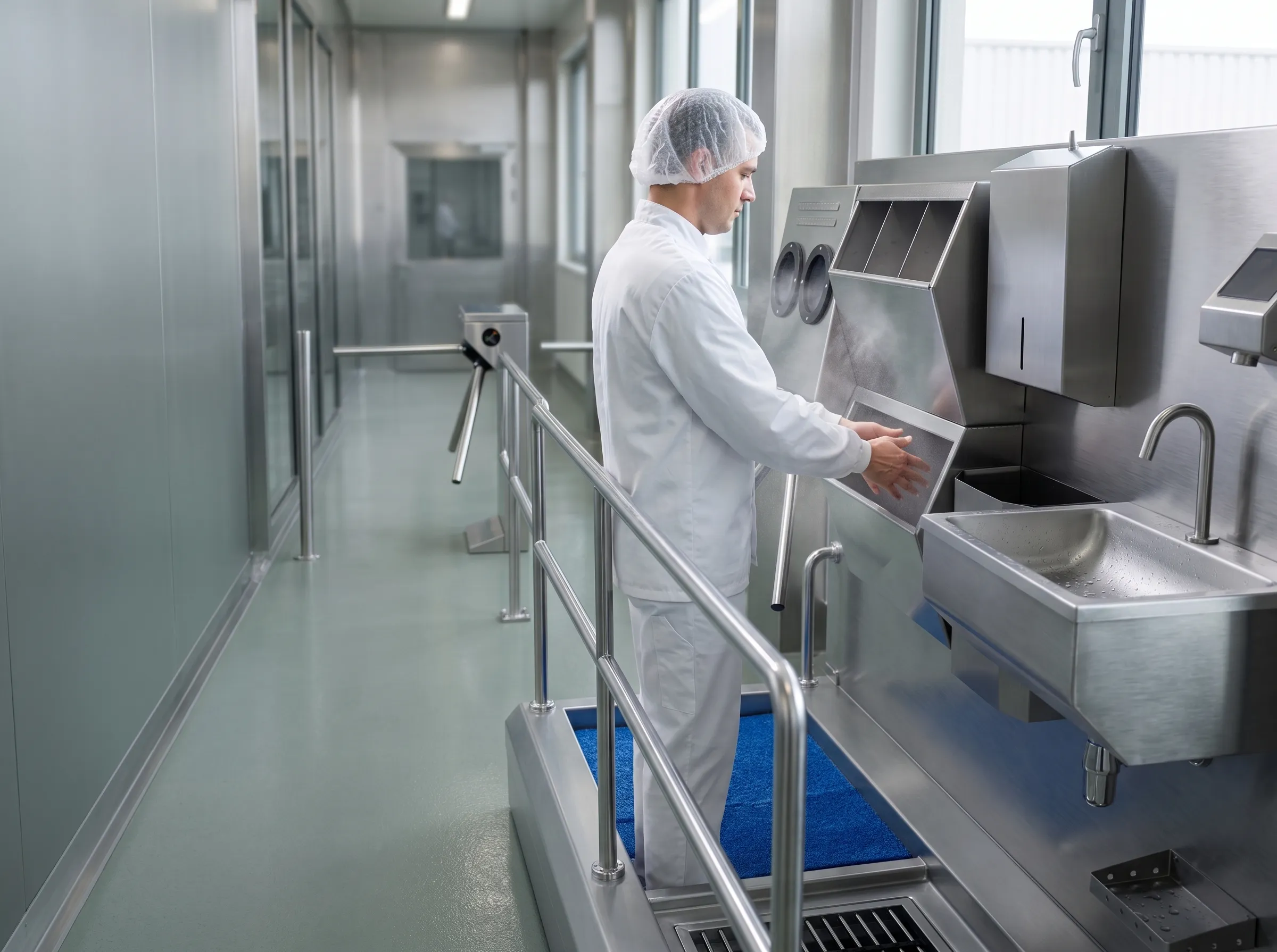
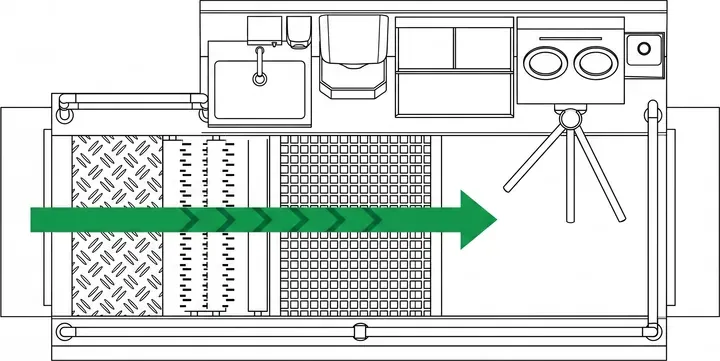
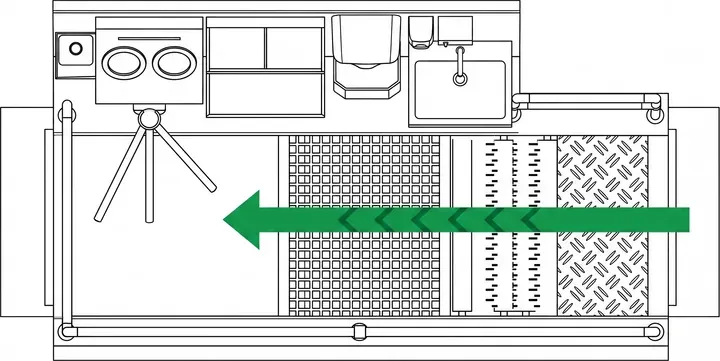
At its core a hygiene barrier combines hand washing, hand and boot disinfection and turnstile-controlled passage on a single stainless steel line; for its components and operating logic you can read our what is a hygiene barrier article. The levers that determine the cost are:
- Unit type — a full line with a washbasin, or just disinfection + turnstile.
- Number of lanes (turnstiles) — a single passage, or parallel double/multiple passages.
- Boot cleaning method — a disinfectant footbath, or a boot-brush/motorized line.
- Turnstile type — tripod, or flap.
- Stainless steel grade — AISI 304, or 316.
- Sensors and automation — from a basic photocell to counter/logging and access integration.
- Installation and commissioning — site preparation, assembly, transport and testing.
The right question is not “how much is a hygiene barrier?” but “which configuration meets this facility’s flow?” — the price is the result of that.
How does unit type affect the price?
Unit type is the first and strongest price driver because it defines how many functions the line covers. A plain access unit consisting of only hand disinfection and a turnstile is the most economical configuration. When a washbasin (hand washing), paper towel and liquid soap units are added, both the material and the plumbing scope (clean water and drain) grow; the cost therefore rises.
The decision should start not with the budget but with the risk profile: in high organic-load facilities such as meat, dairy or poultry, hand washing is usually mandatory and a line without a washbasin falls short. We compare which model suits your sector in our types of hygiene barriers article.
Why does the number of lanes (turnstiles) raise the cost?
The number of lanes raises the cost almost linearly, because every extra lane means a separate turnstile, a separate sensor set and often a separate body. A single-lane tripod turnstile typically lets through about 25–30 people per minute; if the flow at the start of a shift exceeds this capacity, a second (or further) lane is needed to prevent queuing.
The critical balance here is this: too few lanes lead to queues and a tendency to “bypass” (skip the hygiene); too many lanes are an unnecessary cost. To calculate the right number of lanes based on shift intensity, you can use the method in our what capacity of hygiene barrier you need article.
How does the boot cleaning method reflect on the price?
The boot cleaning method creates a wide cost range that runs from a simple disinfectant footbath to a motorized boot-brush line. The most economical solution is a passive footbath in which the shoe sole is dipped into disinfectant. A mechanical boot-brush grate and, especially, motorized/automatic sole-and-side washing units raise the cost because they require an additional motor, brush, water management and control.
Which one is right depends on the type of soil: while a footbath may be enough in a dry/lightly soiled environment, boot-brush cleaning delivers real cleaning effect in facilities where organic residue is lodged in the sole tread. We compare the methods in detail in our boot washing: boot-brush or footbath article.
Does the choice of turnstile type change the price?
Yes, the turnstile type affects both the price and the passage experience. The tripod (three-arm) turnstile is the most common and usually the most economical solution for hygiene passages; it is robust, compact and reliable. Flap turnstiles offer a wider, smoother passage and a more modern appearance, but they are typically higher in cost because of their mechanism and drive structure.
The choice should be made not by price alone but by requirements such as passage width, flow rate and accessibility for disabled users. We compare the two types in our tripod turnstile or flap turnstile article.
AISI 304 or 316 — how much does the grade difference reflect on the cost?
Stainless steel grade is a factor that is invisible to the eye but reflects clearly on the cost. The body of hygiene barriers is typically made of AISI 304 (roughly 18% chromium, 8% nickel) stainless steel, and it is the right, sufficient choice for most personnel entrance hygiene applications. AISI 316, on the other hand, additionally contains roughly 2–3% molybdenum; this increases resistance to pitting corrosion, especially in chloride-bearing environments (heavy salt, brine or chlorine-based disinfectant).
This difference reflects on the price: because of the molybdenum and higher alloy content, 316 is typically about 25% more expensive than 304 (this ratio can vary by market and product). In practice 304 is sufficient for standard food/pharma entrances; 316 is considered for aggressive environments with constant chloride contact. We address which grade suits your environment in our choosing hygiene steel: 304 or 316 article.
Choosing 316 for a standard indoor food entrance is often an unnecessary cost; conversely, choosing 304 in a high chloride-load environment means early corrosion and a higher total cost of ownership. The right grade is not the cheapest one, but the one that suits your environment.
How does the sensor and automation level raise the price?
The automation level determines how “smart” the unit is and raises the cost incrementally. At the basic level there are photocells that verify the hygiene steps and a simple control board that opens the turnstile. Every capability added on top — a passage counter, step/log tracking, access integration via a card/biometric reader, PLC-based control or higher protection-class components — raises the hardware and engineering cost.
In wash-down environments the protection class of the sensors and components also affects the cost: units exposed to pressure washing require high protection (e.g. IP69K), and these components are more expensive. We explain what IP69K protection means in our what is IP69K article. In facilities that demand auditability, the value of automation can more than pay back its cost.
Are installation, transport and commissioning included in the cost?
Yes; as much as the unit itself, the work that gets it running on site is part of the total cost. Transport, site preparation (water, drain and electrical infrastructure), assembly and commissioning/testing vary according to the facility’s location and entrance layout. These items are usually assessed separately within the quote. To plan the infrastructure the unit requires in advance, our hygiene barrier installation and requirements article is a helpful guide.
The factors’ effect on price: summary table
The table below summarises in which direction each factor changes the cost. The table contains no prices; it shows only the relative cost impact of configuration decisions. The actual figure is determined by the combination of these decisions and by your facility’s flow.
What should you prepare to get an accurate quote?
Hygiene barrier sales are quote-based, because the right price only emerges once the facility’s need is clear. To obtain a comparable and realistic quote, preparing the following information speeds up the process and prevents surprises:
- 1Sector and product — meat, dairy, poultry, ready meals, pharma, etc. (risk profile).
- 2Personnel count at shift start — the most critical data for the lane and capacity calculation.
- 3Functions needed — hand washing, hand disinfection, boot cleaning.
- 4Cleaning regime — use of chloride/aggressive chemicals (304/316 decision).
- 5Entrance layout and dimensions — door width, passage direction, available space.
- 6Infrastructure — the state of the water, drain and electrical connections.
- 7Audit needs — is counter/logging and access integration required.
The price emerges from the combination of the decisions above; we can determine the right configuration together and prepare a precise quote tailored to your facility. If you are not sure what kind of barrier you need, you can first take a look at our how to choose a hygiene barrier guide.
Conclusion
A hygiene barrier price is not a fixed list but a configuration-dependent cost. Unit type, number of lanes, boot cleaning method, turnstile type, stainless grade (304/316) and automation level — with installation added — together determine the total cost. The best decision is not to choose the cheapest option but to build the configuration that suits your facility’s risk and flow. Clarify your need, and we will prepare a precise quote tailored to your facility.
Frequently asked questions
What determines a hygiene barrier price the most?
Not a single factor but the configuration as a whole. The biggest impact comes from unit type (with/without a washbasin), number of lanes (turnstiles), boot cleaning method and automation level; stainless steel grade (304/316) and turnstile type also change the price. To these are added installation, transport and commissioning.
Why is there no price list on the website?
Because every facility’s need is different and a fixed list price would be misleading. The right price emerges once the sector, personnel count, cleaning regime and entrance layout are clear. That is why sales are quote-based; when you share your need, we prepare a precise quote tailored to your facility.
How much more expensive is 316 stainless than 304?
Because of its molybdenum and higher alloy content, AISI 316 is typically about 25% more expensive than 304; this ratio can vary by market and product. For most personnel entrance hygiene, 304 is sufficient; 316 is considered for aggressive environments with constant chloride contact.
How much does the number of lanes (turnstiles) affect the cost?
Significantly. Because every extra lane means a separate turnstile, a sensor set and often a separate body, it raises the cost almost linearly. The right number depends on the personnel flow at the start of a shift: a single-lane tripod typically lets through about 25–30 people per minute.
Are installation and transport included in the price?
They are usually assessed separately within the quote. Transport, site preparation (water, drain, electricity), assembly and commissioning vary according to the facility’s location and entrance layout. The existing state of the infrastructure directly affects these items.
What information should I prepare to get a quote?
Your sector, personnel count per shift, the functions you need (hand washing, disinfection, boot cleaning), your cleaning regime (chloride use), entrance dimensions and the state of your water/electrical infrastructure. This information is enough for a comparable and realistic quote.