Turkish food law & hygiene
Handwashing-facility and personnel-hygiene requirements in Turkish food hygiene legislation.
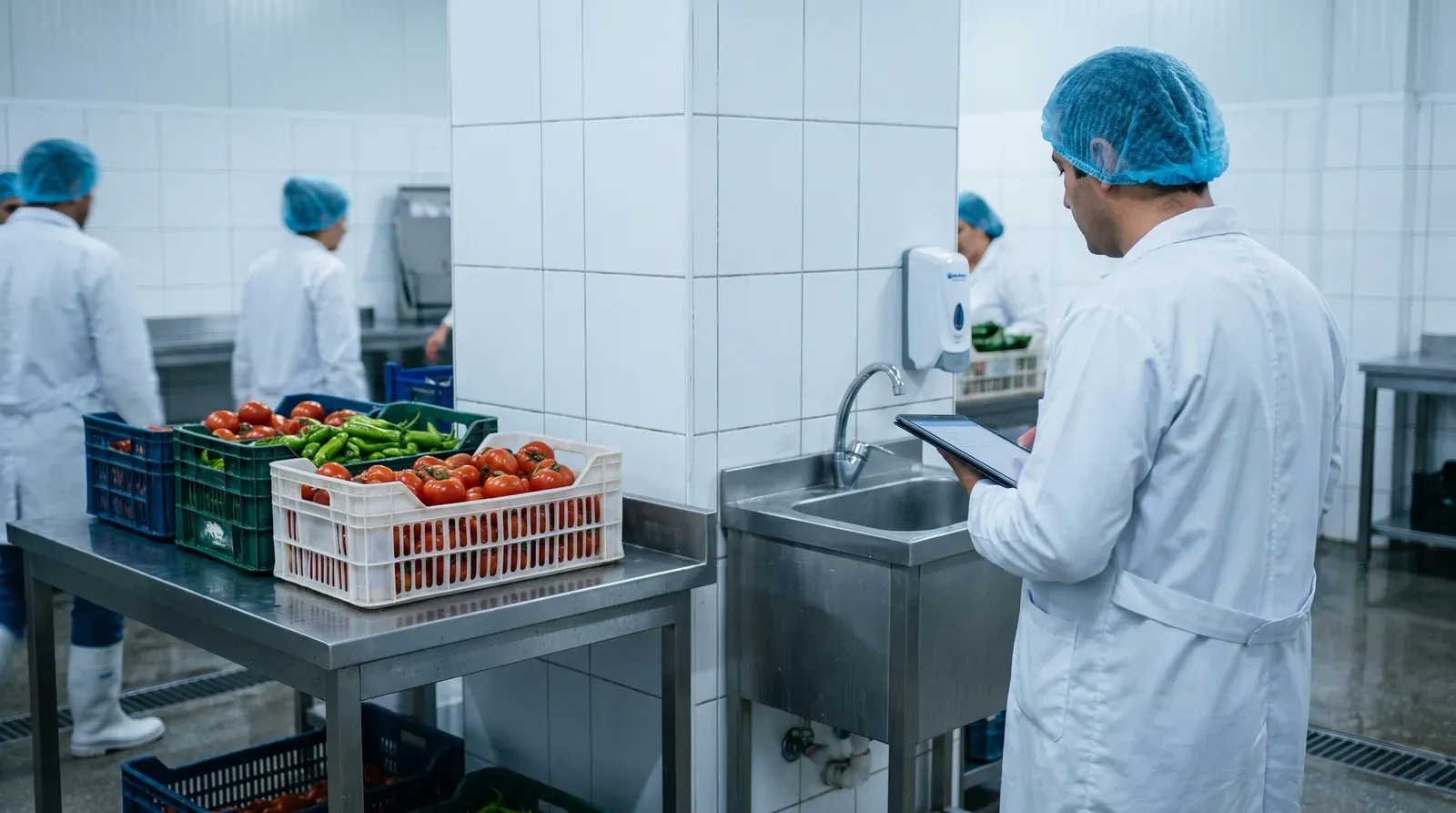
Turkish food law defines personnel hygiene and adequate hand-washing provisions in food businesses as a legal obligation. The backbone of this framework is the Food Hygiene Regulation (Gıda Hijyeni Yönetmeliği), which was drafted in line with the EU’s Regulation 852/2004/EC and is based on Law No. 5996; the regulation explicitly requires an adequate number of appropriately located washbasins, hot and cold running water, means for cleaning and hygienic drying of hands, as well as personnel personal cleanliness and the use of suitable protective clothing. In this article we explain, from a manufacturer’s perspective, which legislation requires what, what auditors look at, and the practical way to meet these obligations at the entrance in an auditable manner.
Which legislation governs personnel hygiene in Türkiye?
In Türkiye, the primary text governing personnel hygiene in food businesses is the Food Hygiene Regulation. This regulation is based on Law No. 5996 on Veterinary Services, Plant Health, Food and Feed, and was drafted in parallel with the European Union’s food hygiene regulation 852/2004/EC. In other words, the rules in Türkiye rest on the same foundation as the food hygiene requirements in Europe — which is a significant compliance advantage for businesses that export or plan to.
Personnel hygiene is not limited to a single regulation; in practice it forms a three-layered framework. Each layer complements the others and can be checked separately during an audit:
- Food Hygiene Regulation — sets the facility’s physical hygiene conditions (hand-washing facilities, personnel behaviour, protective clothing).
- Hygiene Training Regulation — governs the mandatory hygiene training and certification of personnel who come into contact with food.
- Turkish Food Codex and related communiqués — define product-specific hygiene and safety criteria in a way that complements the rest of the legislation.
Food hygiene legislation in Türkiye is aligned with 852/2004; this means that local compliance is at the same time compliance with the European market.
What does the legislation require for hand-washing facilities?
The Food Hygiene Regulation requires that adequate and appropriately located hand-washing provisions be available in areas where food is prepared, processed or handled. The essential conditions the regulation seeks for hand-washing facilities are:
- An adequate number of appropriately located washbasins — designed for cleaning hands, according to the personnel flow and the area.
- Hot and cold running water — at a suitable temperature, appropriate for hand washing.
- Hand-cleaning materials — liquid soap or a suitable cleaner, in an accessible location.
- Means for hygienic drying — drying that does not create cross-contamination, such as single-use paper towels.
- Separation where necessary — keeping food-washing sections separate from hand-washing sections.
The legislation does not simply say “there must be a washbasin”; it requires the washbasin to be in the right location, in adequate numbers and fully equipped. The trio of a sensor-operated (touchless) tap, liquid soap and paper towel is the configuration that meets this requirement most cleanly — because it prevents the washed hand from touching a dirty tap again.
What does the legislation expect from personnel?
The legislation expects a high level of personal cleanliness and correct behaviour from personnel who come into contact with food. These obligations directly define the responsibility of the employee, not only of the business. The main expectations are:
- Personal cleanliness — personnel working with food must take the utmost care of their personal cleanliness.
- Clean and suitable protective clothing — wearing clean, suitable and protective work clothing where necessary.
- Avoiding contact when ill — personnel who carry a food-borne transmissible disease, have diarrhoea or have an infected wound/skin infection must not work in areas where food is handled.
- Correct and regular hand hygiene — washing hands especially when entering the area and between operations that carry a contamination risk.
There is a critical distinction here: hand washing and hand disinfection are not the same thing and do not replace each other. Washing removes dirt and organic residue; disinfection reduces the remaining microbial load. The two must be carried out in the right order — we address this difference in detail in our hand washing or hand disinfection article.
Is a hygiene training certificate mandatory?
Yes. In Türkiye, personnel who come into contact with food in food production and sales premises are required to receive hygiene training and be certified under the Hygiene Training Regulation. This regulation was published in the Official Gazette dated 5 July 2013 and covers lines of work involving contact with food, such as food-producing premises, mass-catering outlets and points of sale.
In other words, personnel hygiene rests on two pillars: physical provision (washbasin, disinfectant, protective clothing) and knowledge (training and certification). Even if a business equips its facility with the best equipment, the chain breaks if personnel do not know the correct hygiene behaviour. During an audit, both pillars are examined separately.
Without physical provision, training hangs in the air; without training, the equipment is not fully used. Compliance with the legislation requires the two to work together and consistently.
How is personnel hygiene checked during an audit?
In official food inspections, personnel hygiene is assessed through both physical conditions and records. The points an auditor will typically look at are:
- 1The number, location and equipment of hand-washing washbasins (hot and cold water, soap, hygienic drying).
- 2Personnel’s use of protective clothing and general personal cleanliness.
- 3Whether the hygiene training certificates are up to date and cover all relevant personnel.
- 4The separation of clean and dirty areas and whether the personnel entrance flow is controlled.
- 5Health status records and the practice for preventing contact with food in case of illness.
The hardest part of an audit is usually “being able to demonstrate it”: even though the rules are written down, proving that they are applied is a separate matter. An arrangement that routes the personnel entrance through a single controlled point and logs the steps makes this evidence concrete — we explain how we set this up in our making the hygiene passage auditable article.
How do the legislation and HACCP and ISO 22000 overlap?
Local legislation and voluntary food safety standards serve the same goal — safe food — from different layers, without conflicting. The Food Hygiene Regulation sets the legal minimum condition; standards such as HACCP, ISO 22000, BRCGS and IFS Food then add more detailed prerequisite programmes (PRP) and verification expectations on top of it. Personnel hygiene and hand-washing provision are a shared and intersecting requirement of both the local legislation and these standards.
In practice this means: a business that properly complies with local legislation does not start from scratch on the personnel hygiene side when moving to a voluntary certification — the foundation is already in place. We explore the standard-based requirements in depth in our HACCP and the personnel hygiene station and ISO 22000 personnel entrance hygiene articles.
How does a business meet these obligations in practice?
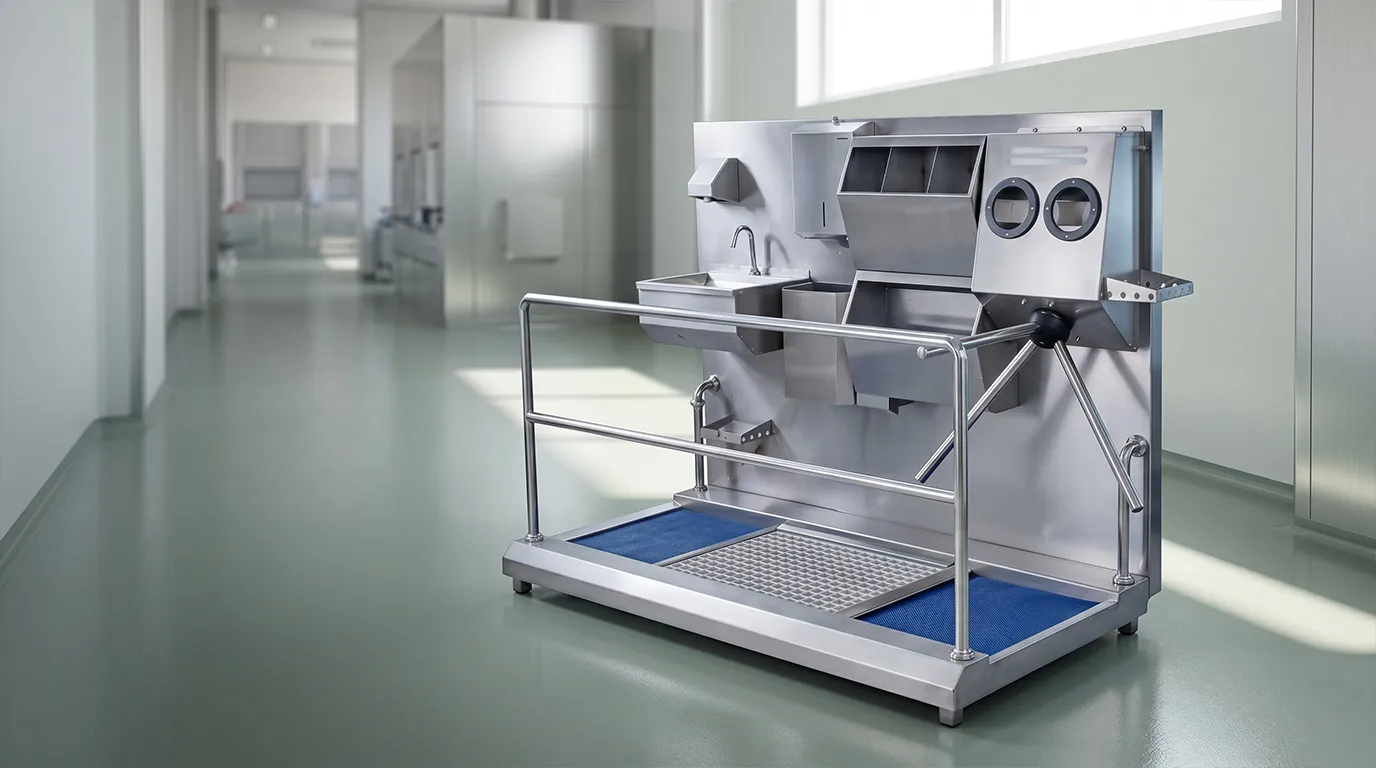
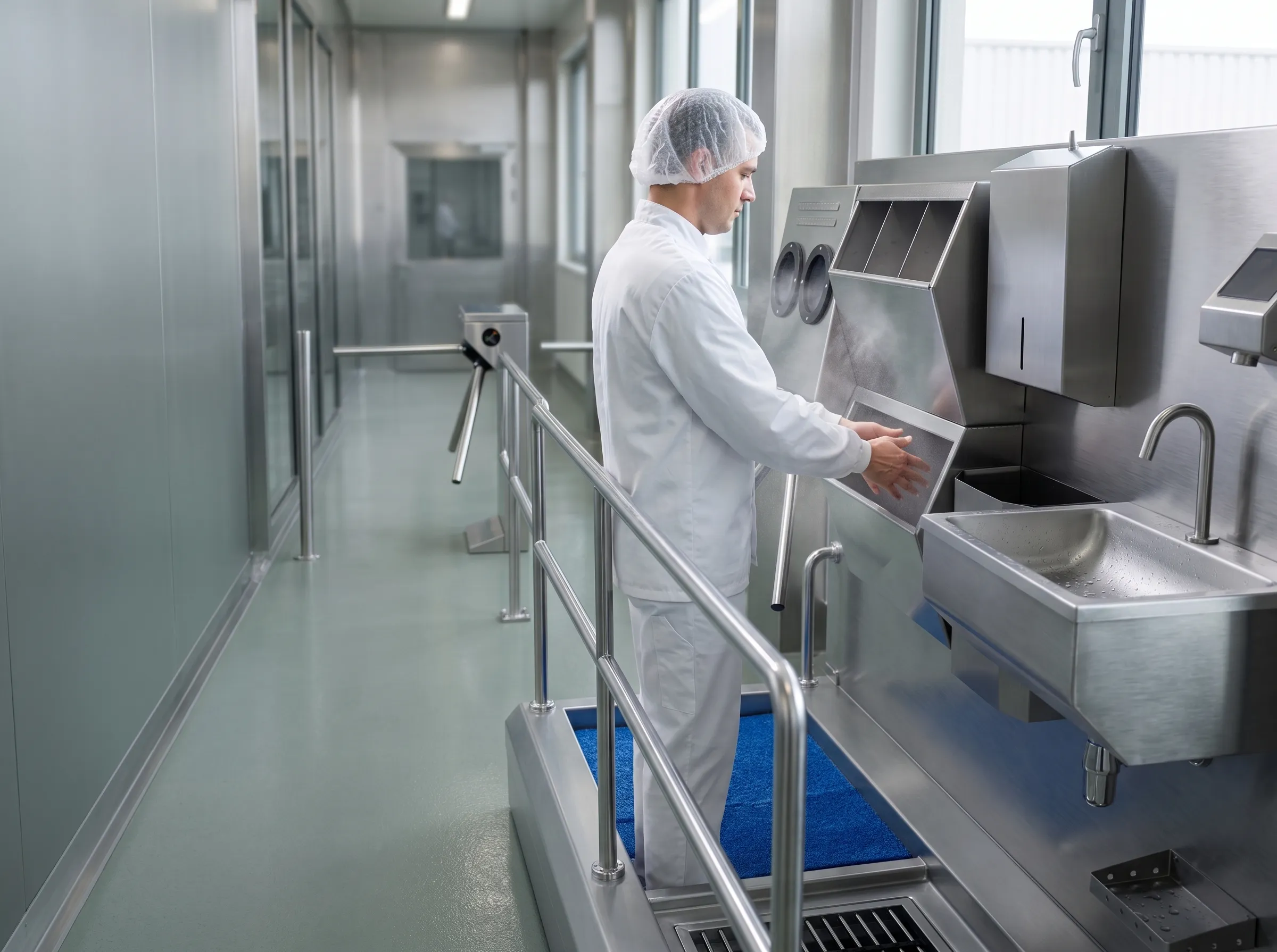
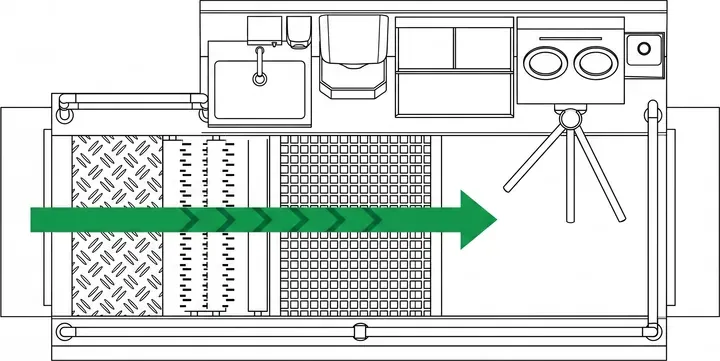
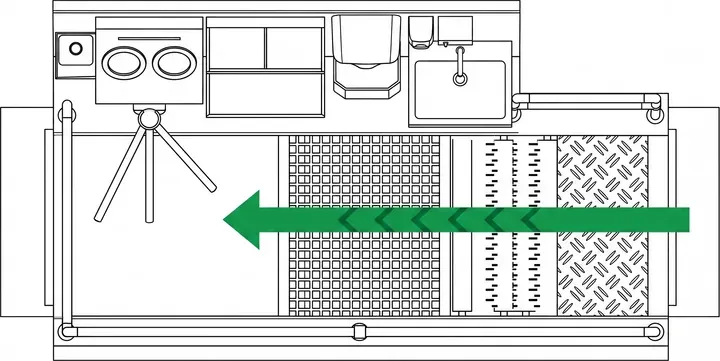
The most effective way is to gather the legislation’s scattered requirements at a single controlled point at the personnel entrance. A hygiene access unit that combines hand washing, hand disinfection and, where needed, boot cleaning with controlled passage meets most of the conditions the regulation seeks on a single line and in an auditable manner. The practical benefits of this approach are:
- Compliance at a single point — the washbasin, disinfectant and drying are gathered on a single line; there is no need to look for scattered solutions.
- Mandatory sequence — the turnstile does not open until the steps are completed; hygiene stops being up to the employee’s discretion.
- Evidence in audits — passages can be logged, and concrete data is presented instead of a verbal statement.
- Consistency — every shift, every employee and visitor applies the same standard.
The right configuration varies by sector, number of people and the physical layout of the entrance; we cover the basic logic of a personnel hygiene unit in our what a hygiene barrier is and what it is for article, and how to choose the right model in our how to choose a hygiene barrier guide.
Conclusion
Turkish food law defines personnel hygiene and adequate hand-washing provision as a clear legal obligation; the Food Hygiene Regulation aligned with 852/2004 forms its backbone, while the Hygiene Training Regulation forms the knowledge pillar. The most robust way to meet these obligations is to gather the requirements at a single controlled point at the entrance and to be able to demonstrate with records that they are applied. We can determine together the configuration suited to your facility’s flow and legislative needs.
Frequently asked questions
Is a hand-washing washbasin legally mandatory in a food business?
Yes. The Food Hygiene Regulation requires that appropriately located washbasins, in adequate numbers and designed for cleaning hands, be available in areas where food is handled. These washbasins must have hot and cold running water, a hand-cleaning material and means for hygienic drying.
Is Turkish food hygiene legislation the same as the European rules?
It is largely aligned. The Food Hygiene Regulation was drafted in parallel with the EU’s food hygiene Regulation 852/2004/EC and on the basis of Law No. 5996. For this reason, local compliance also provides a strong foundation on the European-market compliance side.
Is it mandatory for personnel to obtain a hygiene training certificate?
Yes. Personnel who come into contact with food must receive hygiene training and be certified under the 2013 Hygiene Training Regulation. Alongside the physical hygiene provisions, this training is the second fundamental pillar of legislative compliance.
Does the legislation require hand washing or hand disinfection?
At the heart of the legislation is appropriate hand-washing provision; washing removes dirt and organic residue. Hand disinfection is a complementary step that reduces the remaining microbial load. In high-risk facilities the two are applied together and in the right order.
Is using a hygiene barrier mandatory under the legislation?
No; the legislation does not require purchasing a “hygiene barrier” by that name. However, it does make adequate hand-washing provision, personnel hygiene and controlled personnel flow mandatory. A hygiene barrier is a practical solution that meets these obligations at a single point and in an auditable manner.
What should be ready for personnel hygiene during an audit?
Equipped hand-washing washbasins, protective-clothing practice, up-to-date hygiene training certificates, clean-and-dirty-area separation and health-status practices are examined during an audit. Logging passages makes it easier to prove that they are applied.